Cart 0
 

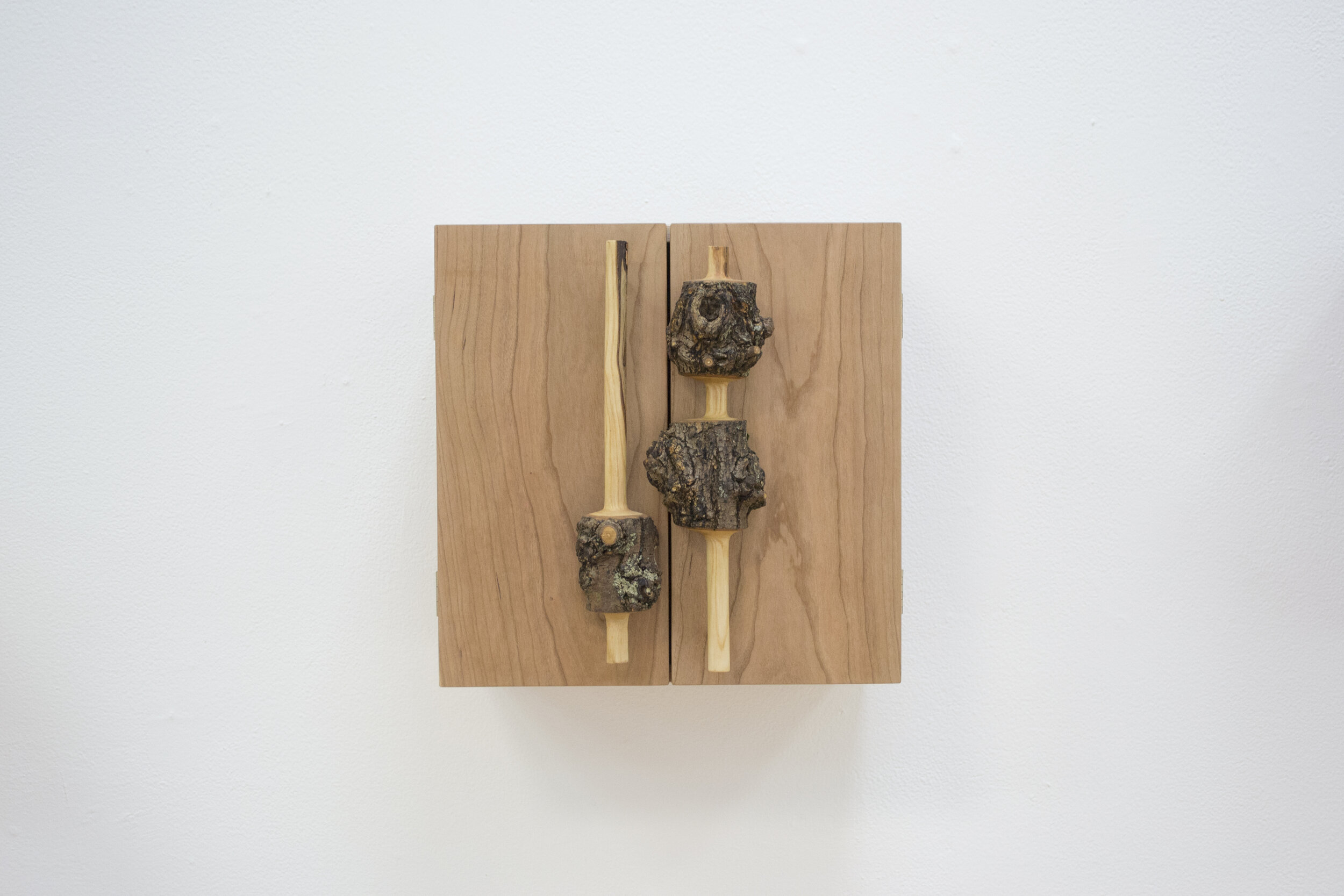
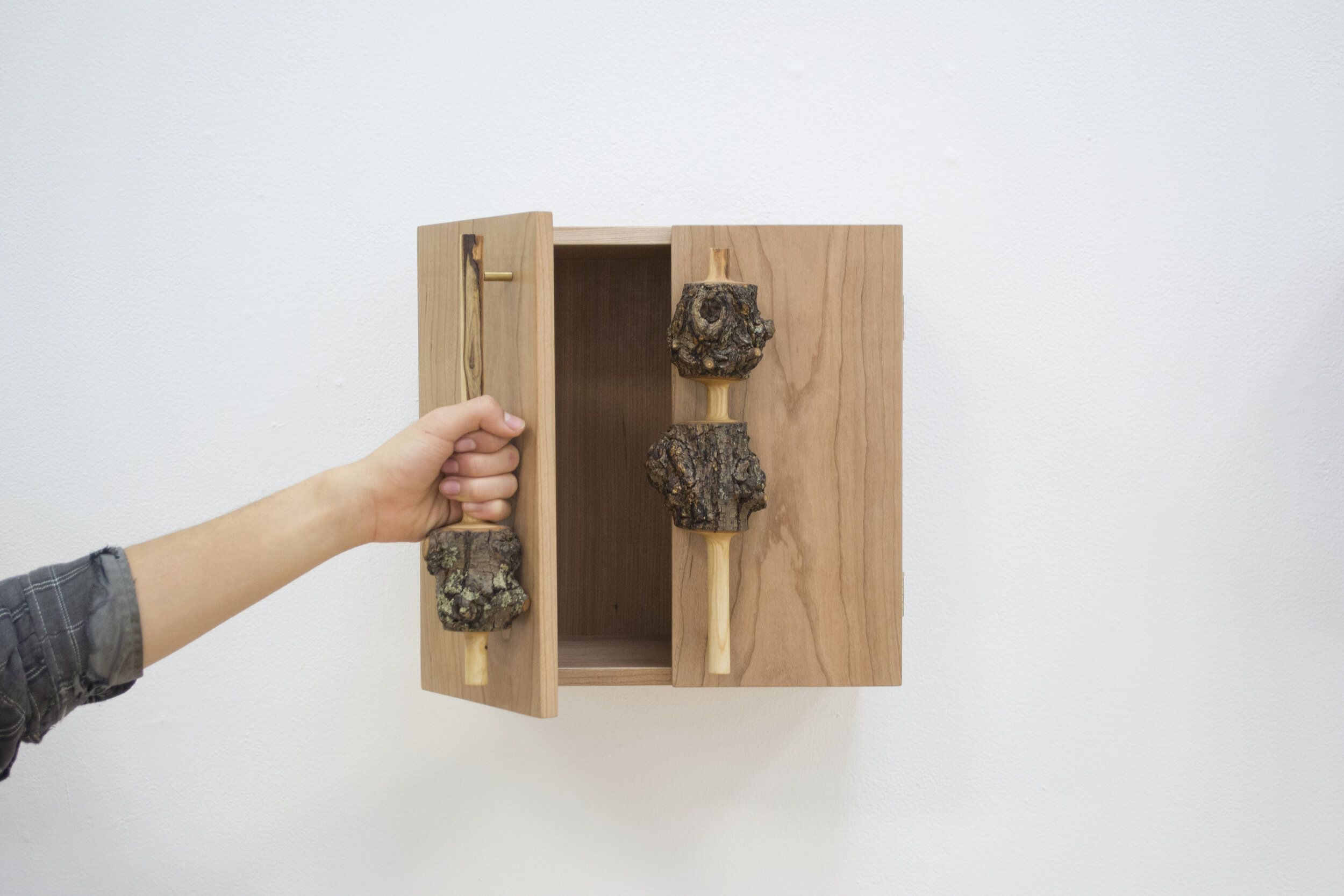
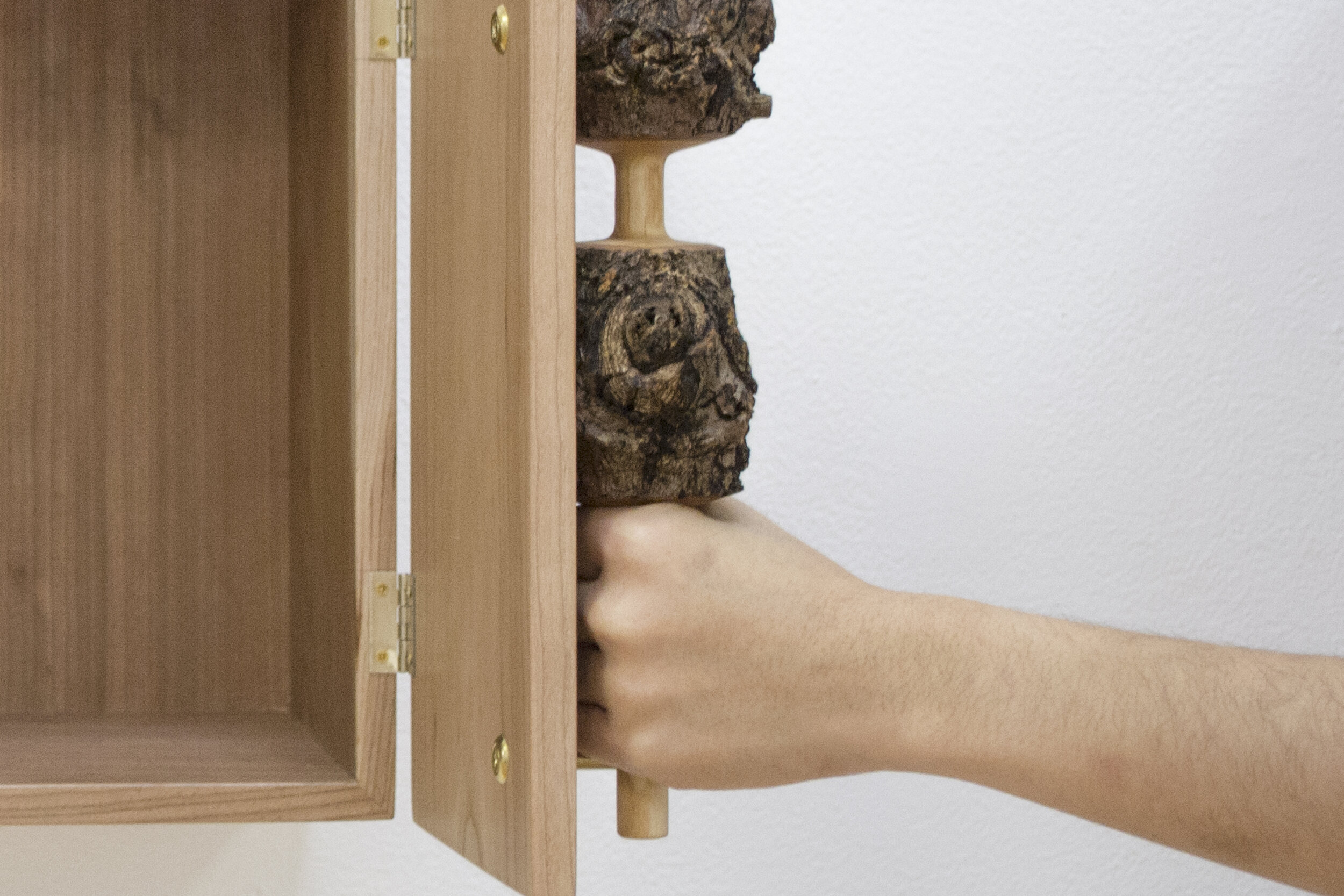
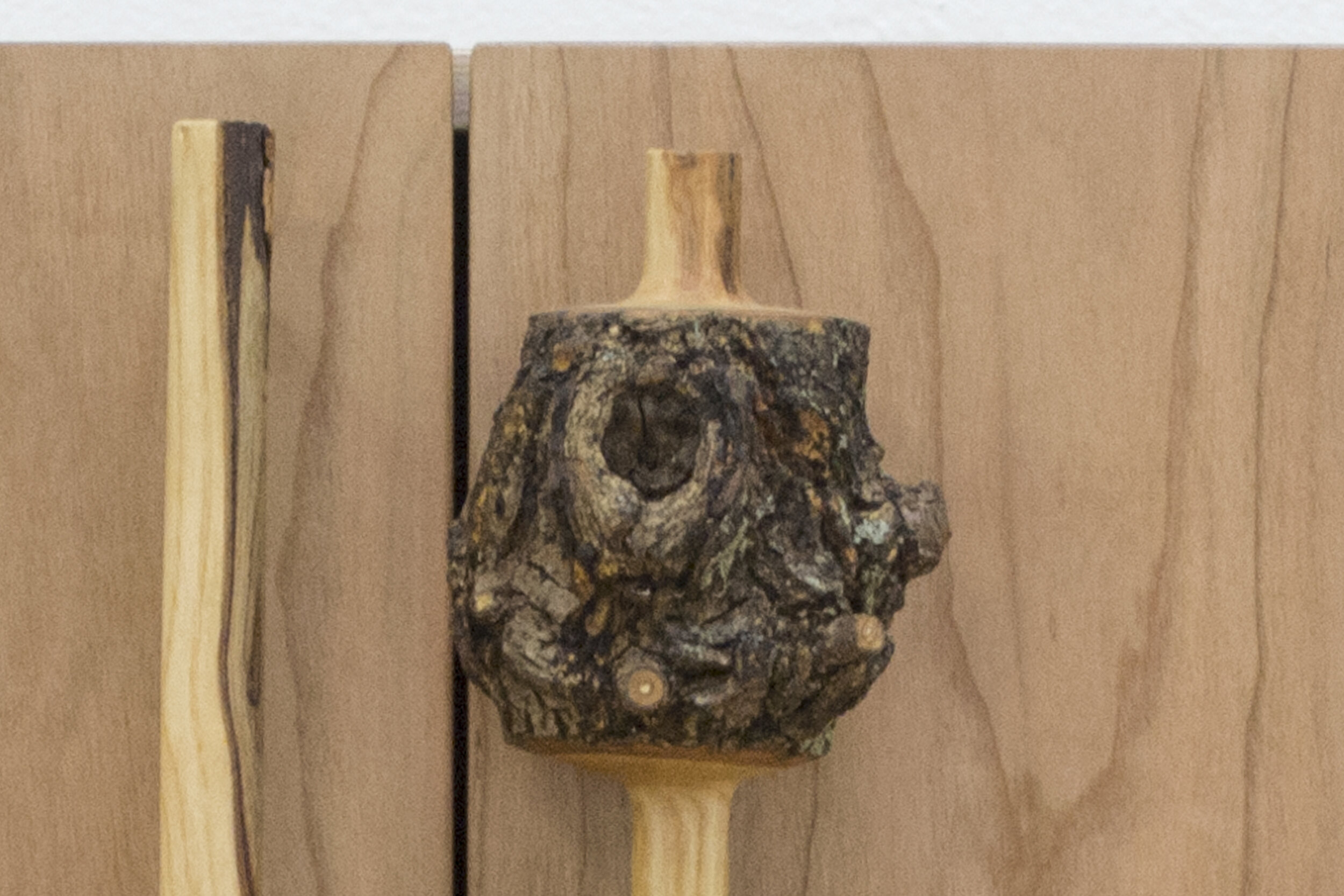
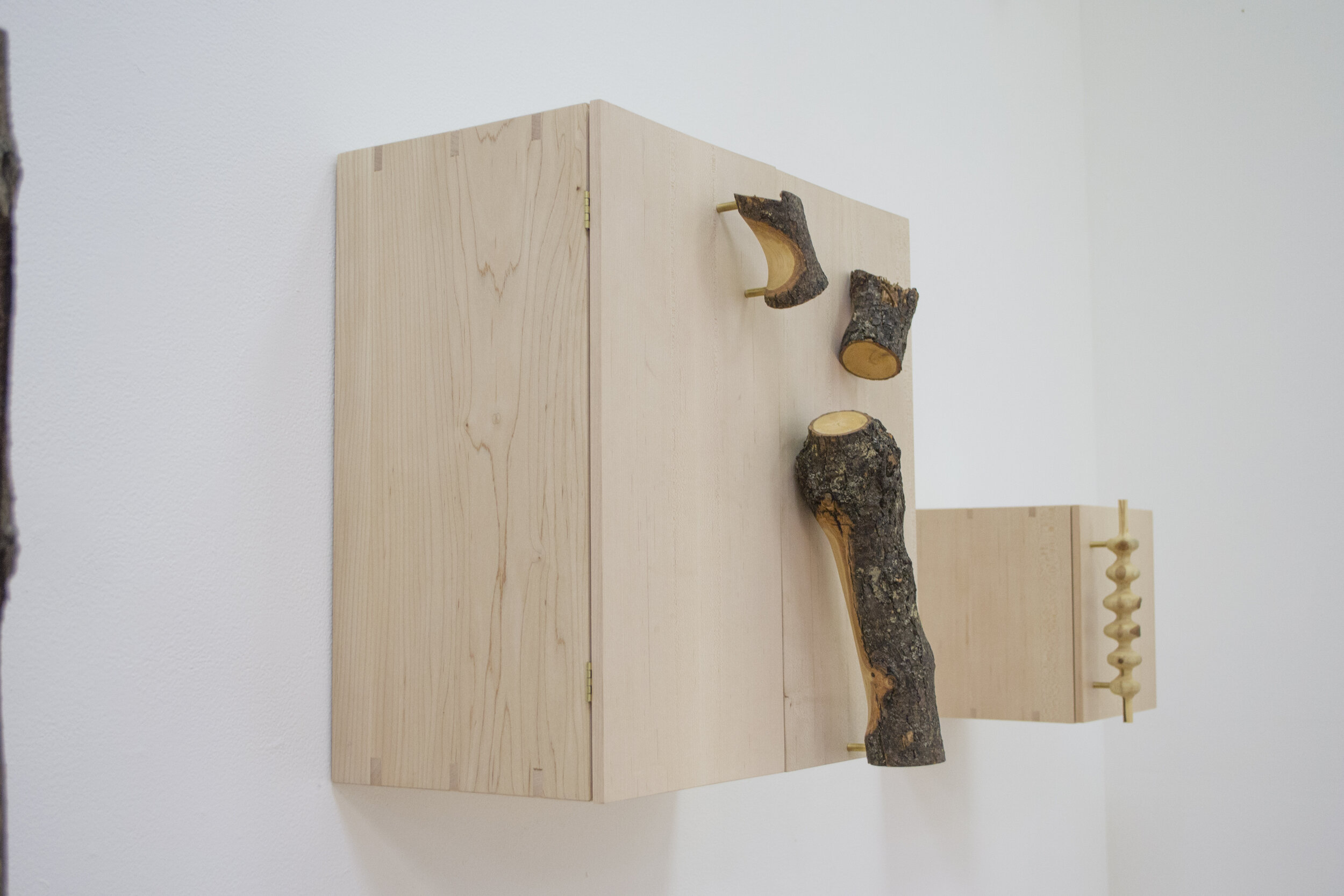
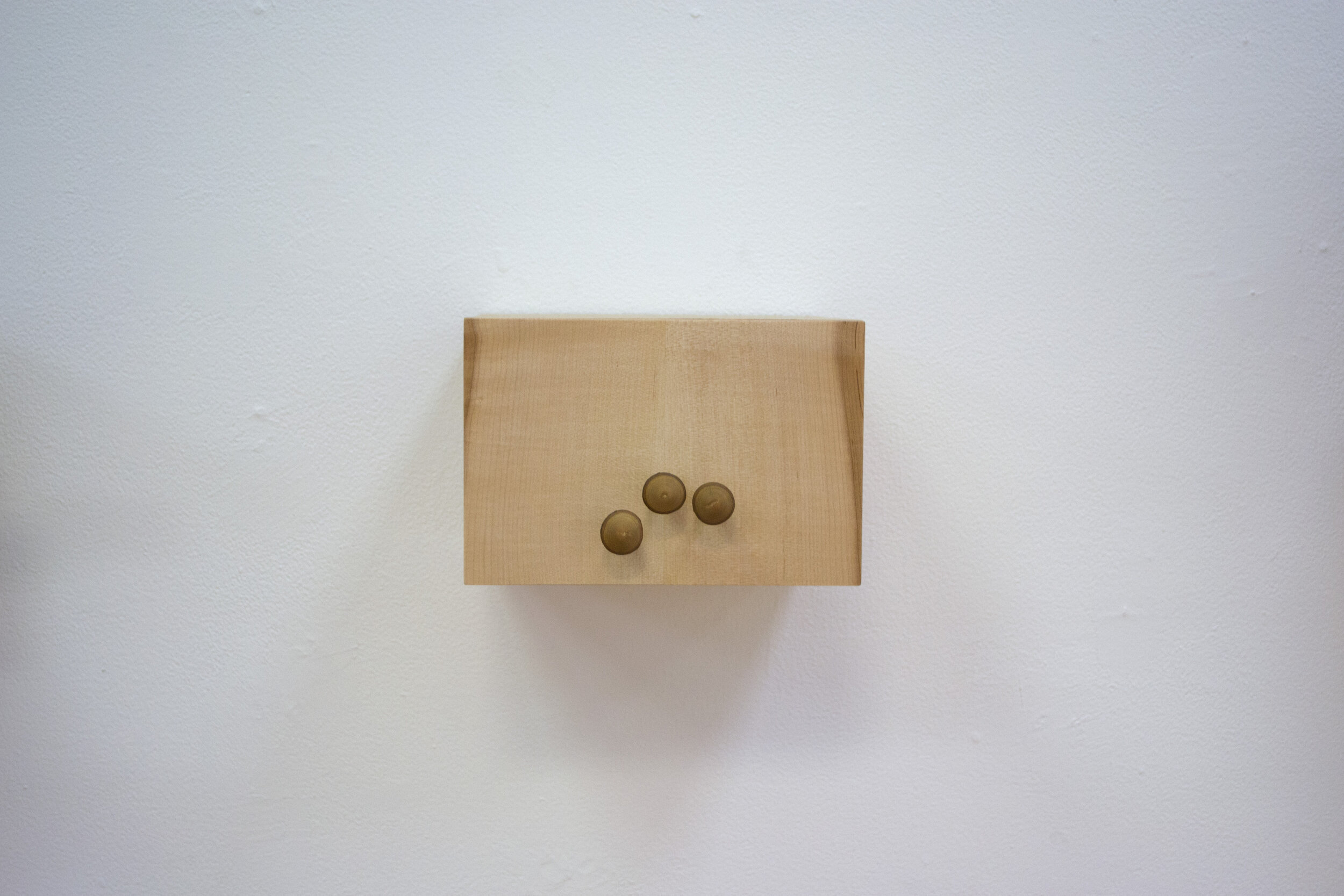
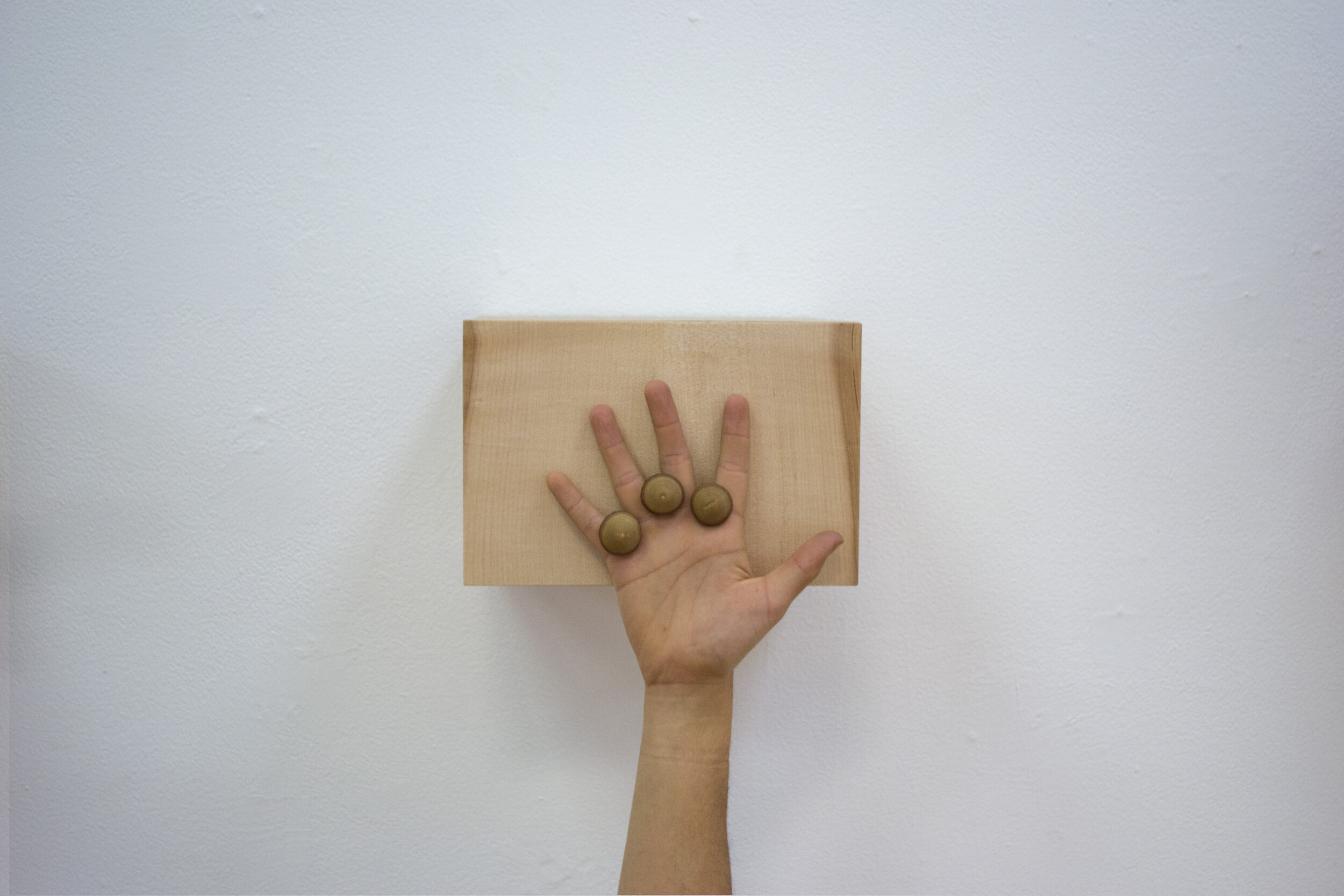
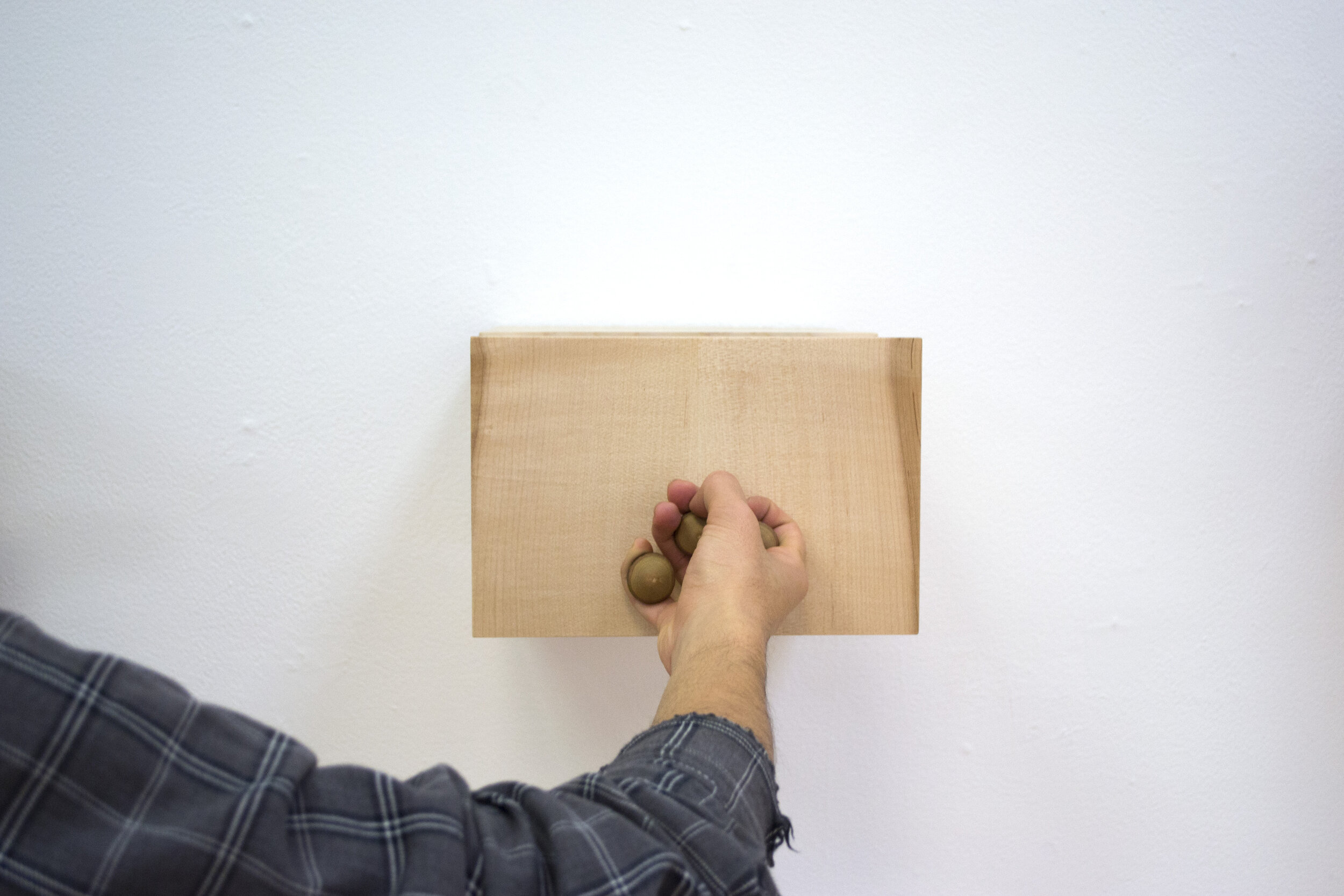
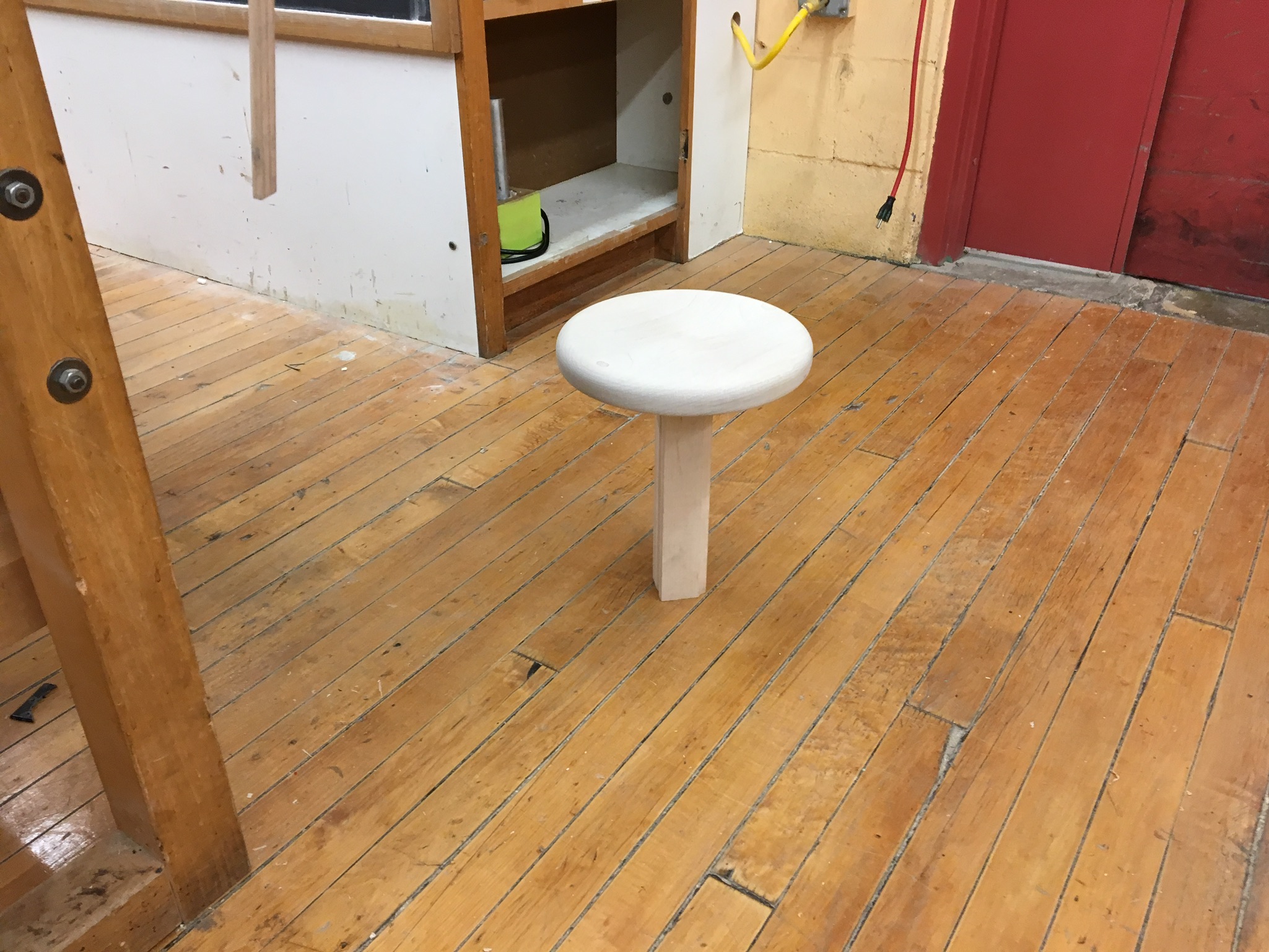
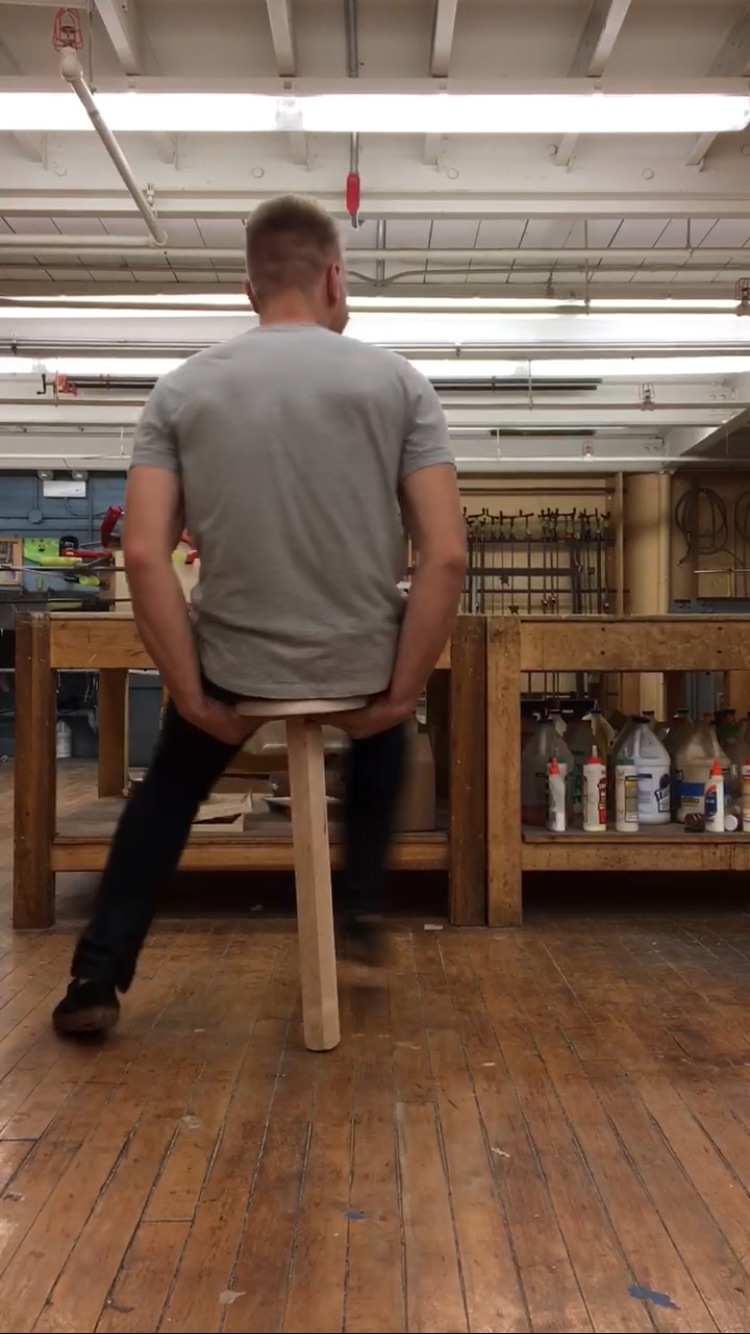
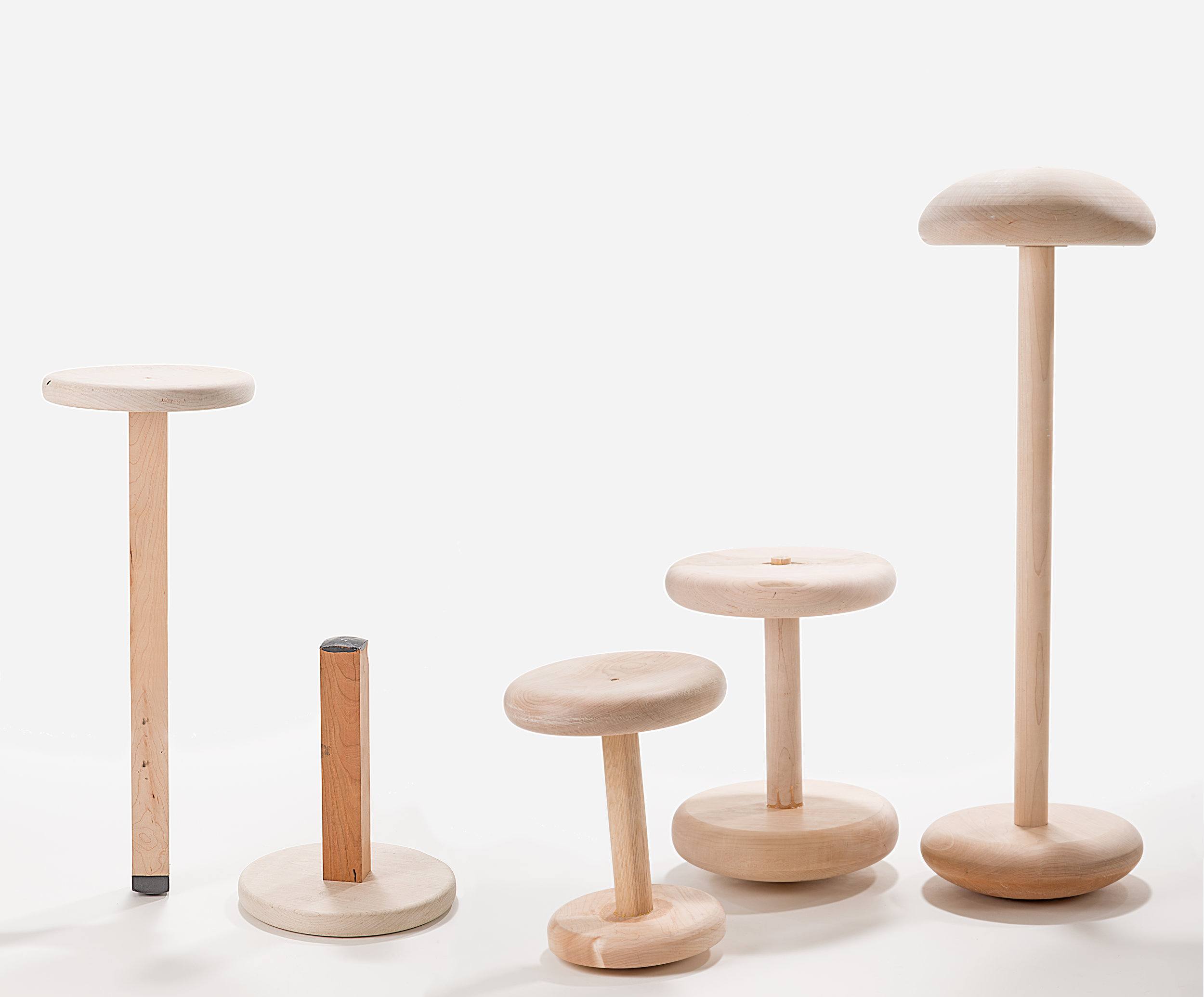
Hand and Feet Stools


For “Ingrained: An Exhibition of Pennsylvania Furniture, Sculpture, and Woodturning”, at the Wayne Art Center, and shown later as part of Seating Assignment: Women in Contemporary Chairmaking and Craft Education at Sawtooth School for Visual Art

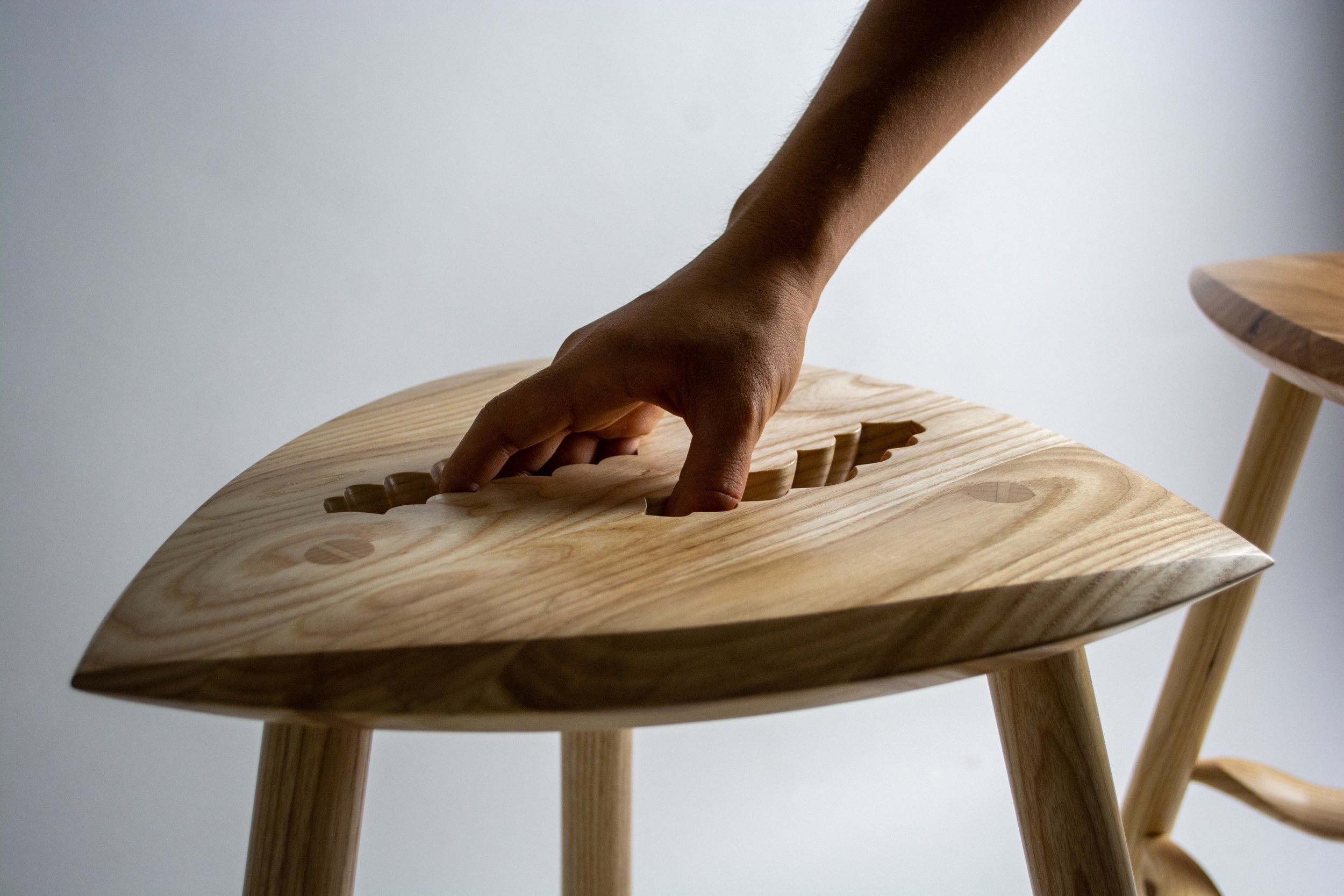
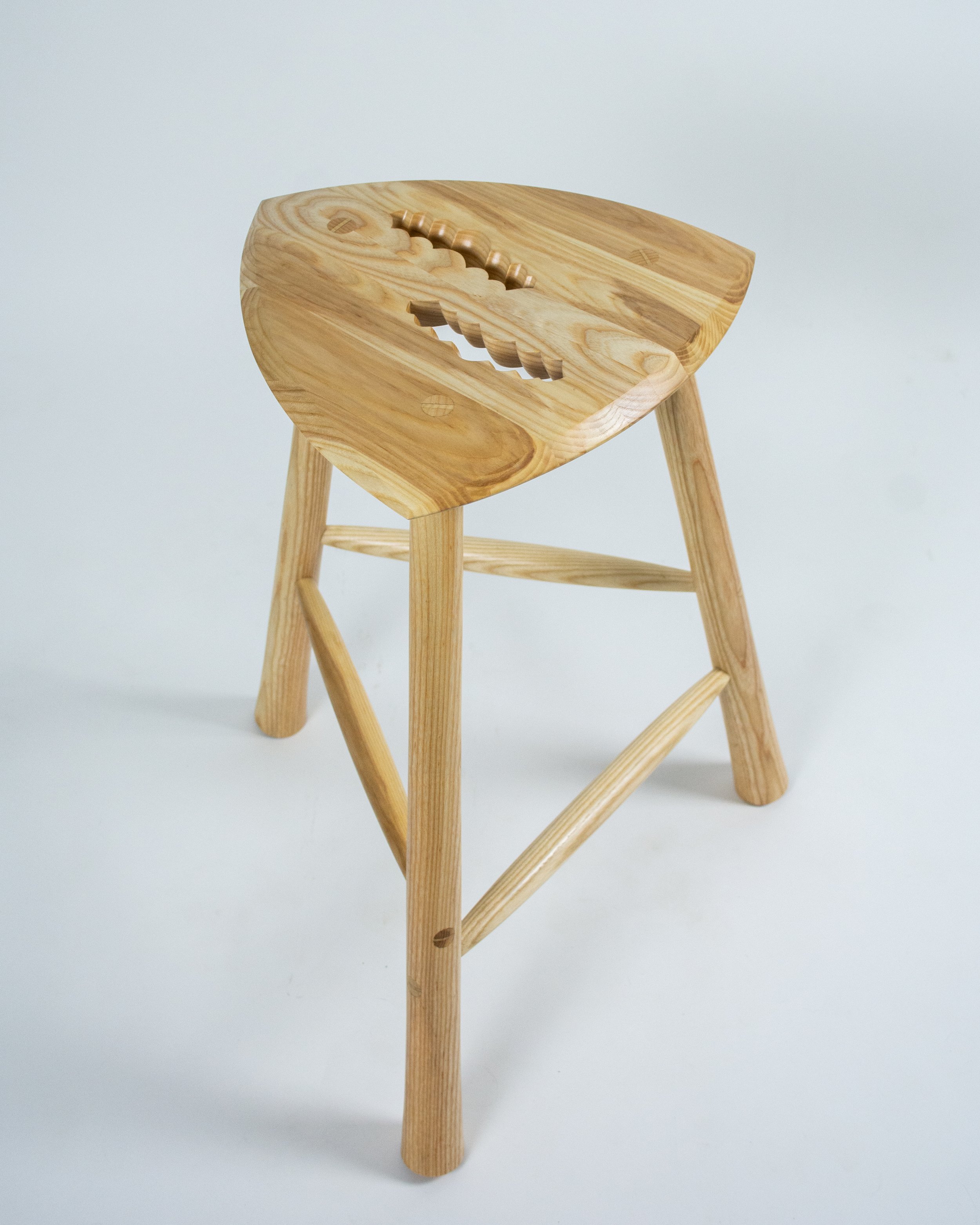
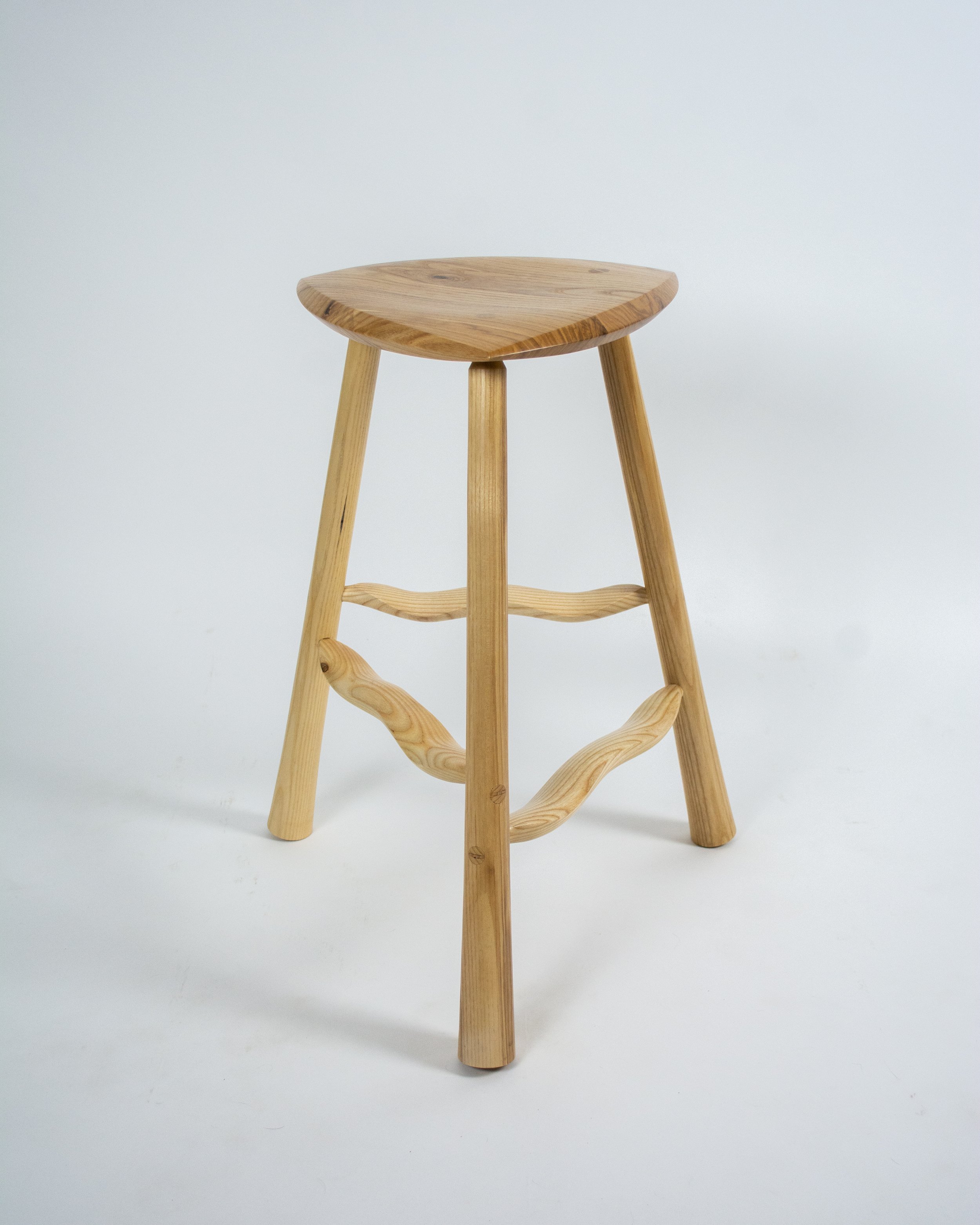
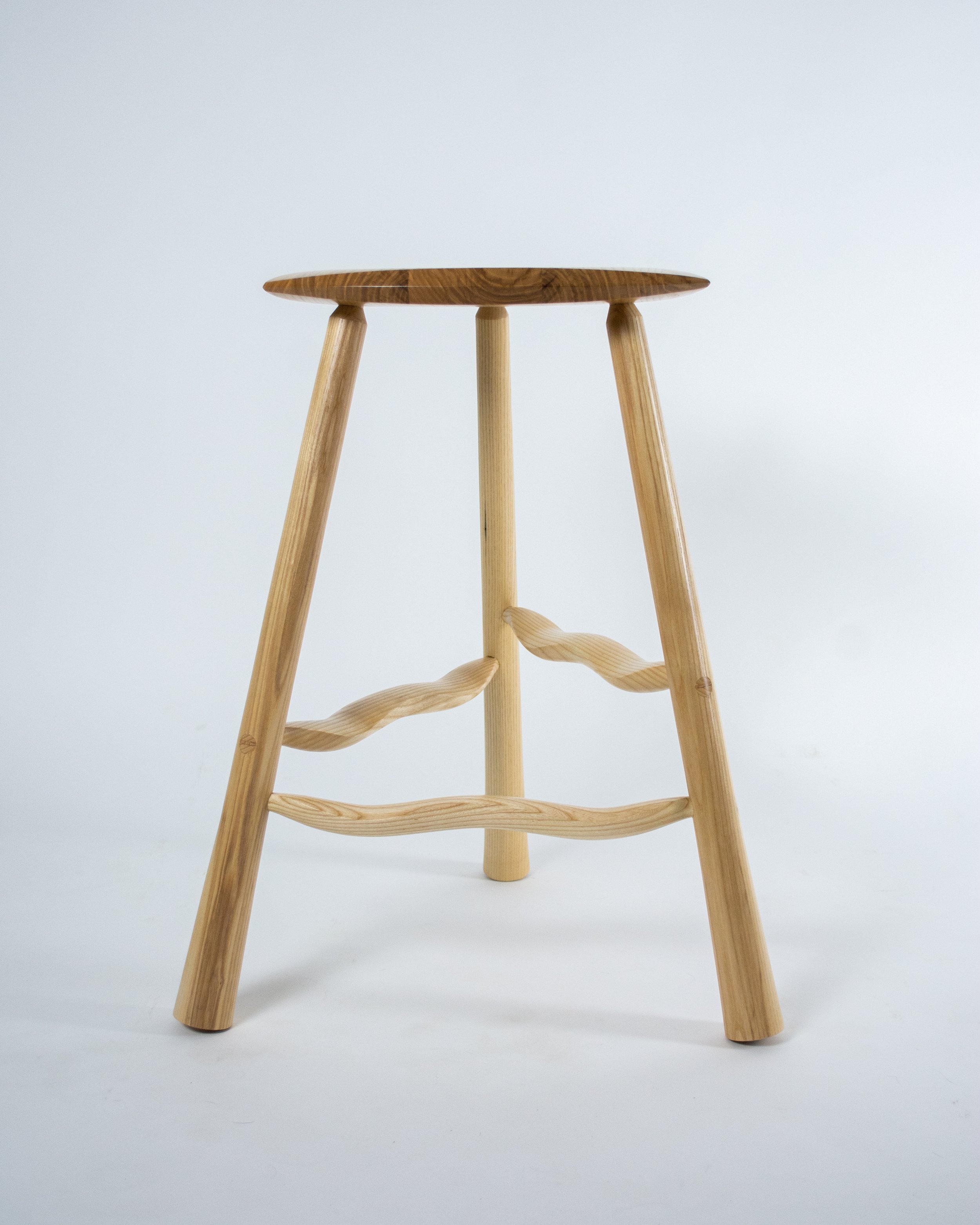
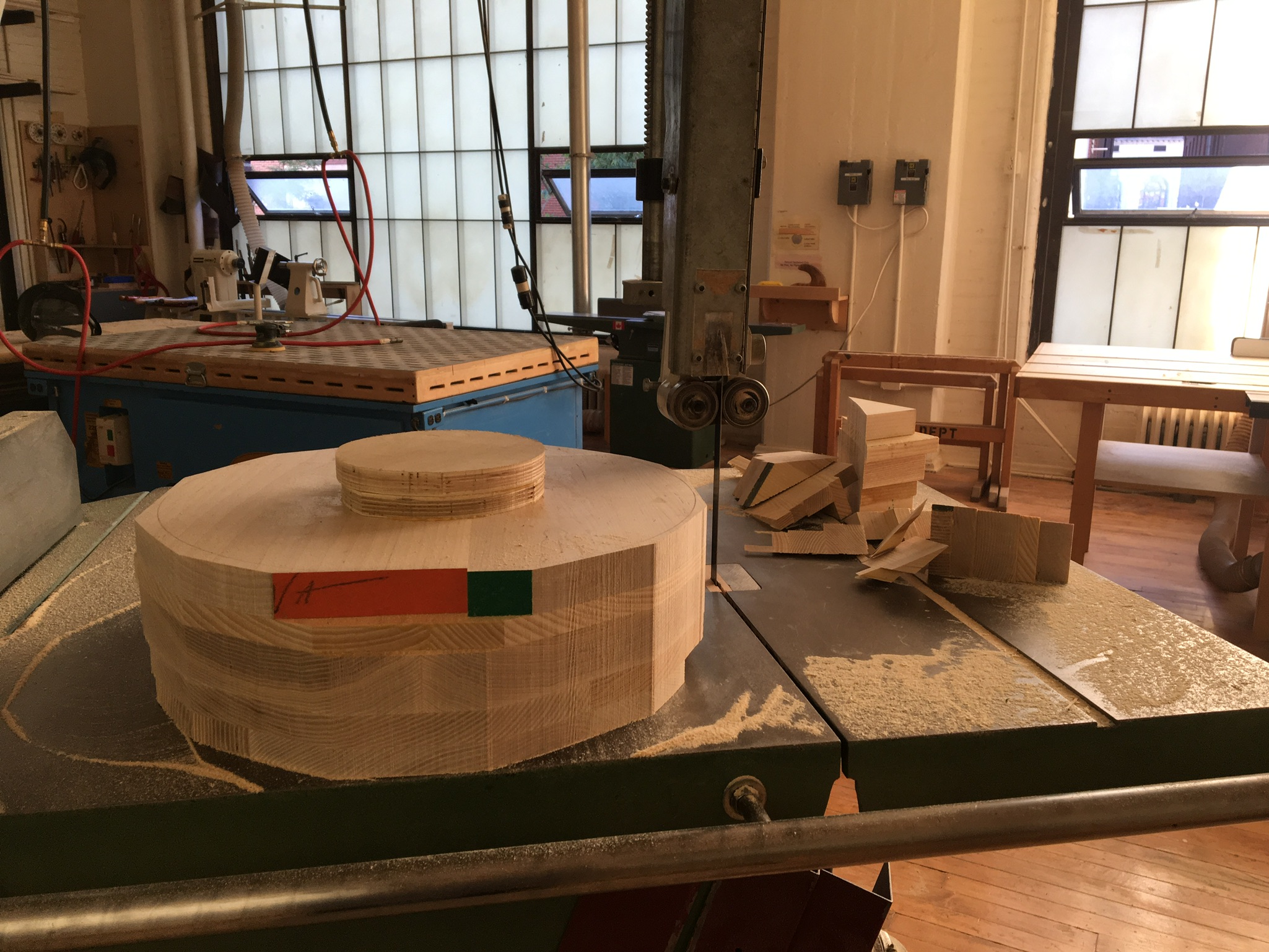
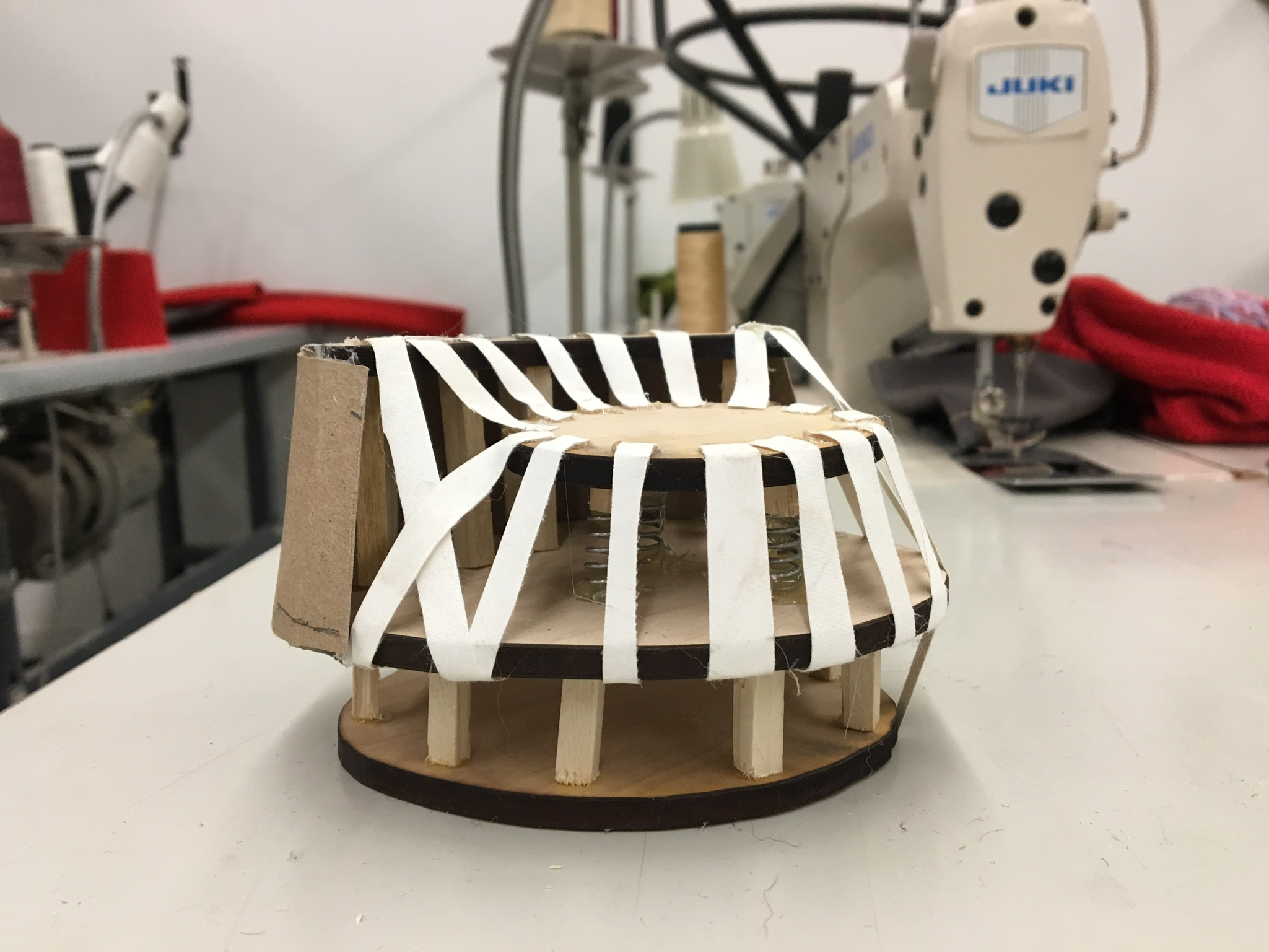
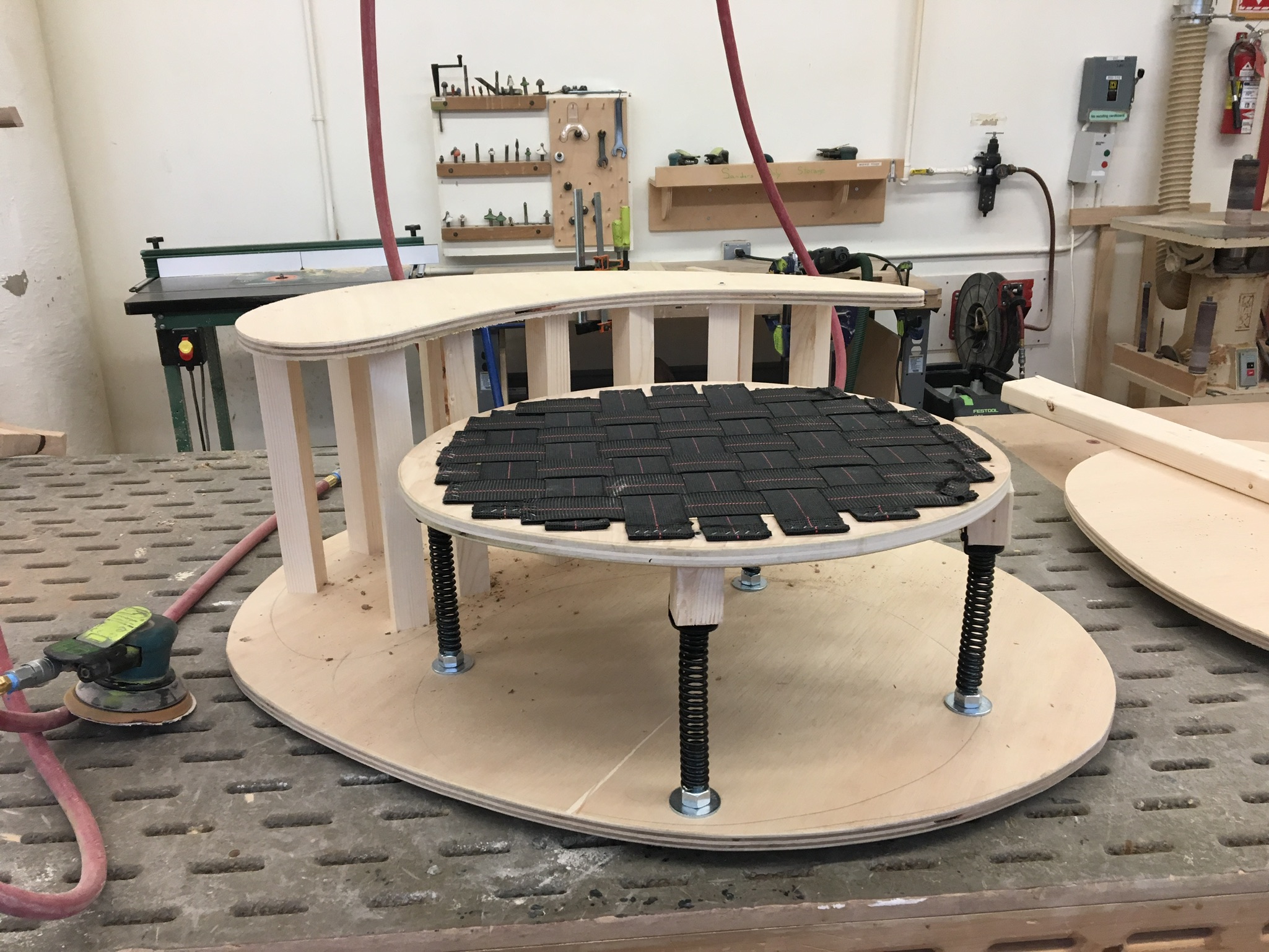
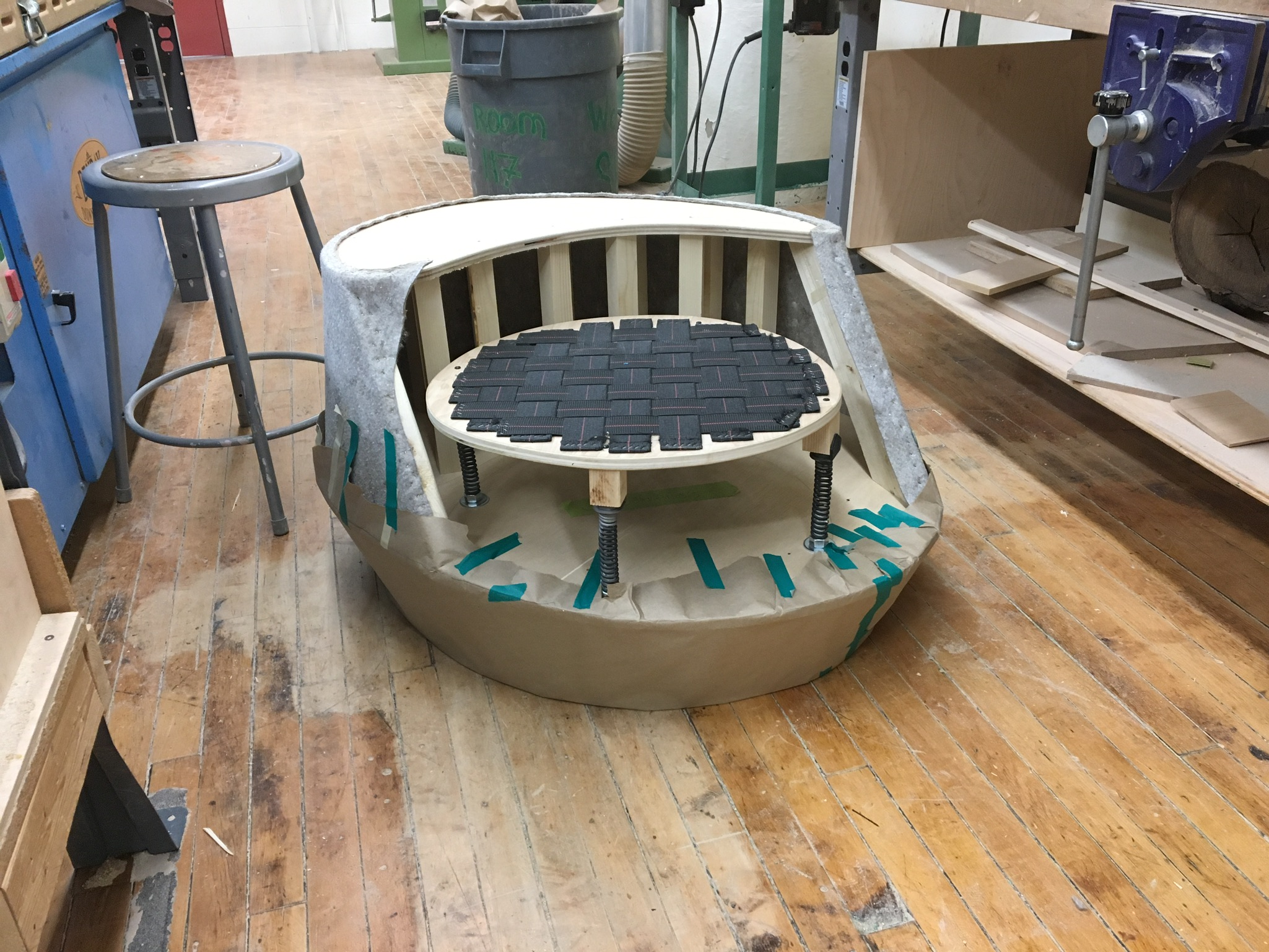
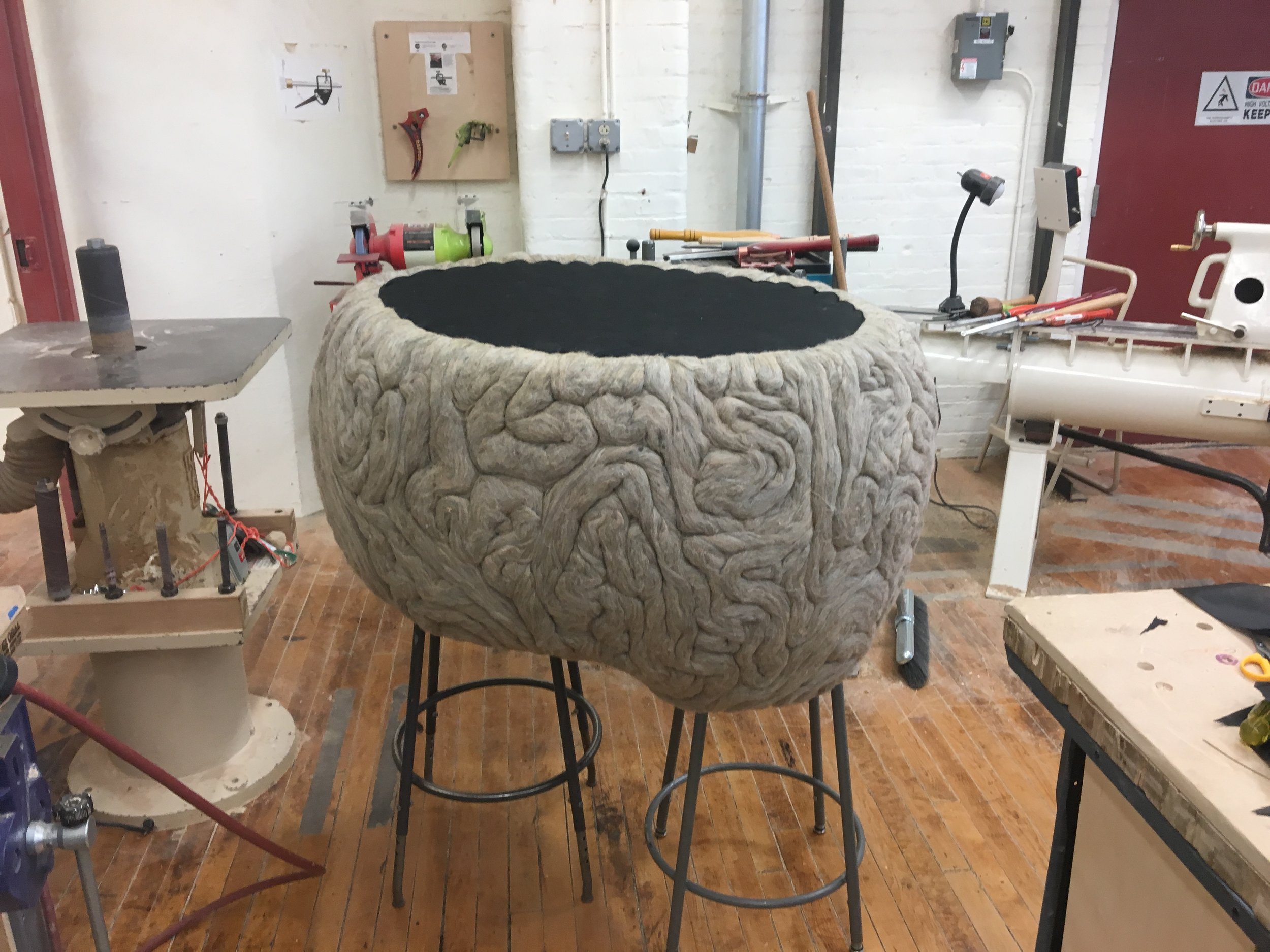
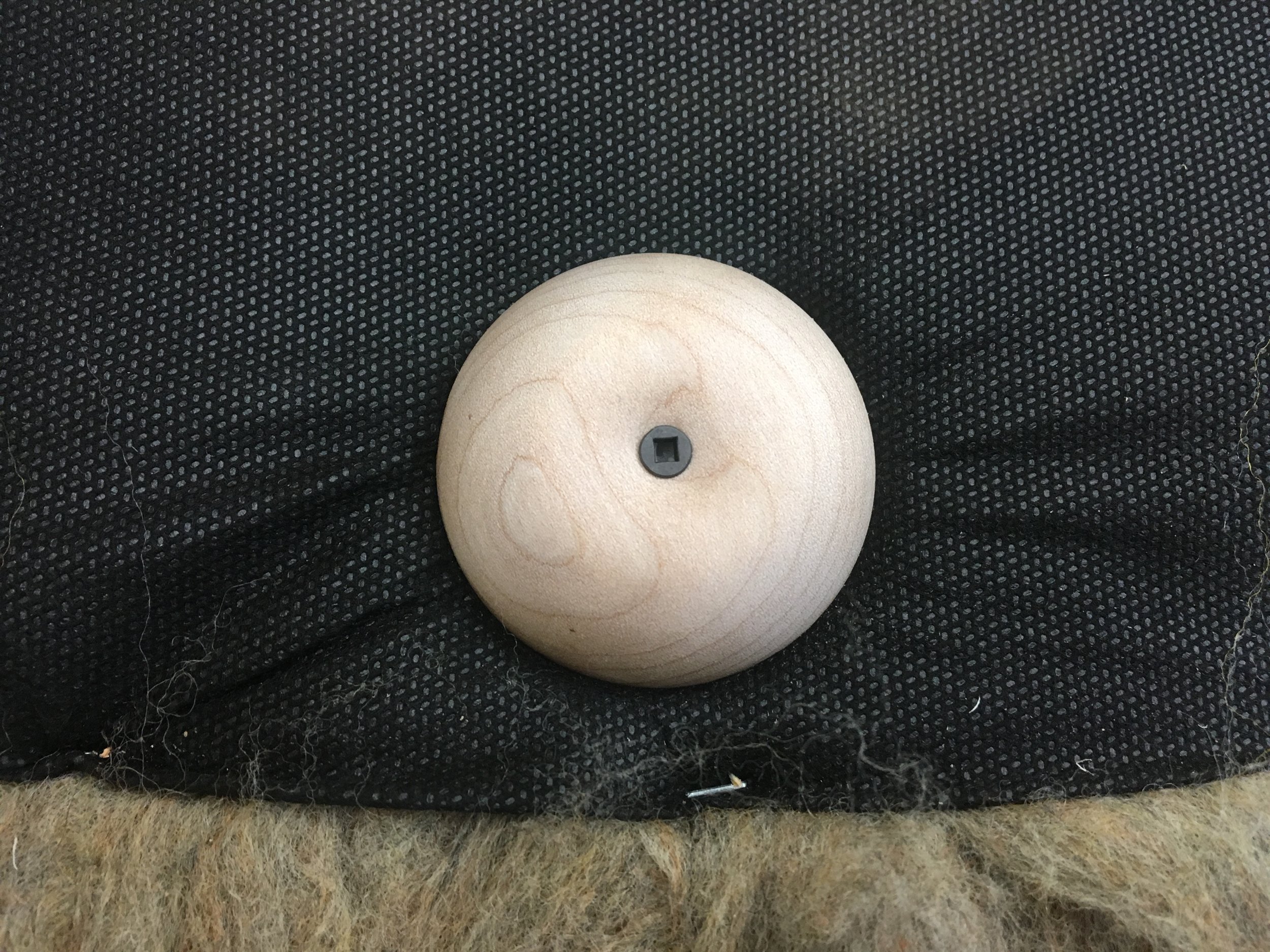
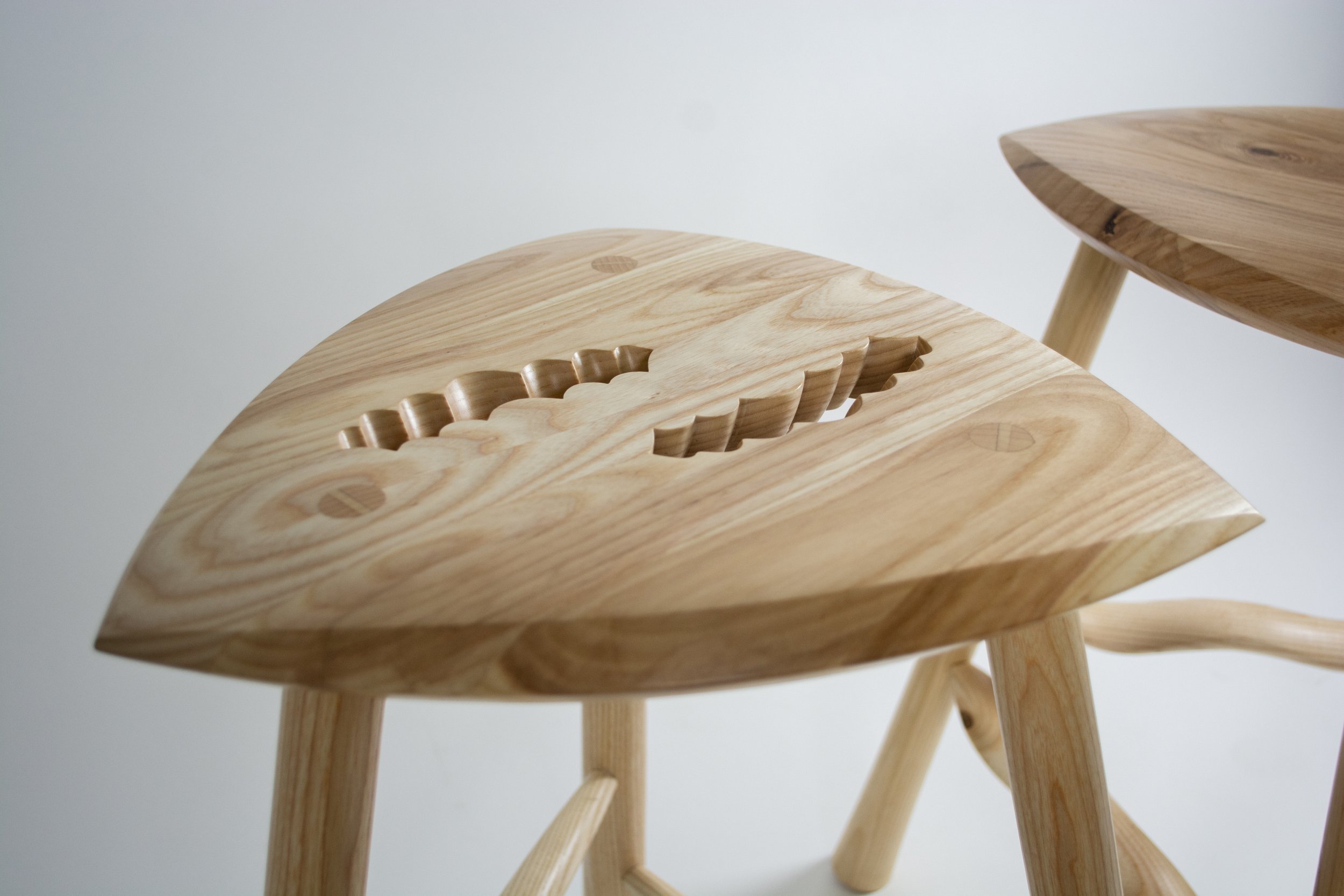
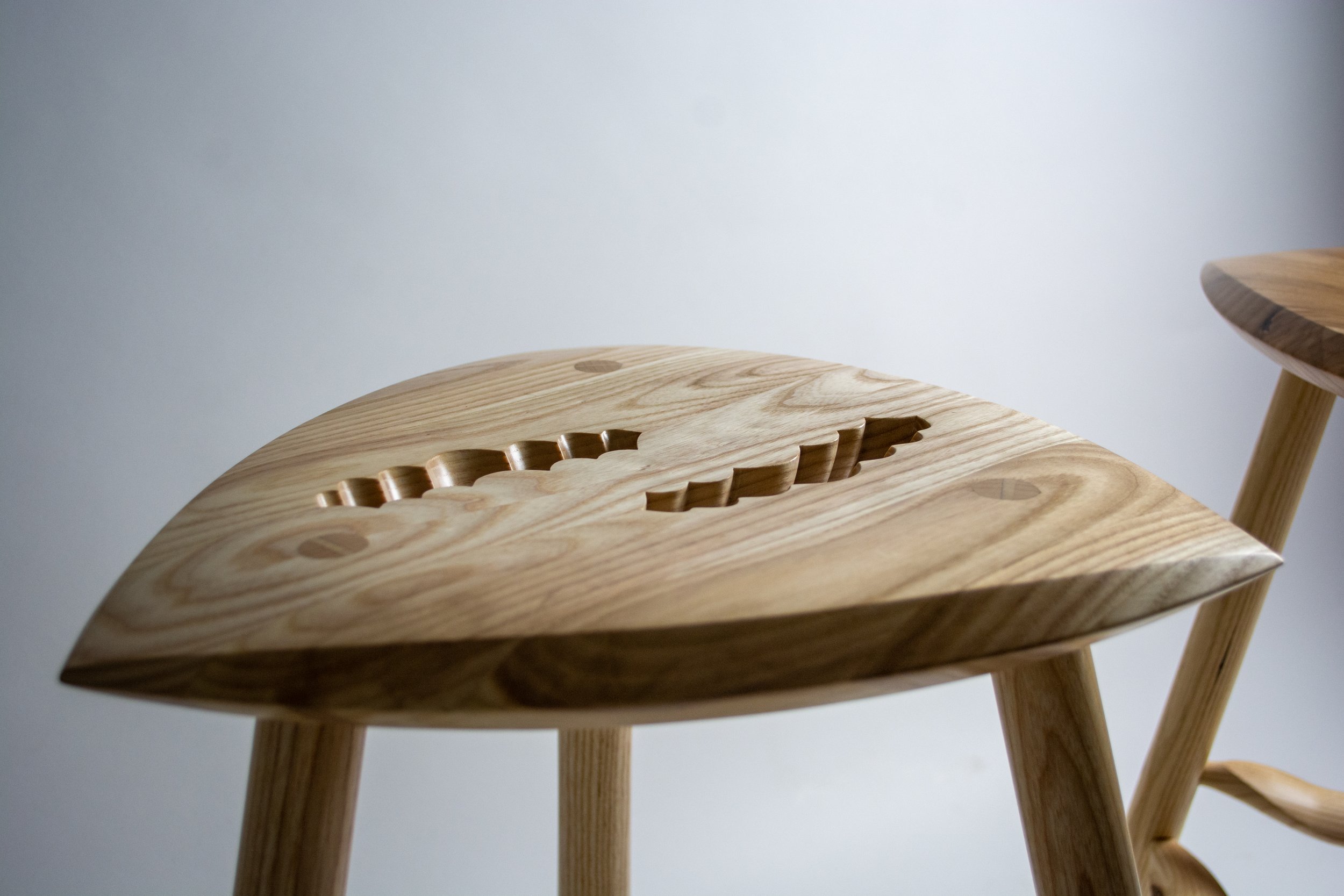
Begun as a scribble 4 or 5 years ago as an “easy” set of stools I could make “real quick” “on my own” one day while I was at work babysitting my CNC, watching it bulldoze, over and over again, doing exactly what I told it to…
things that are hard to carry 

There are things in my life that are incredibly hard to carry and yet I have to move them a few times a year. And so I think about them a lot, more than I want to. 

I once threw my back out for two weeks, taking the air conditioner out of the window. Twice a year I pick up this grime covered heavy thing that is balanced on top of a sharp plastic window edge and flimsy extra plastic wing, all the way outside a cramped window with potential victims on the street below, with its one entire side that you can’t touch without either bleeding or damaging the air conditioner, and its every other side with sharp parts and the solid road air particles of Aramingo Ave. Thankfully since the back incident, Brian deals with the abomination.

There’s the sofa with its beautiful curves on every surface and walls all the way down to the floor that has absolutely nothing to grab onto except the edge at the very bottom but is weighted so that it will fall backward, even with the effort of two people it asks you if you’re sure you’d rather not drag and push it and scratch the floor every bit of the way instead, or let it rip itself to shreds the way it wants to. Every time we mop the house we move this and have this conversation all over again. 

And then there are the things that are intentionally hard to move. Brian’s Bridgeport that had to be taken apart into three hundreds-of-pounds pieces and hoisted up ramps and steps by means of pulleys and rollers and mechanical advantage, the dishwashers, the stoves, the sewing machine table (though thankfully that one had a single handle!) All in common— the weight, the handholds, the relation/location to the body, the almost-intentional lack of care. I swear. As I sit here in my car (with my busted up back/dislocated shoulder from falling face first into Pennypack creek) I will cancel out as much of this ridiculous experience as I can by building as many things in this lifetime that are easy to carry. Against air conditioners. And against working out apparently.
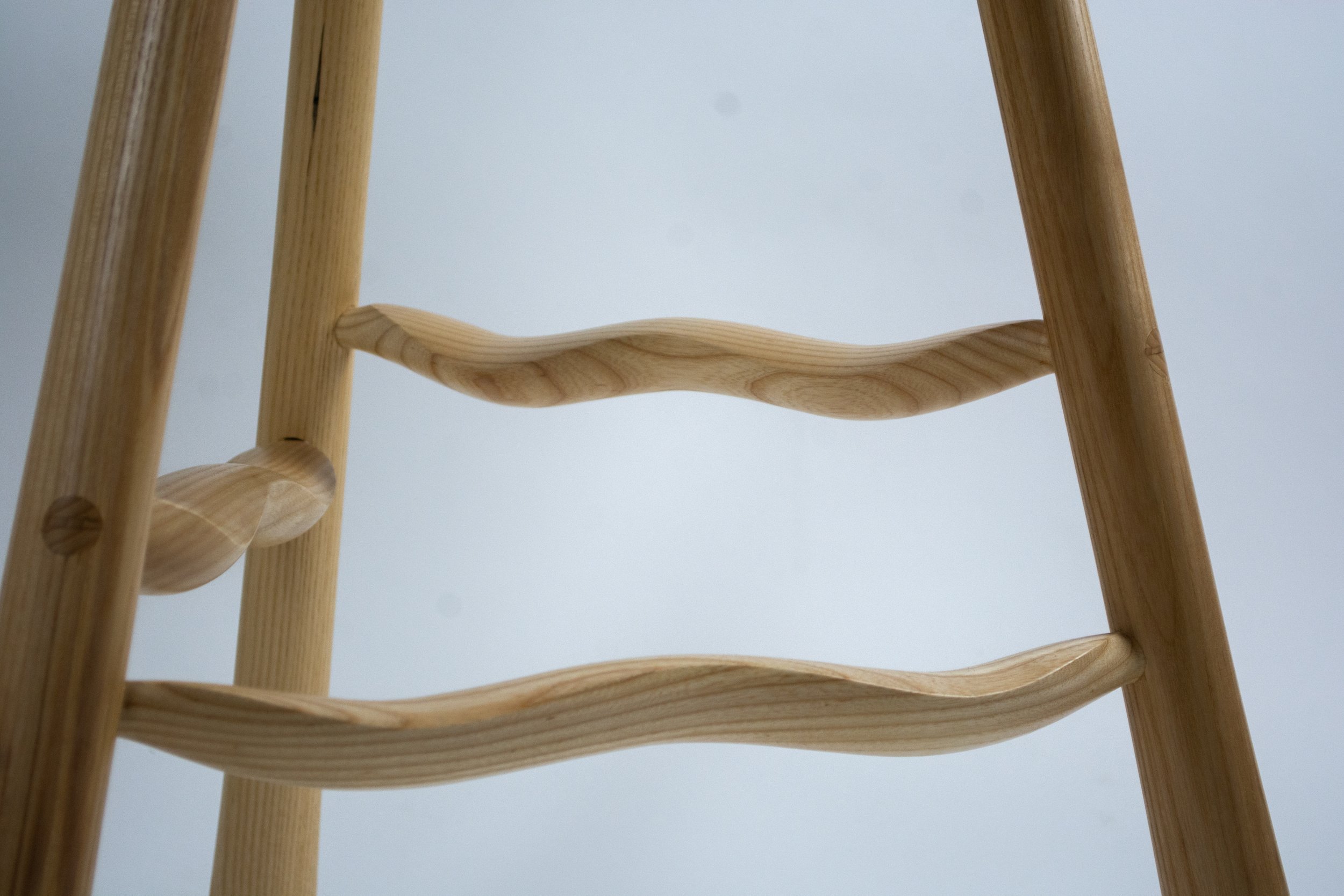
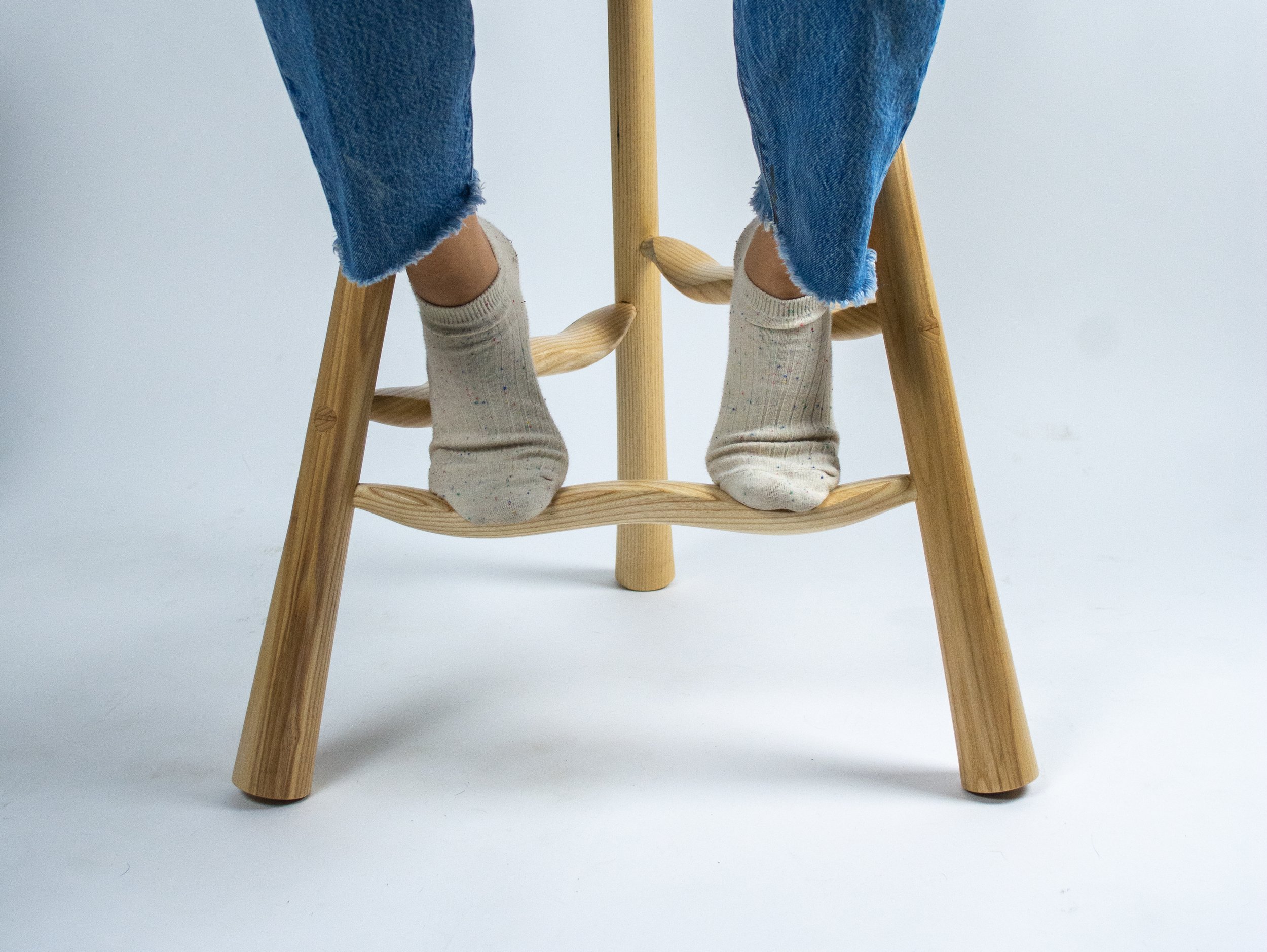
things that are hard to stand

I absolutely hate running, but I might hate standing in one place more. 

Cashiers are amazing, standing still in one place as the world passes them by. It’s got to be both physically and emotionally demanding. And if our jobs train us, I wonder if that means something in a cashier’s personal life— Are their lives at home as they are at the store, or do they go home and lash out? Run around in the woods with no people, no cash, and no bags?

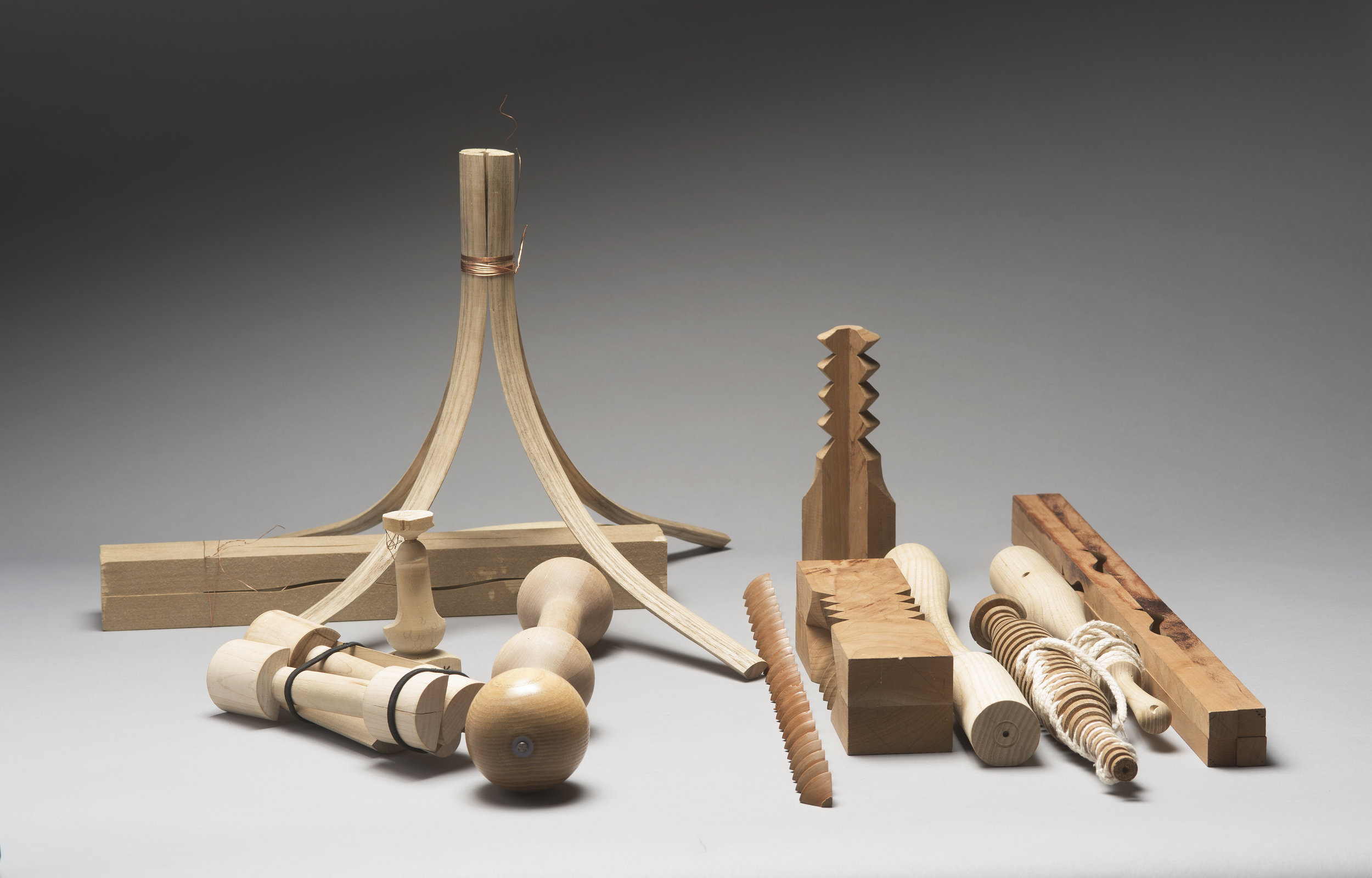
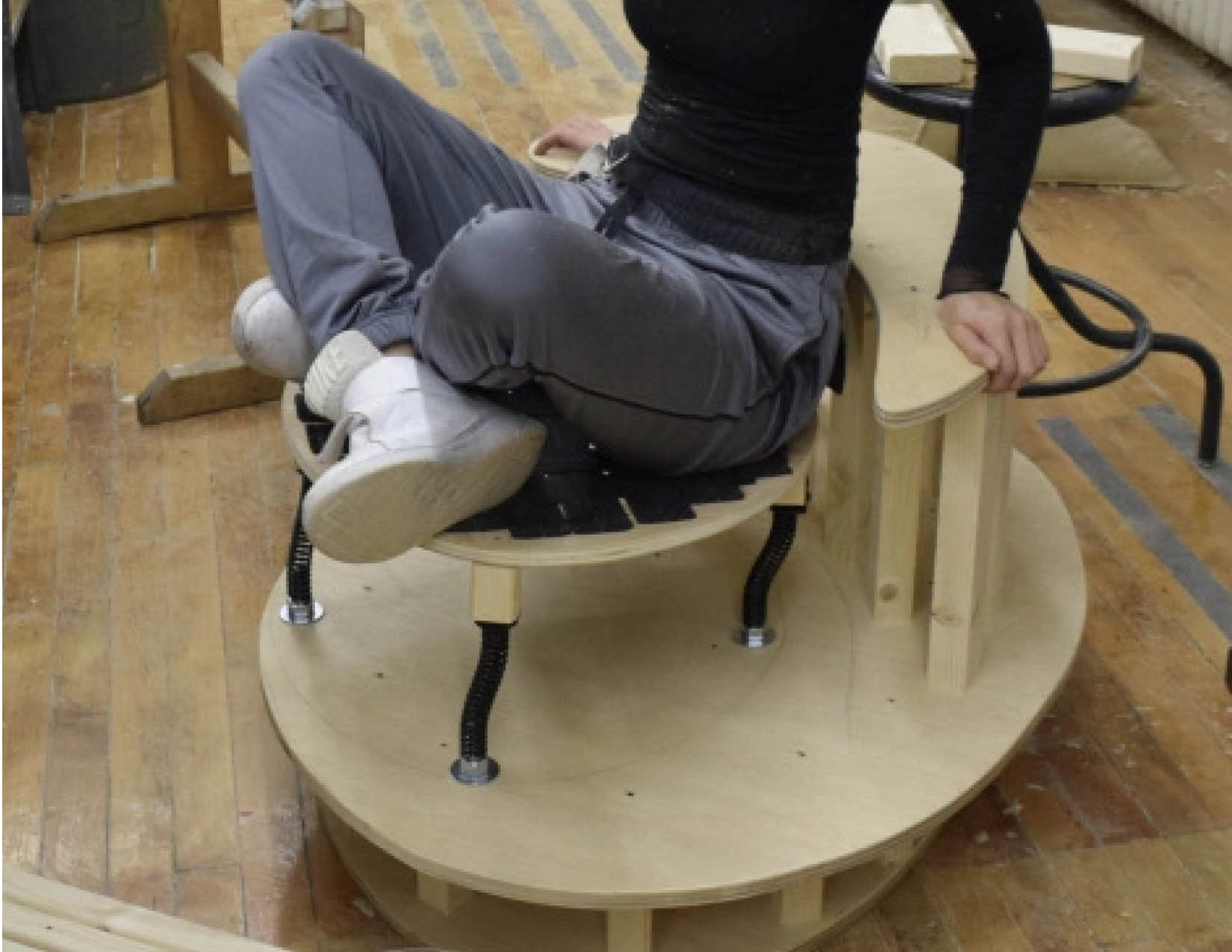
A long time ago, a design professor conjectured that I like turning and multi-directional (round) things because I don’t like telling people what to do and which way to go. I do think suggestion is more powerful than force. Comfortable different footrests is a small thing, but when it comes to furniture, a finite amount of choice to face every day affirms our sense of self and reinforces knowing who we are. 


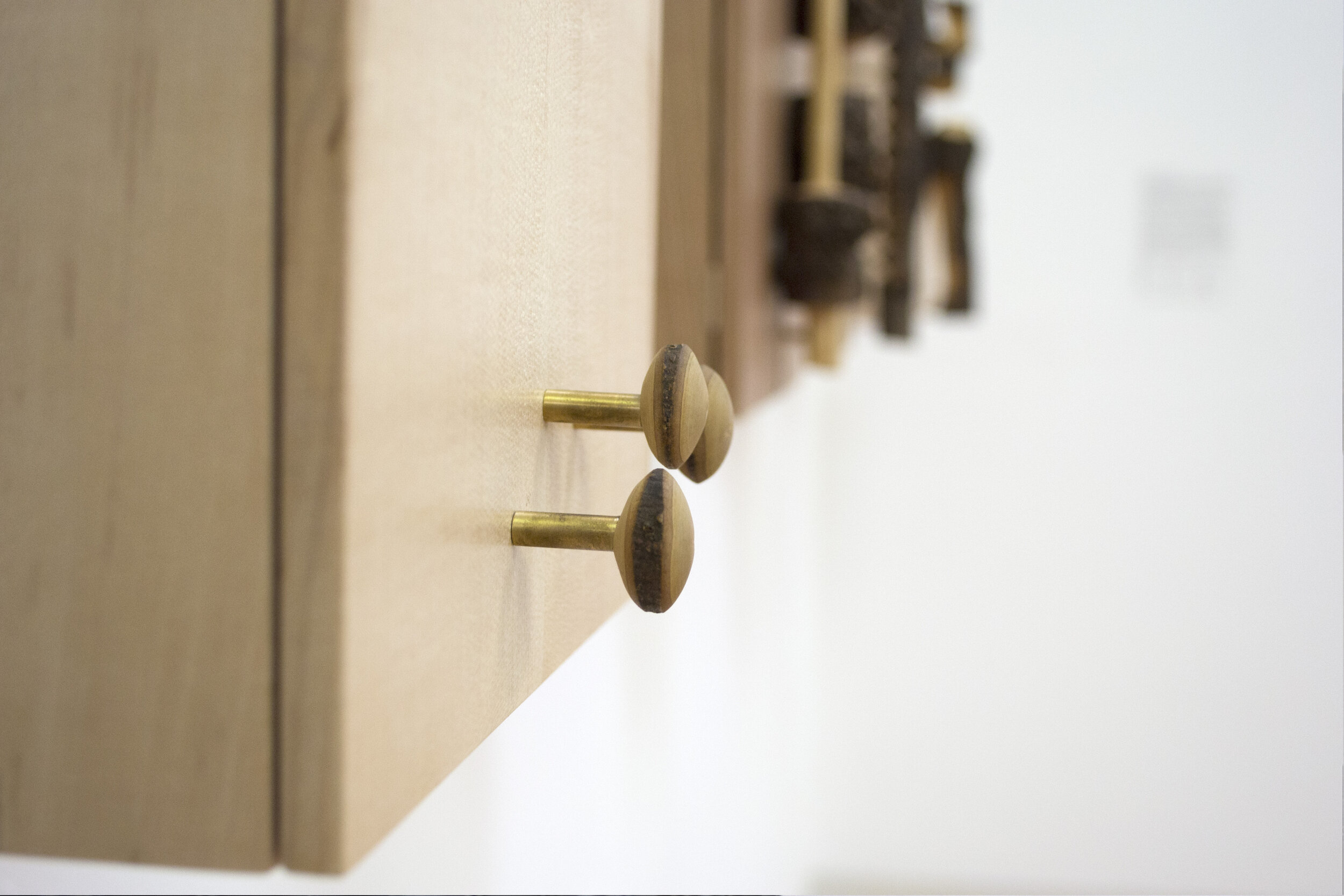
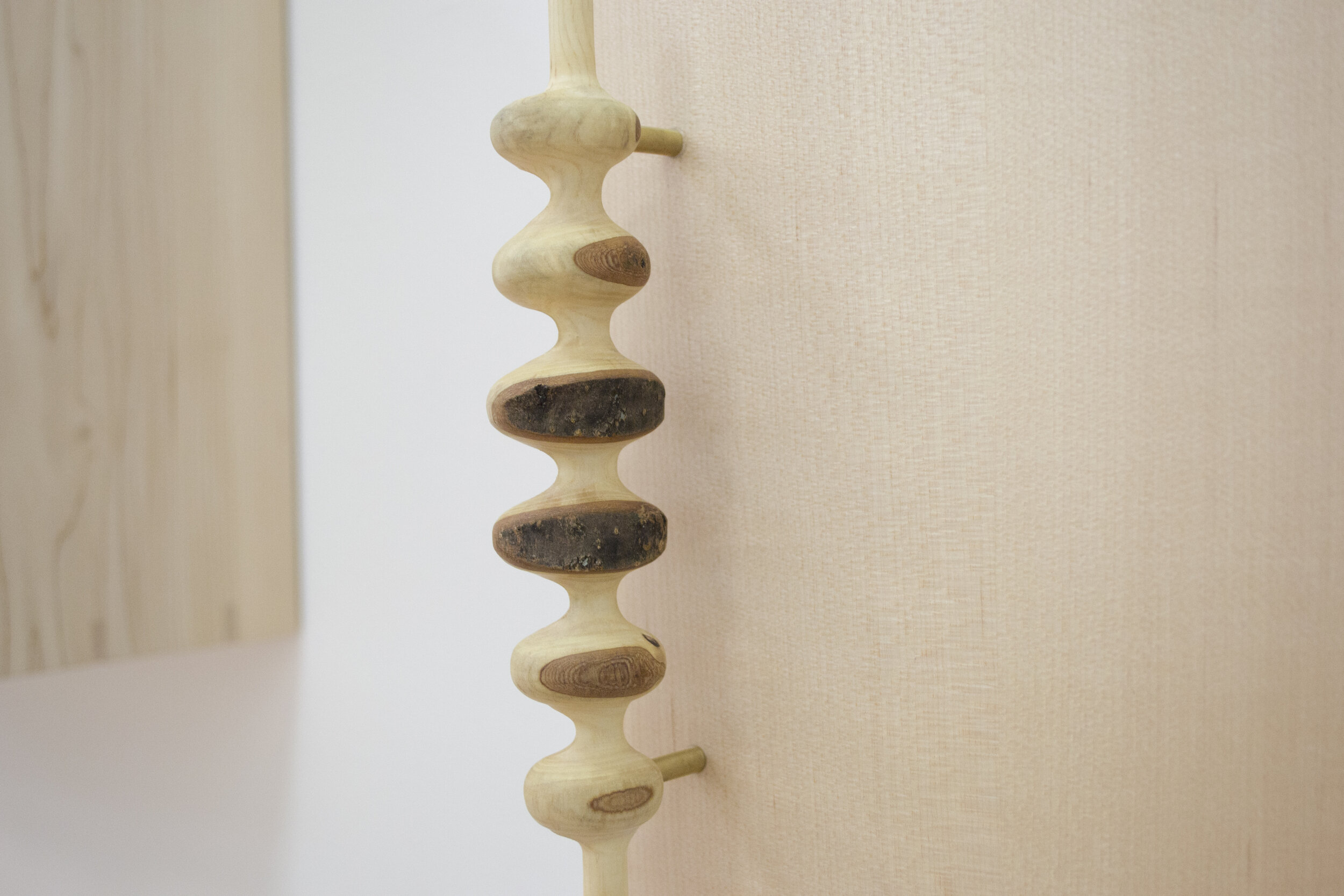
Hand and Feet stools Pair 3 bg60.jpg

Illumination


Collaboration with Diverse Streets Initiative for the show, “Safe Spaces & Solidarity” and continued use in the Initiative’s pop-up public shows on the streets of New York

Third-scale (1’:4”) models of historic NYC street lamps, re-outfitted into art holders.

Simply put, Art is the light that illuminates city streets & makes them safe spaces to live.

The initiative worked with resident New York artists and Open Streets NY to reclaim streets as art spaces during the pandemic by hosting pop-up art shows in residential neighborhoods. These shows feature performance & visual arts, much of which address independent perceptions of community.


Altar to the Twin Towers

for New York Titans and the 20th anniversary of our loss

As a native New Yorker, I have had quite a few tear welling, ear burning conversations about 9/11 throughout the years. Even more than before as we neared this 20th year milestone, and I wonder if I will continue to have these conversations every ten years until all of its witnesses pass away.

I will never forget the day, 10 years later, when the Wang family took a trip to the new memorial. It brought us back.

My mom, to witnessing something out of place, and then horrible that morning as her express bus crossed over the Queensboro bridge. My brother and I, to public school, wondering why all of our teachers were crying but none were speaking. My dad, a journalist, who cut some fruit for his kids that afternoon, turned on the TV, and sat them in front of it to gently explain what happened, why it was important, before going off to work to do the same thing for the Chinese-speaking of New York.

But my youngest brother, a millenium baby, walked through the museum and memorial that day with his head up. He was wide eyed, reverent, absorbing as much information as he could about something that was clearly important to everyone around him. Watching my brother walk around, with his huge eyes darting from thing to thing, ears pricked up hyper-alert, was when I realized that what the rest of us had lived through was history to him, and would be to everyone his age and beyond.

This Altar was a collaboration with the artist-architect Diego Salazar for his show celebrating New York City with his Mexican heritage. The “ofrenda” or traditional Mexican altar celebrates the life of loved ones and was originally shown at Maria Hernandez Park on el Dia de los Muertos, 2021.

The drawing framed is one of a triptych presenting the past, fall, and present-future of the towers. The picture framed is of the happy past, framed by clouds that one can “walk into” at any time.

For more on the process and project, and the beautifully shot “Making of a Frame” video about the project, see the Rombo Art platform here.


IMG_0726 bg3.jpg
 

Holding on in the Aftermath


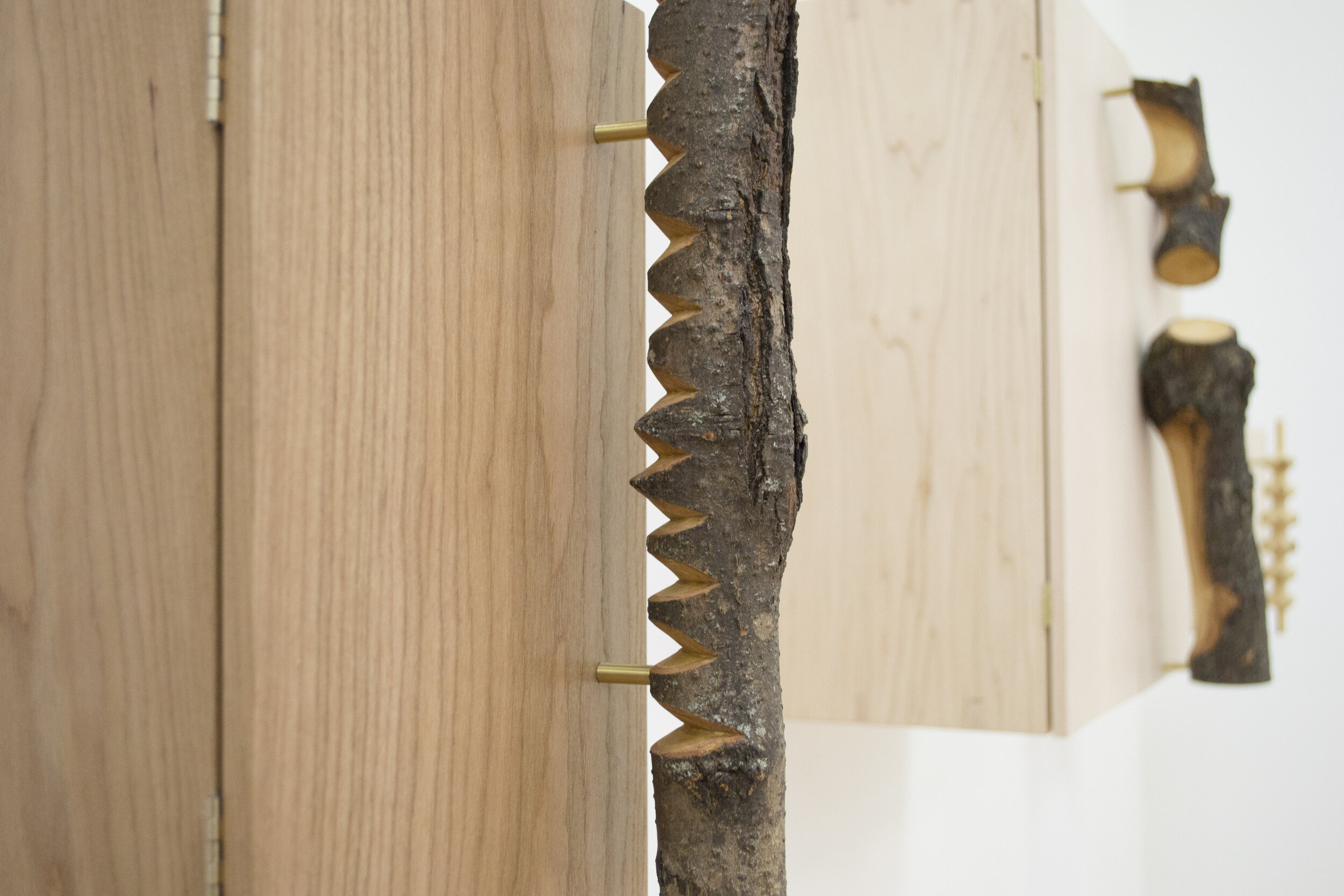
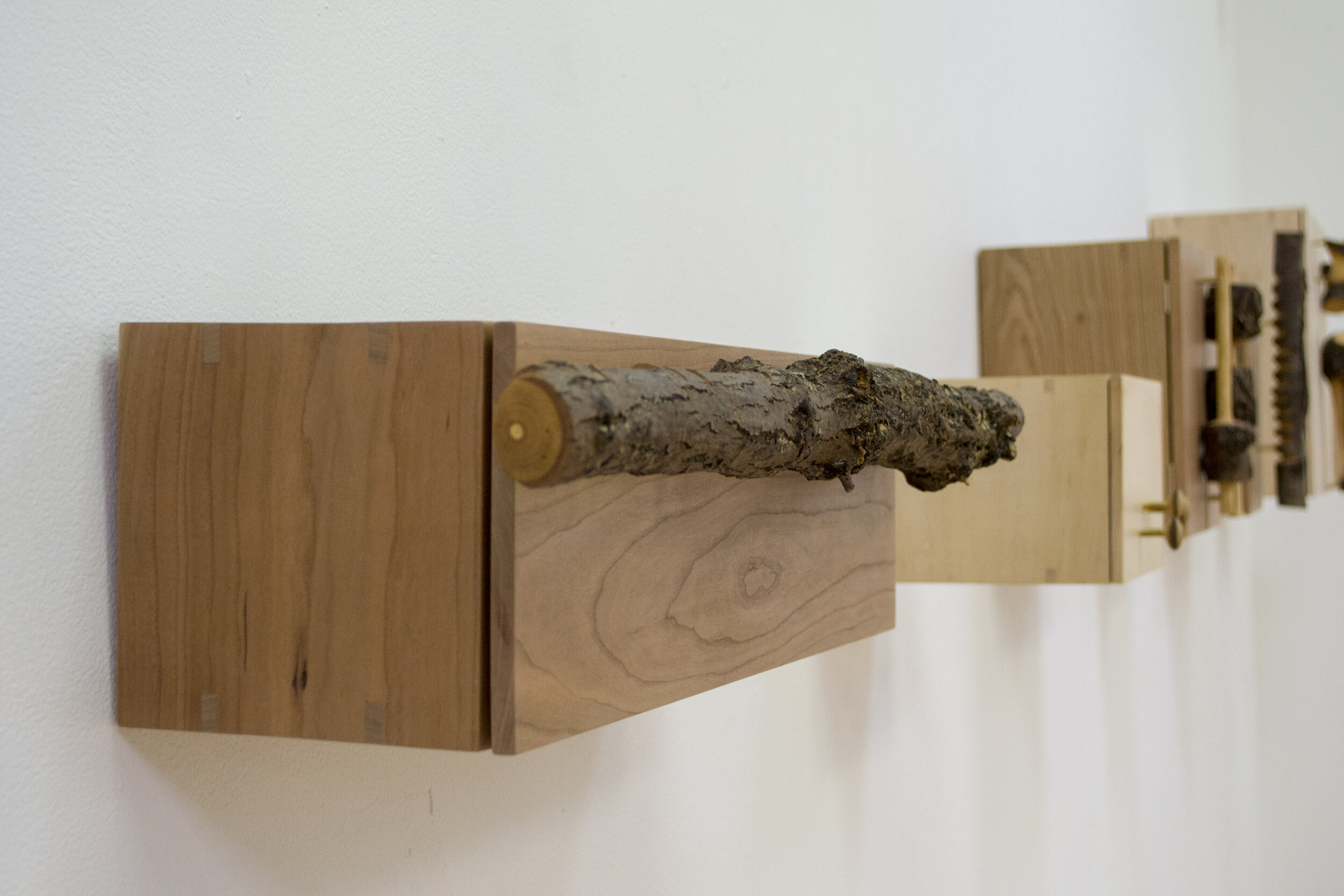
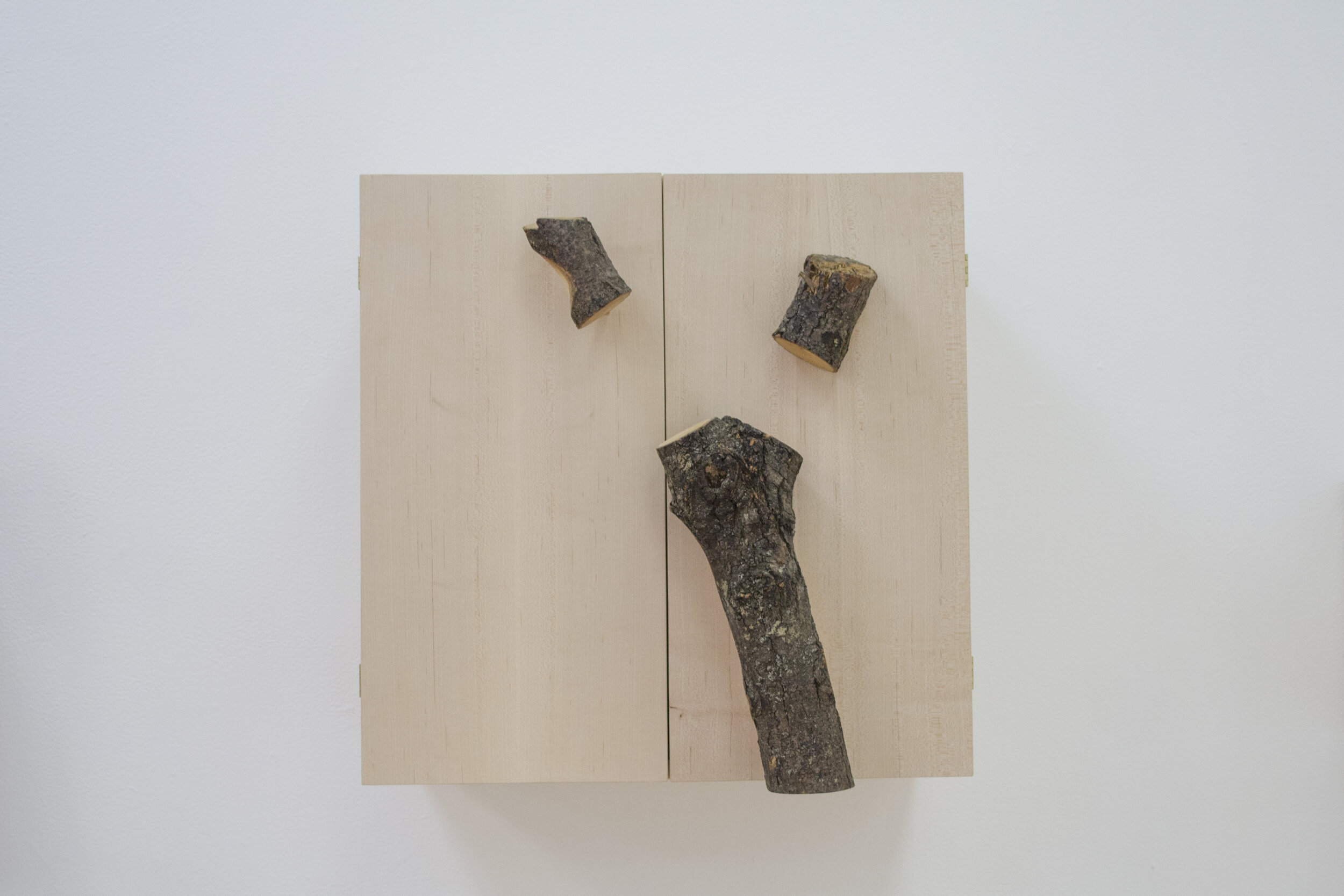
With the Schuylkill Center for Environmental Education, “ We all Fall Down: Artists Respond to the Emerald Ash Borer”

The Emerald Ash Borer (EAB) is an invasive beetle native to China, first noticed in the United States in 2002. In the 18 years since, it has distinguished itself with its 99% kill rate, spread to 37 states, and is predicted to make the ash tree effectively extinct in America in 20 years. That’s 9 billion ash trees.

Where I live, Philadelphia, it will wipe out all of ours within the next 5-10 years.

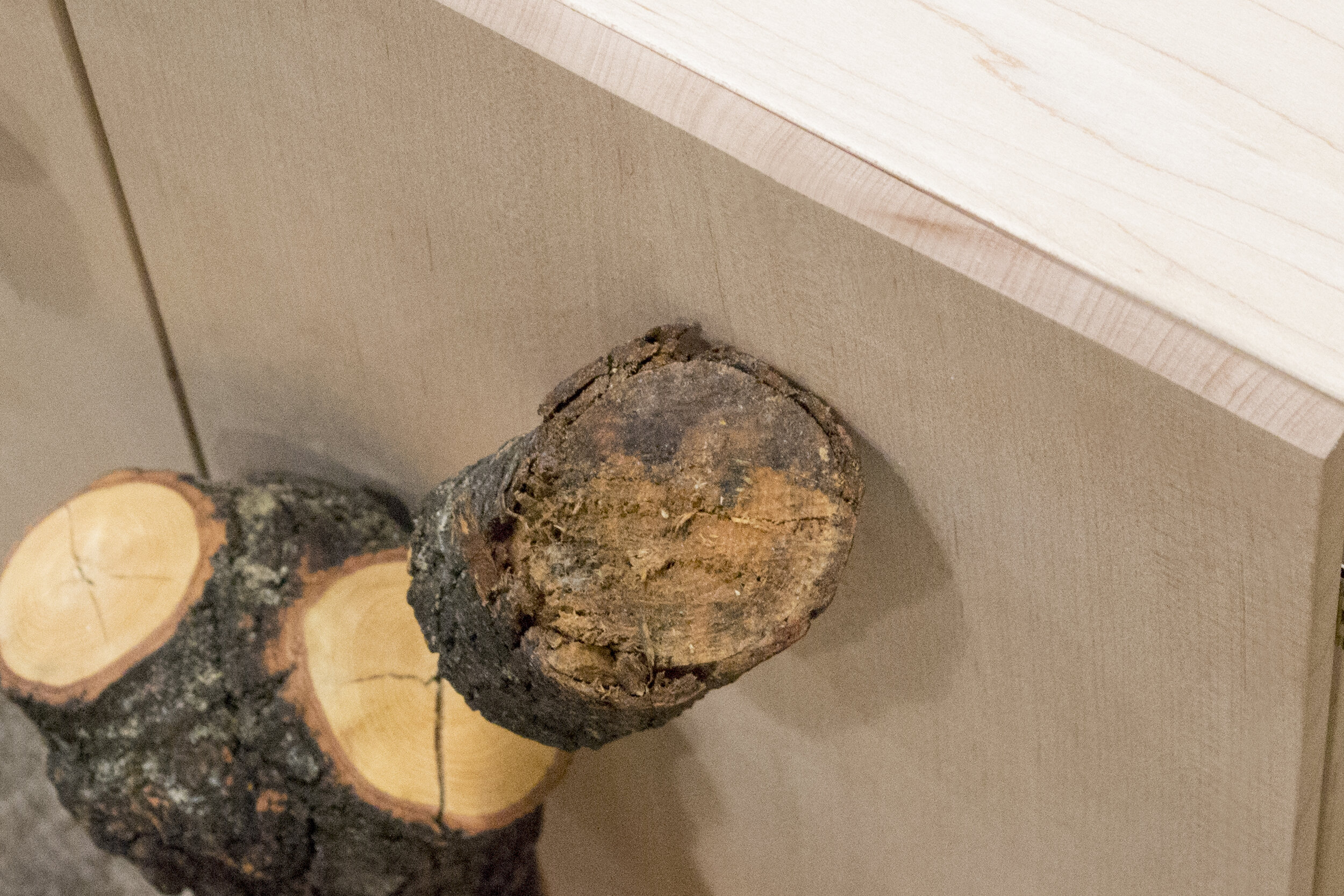
There’s no “cure” in sight. All we can do is take action to stall the spread and hope that someone somewhere can find a viable solution before there’s nothing left to save. Part of that stalling effort involves felling living trees, healthy or infected, in infested areas. The Schuylkill Center has been methodically taking part in this, and when I went to collect materials, I was treated to the most visceral representative of the epidemic itself, a fresh cut dying tree, steps away from the Center’s back door. It was cut down the day before I arrived.

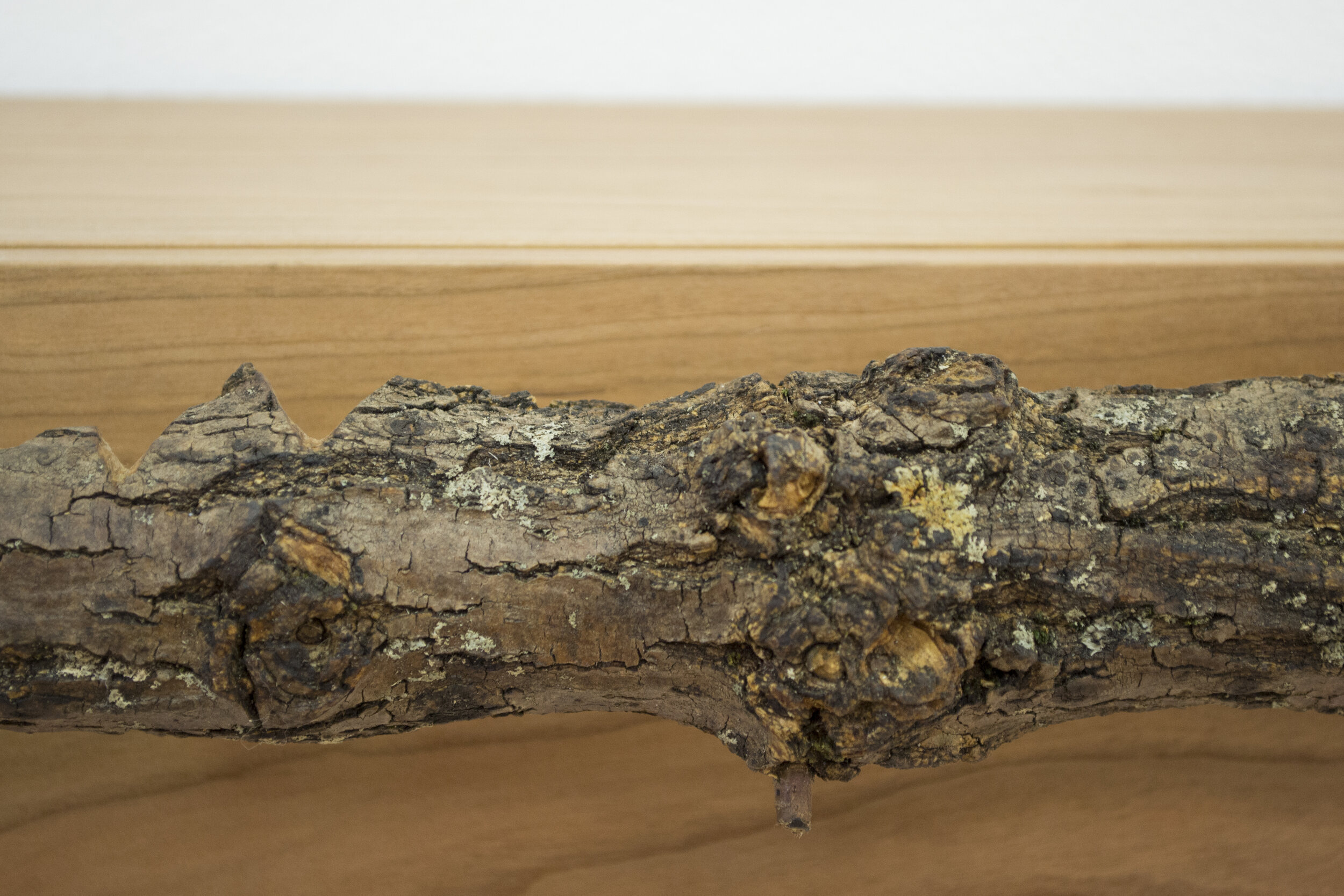
This tree was cut down in a moment where it was trying to preserve itself, making decisions about what parts of itself to keep or not to keep, pour energy into healing, or not to heal. It is a beautiful, sad portrait of a tree’s fight for its life.

I miss my home tree. For the 20 years that I lived there, this massive tree was as much a part of my home as the house itself. The way my parents tell it, it was a big part of why we moved here. My brother and I jumped out of the car on open house day, and played around its root, barely going inside. We didn’t stop until we were well into our teens. In the mean time, my dog did her business at its base every day for 13 years straight.

When the Emerald Ash Borer wore it down, and its branches were barren into summer, the city came, turned every bit of tree aboveground to chips, dug out the stump, the roots, and even flattened the sidewalk where the roots had taken over and pushed it up, slowly over decades. My parents called me. I was horrified. My parents passed my beg along, to please have some of the wood to remember it by— Their daughter was a woodturner and woodworker. But they refused.

When I visit home now, it’s like it was never there. You’d never know. And maybe this is how it would be across the continent in 20 years.

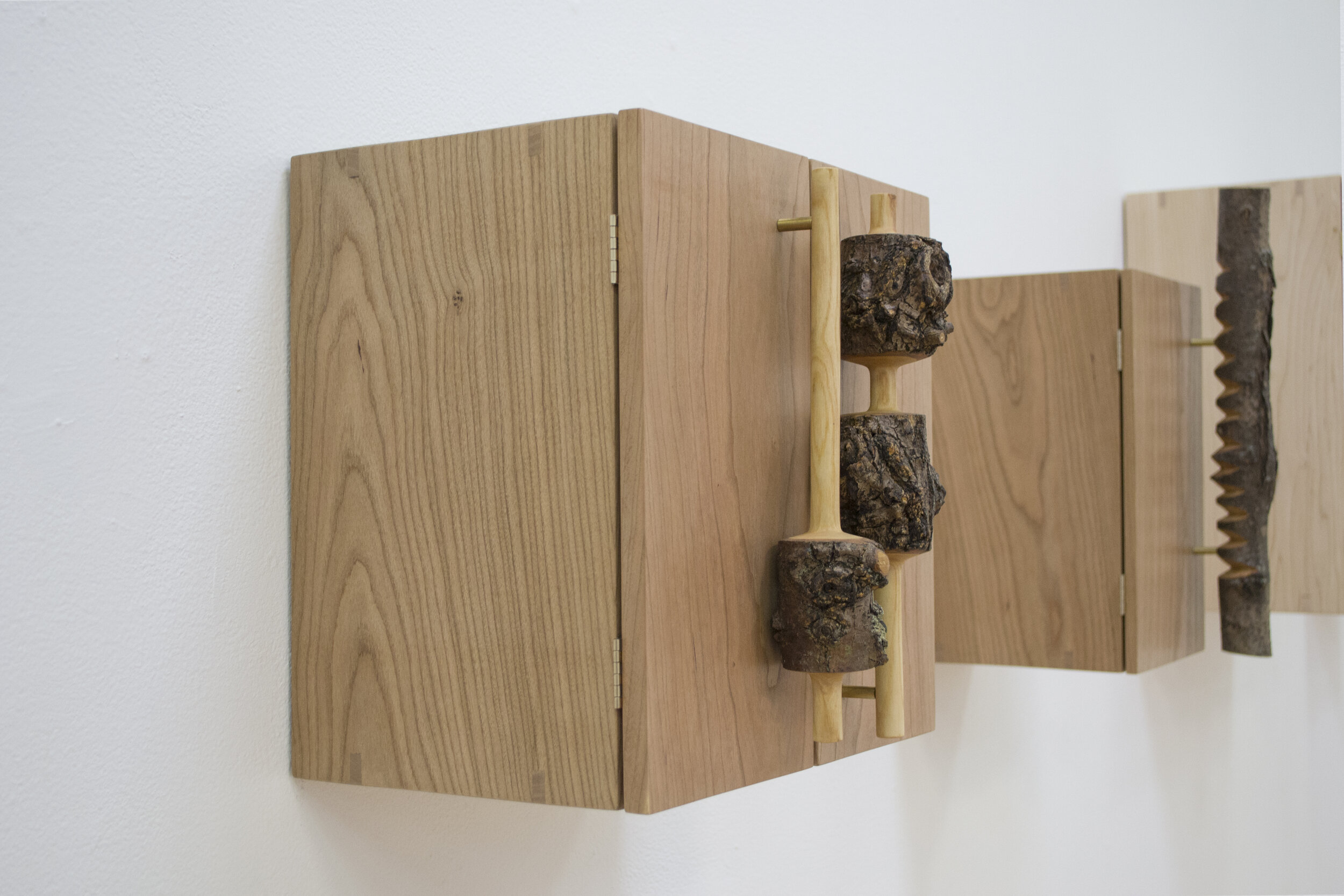
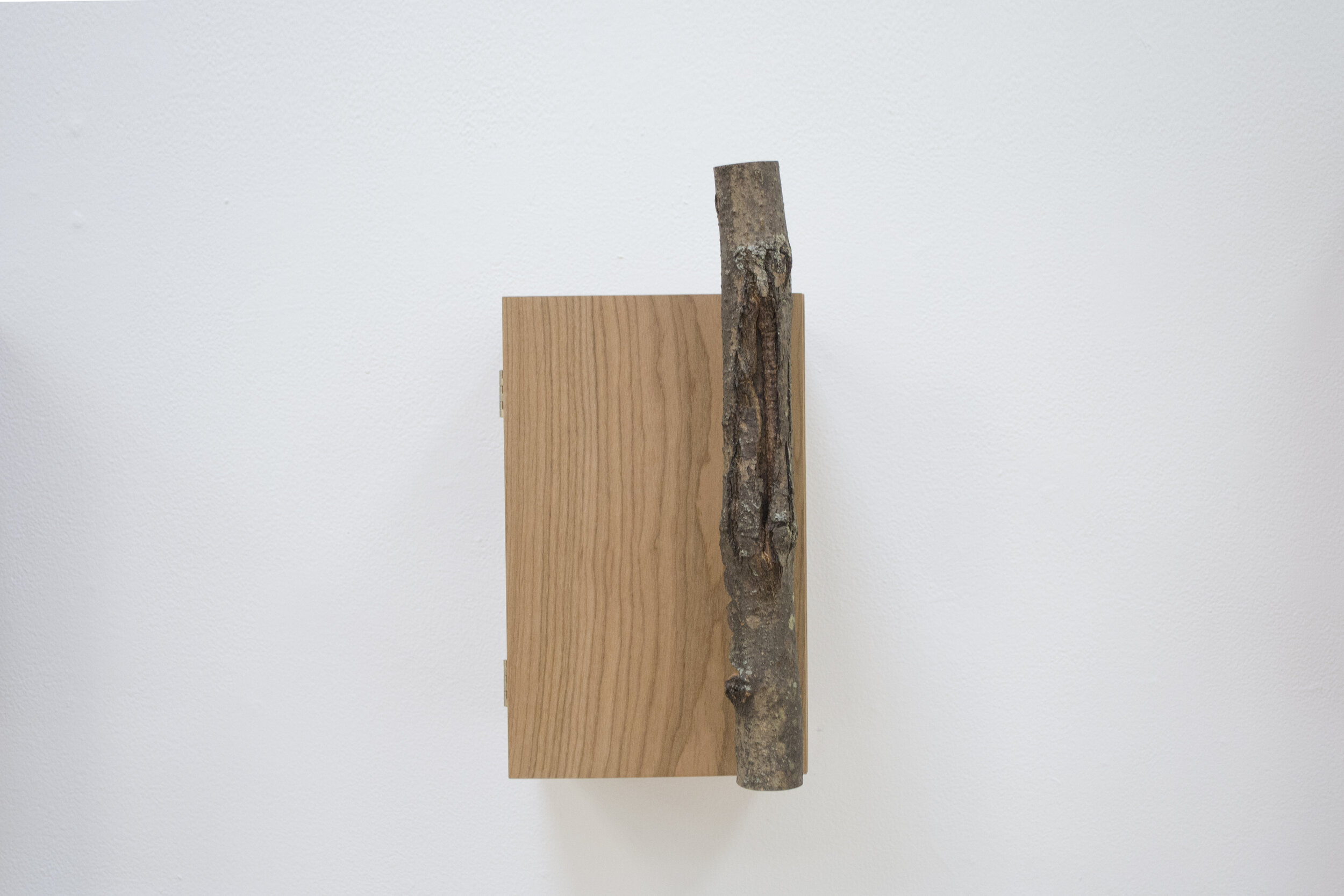
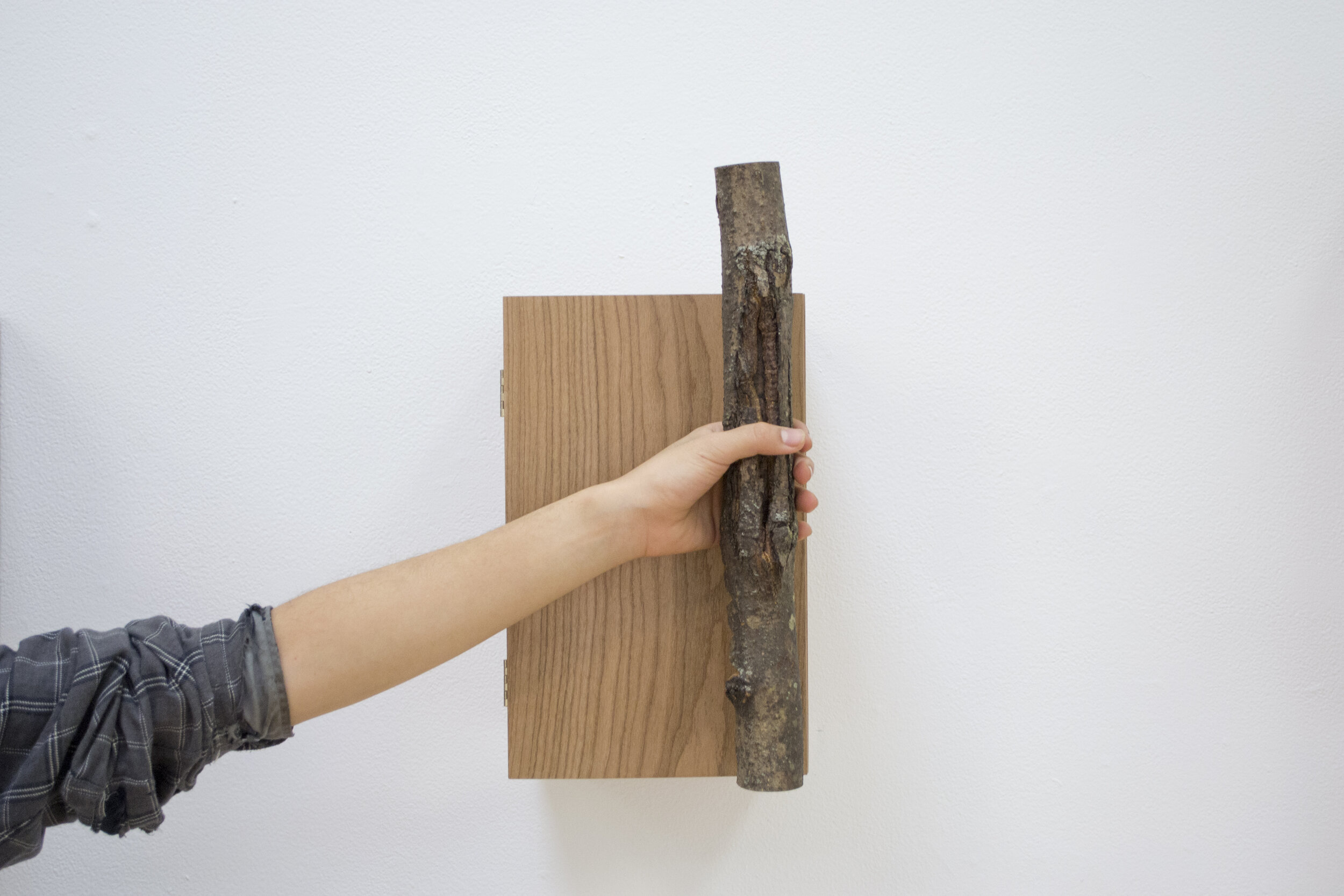
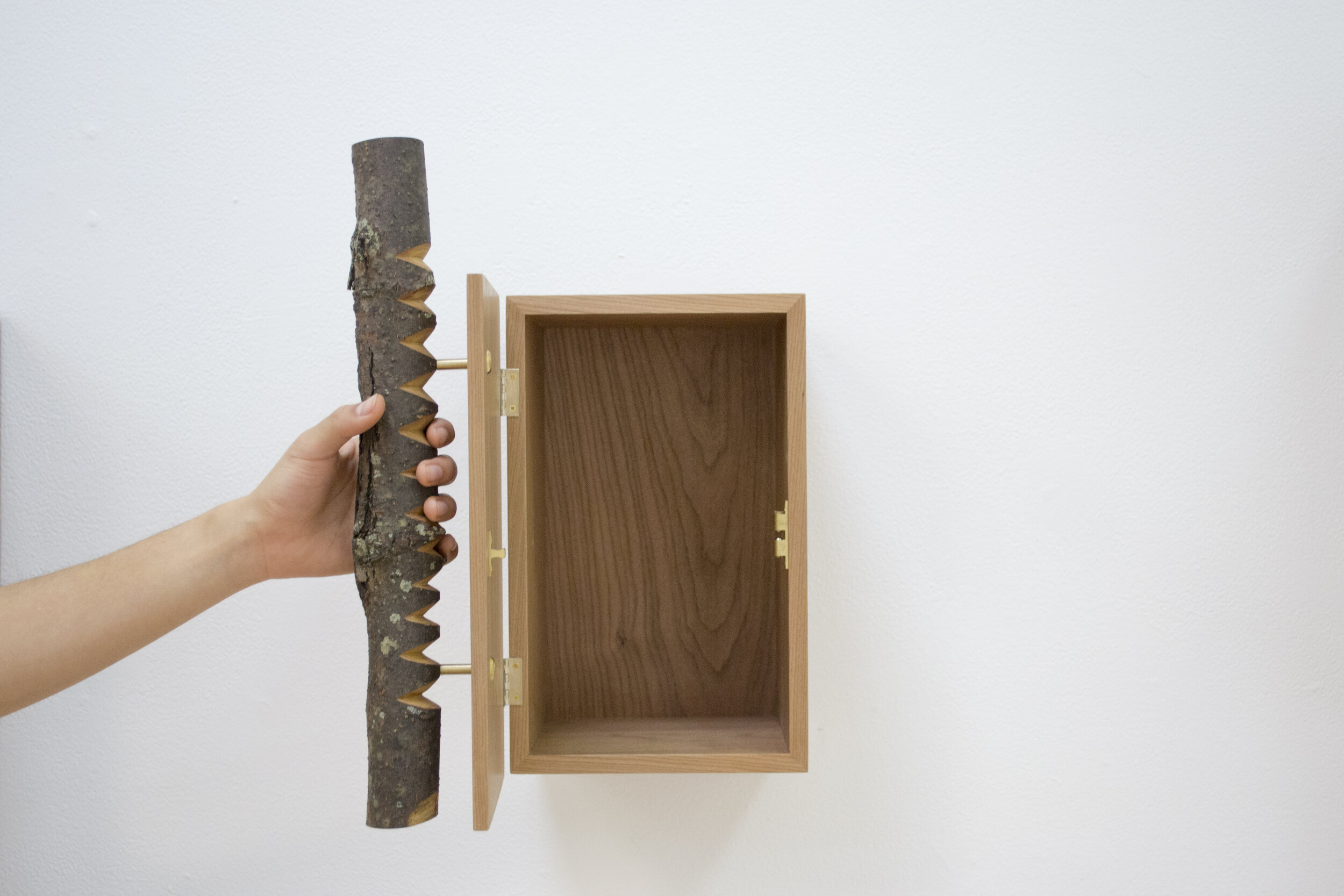
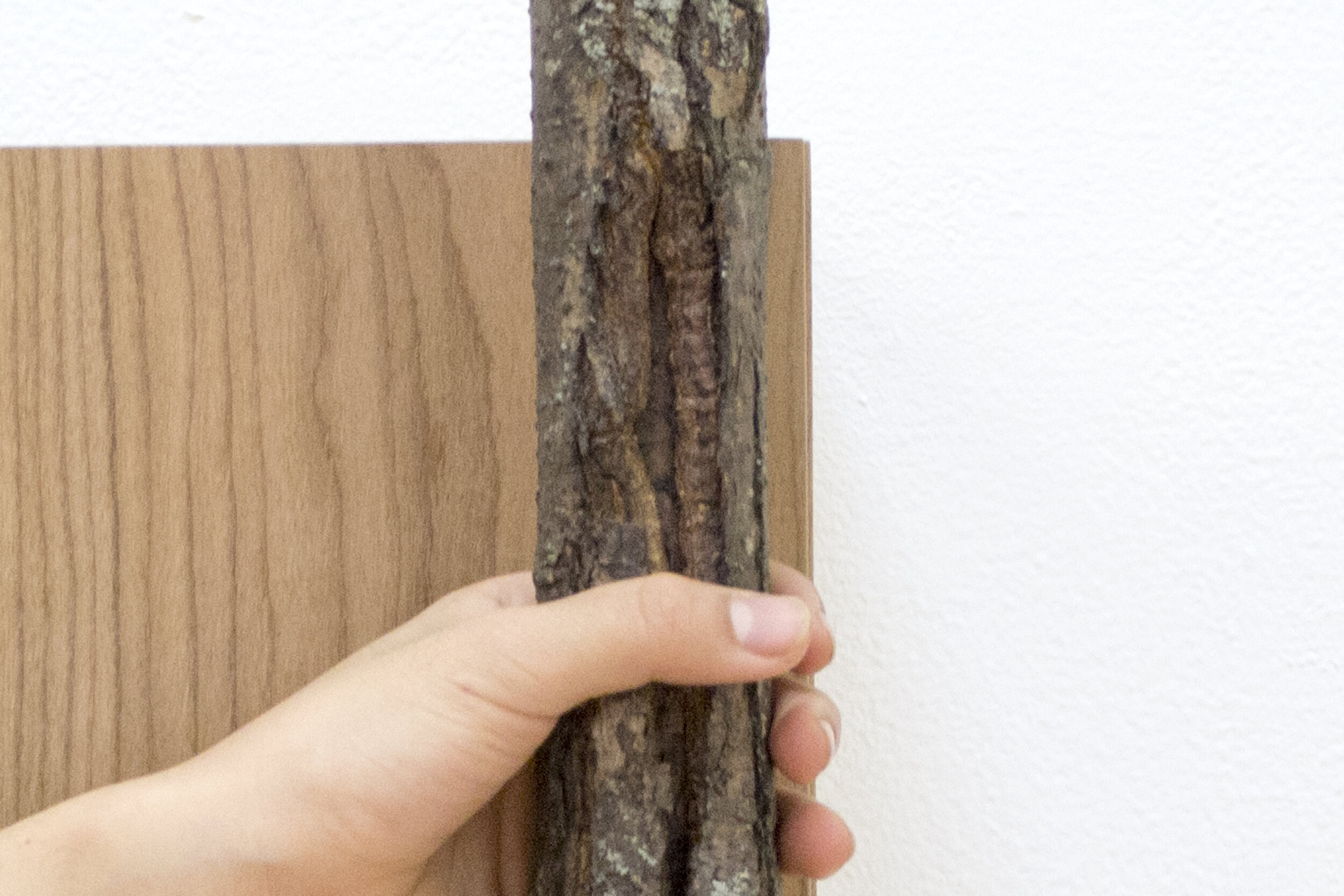
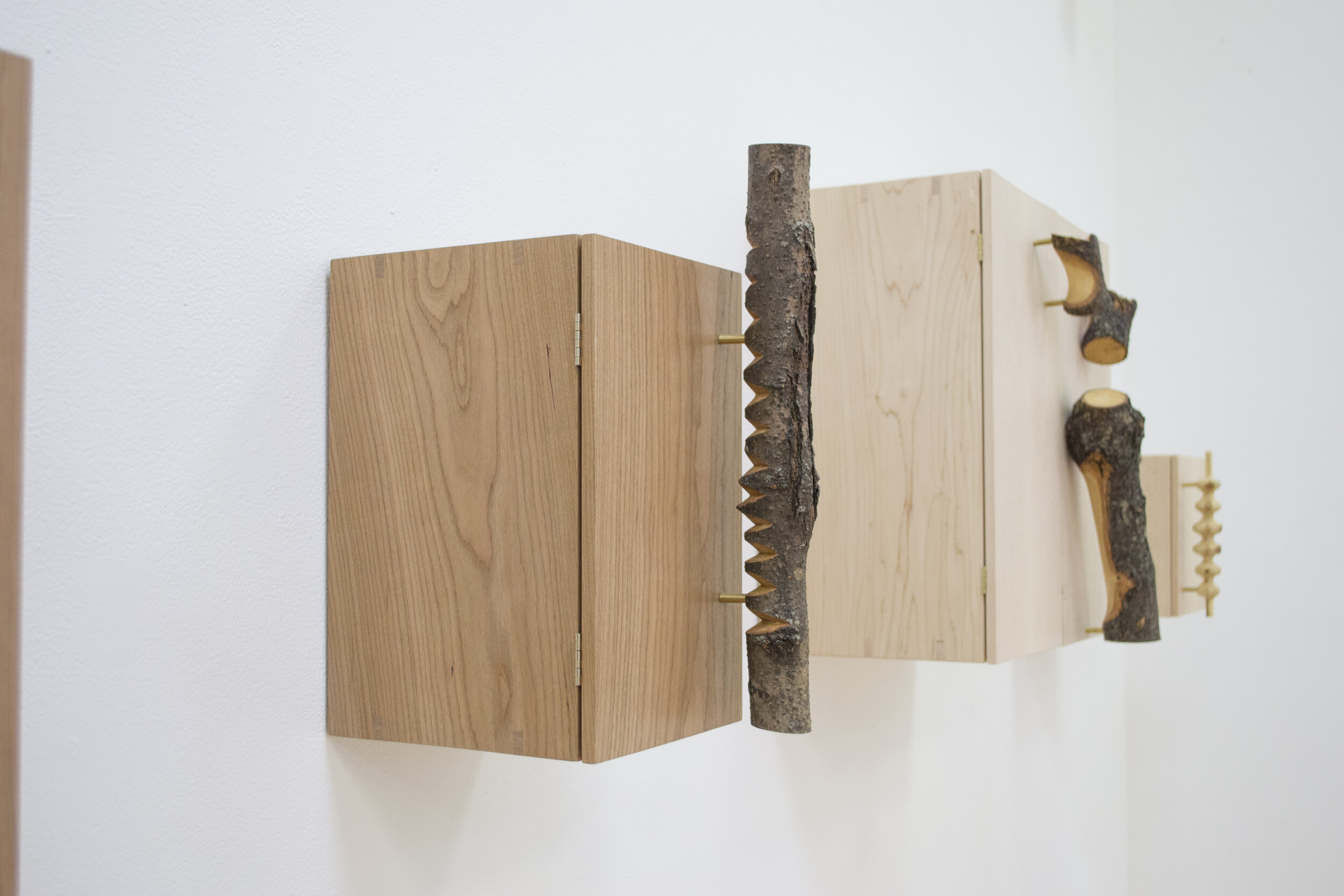
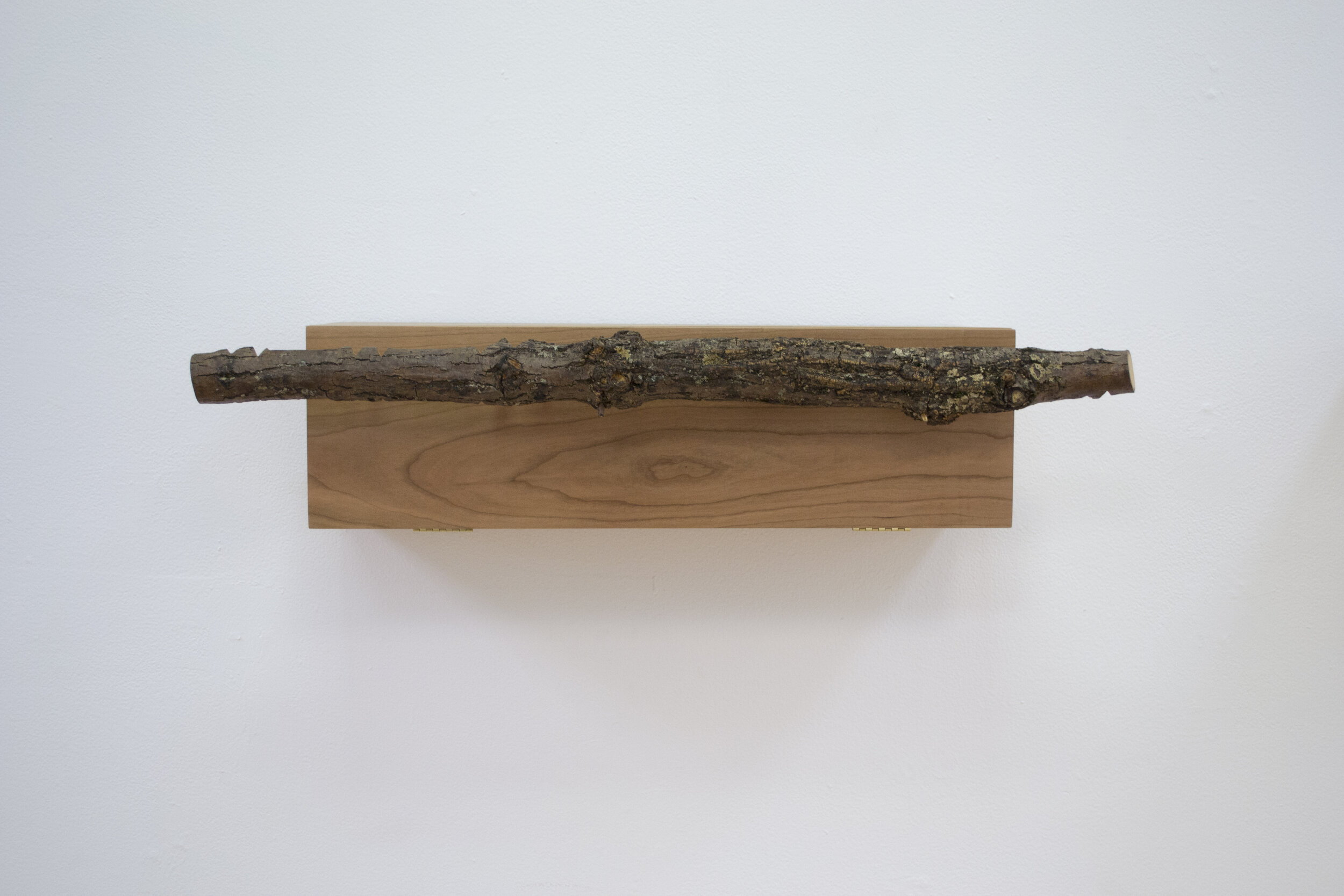
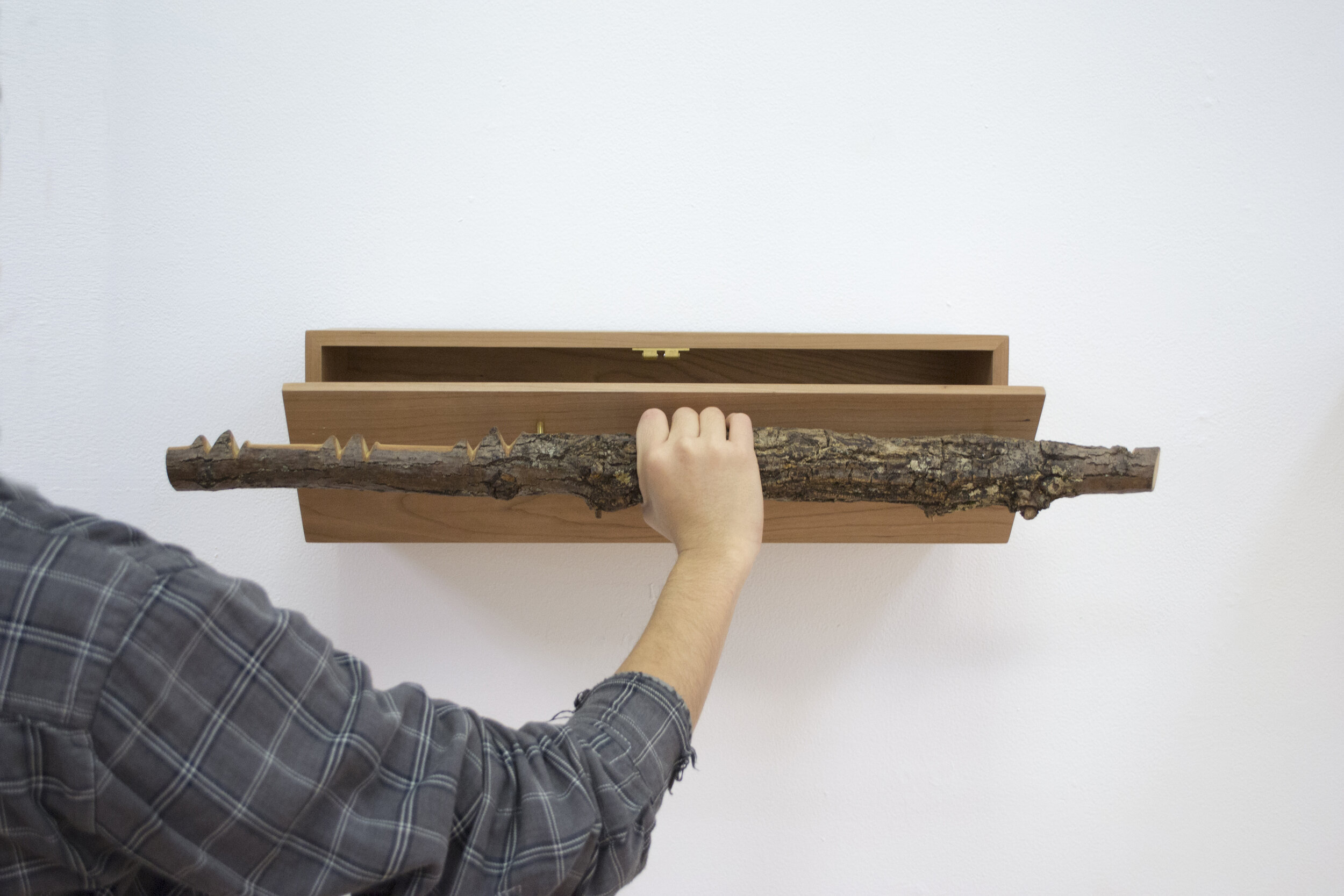
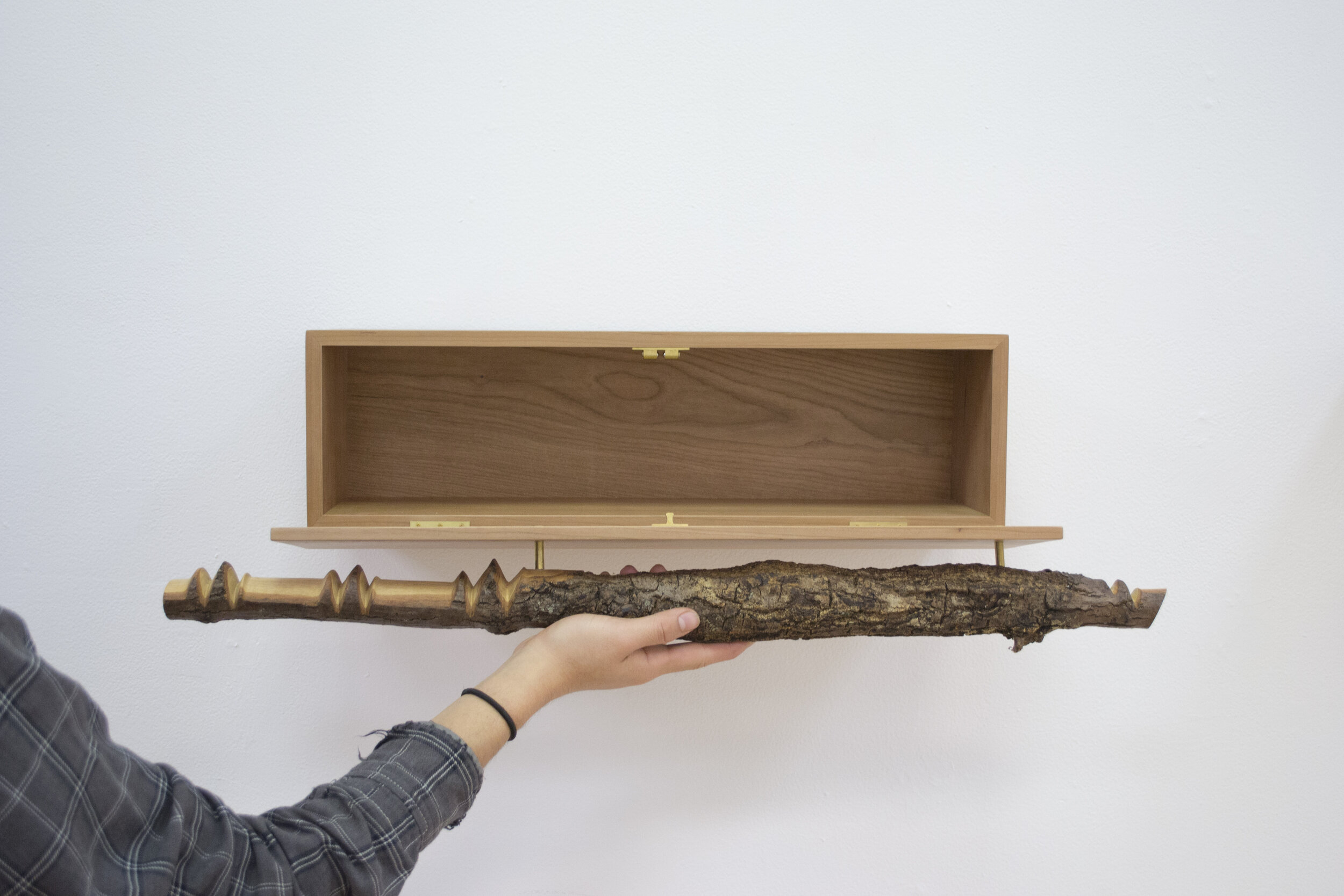
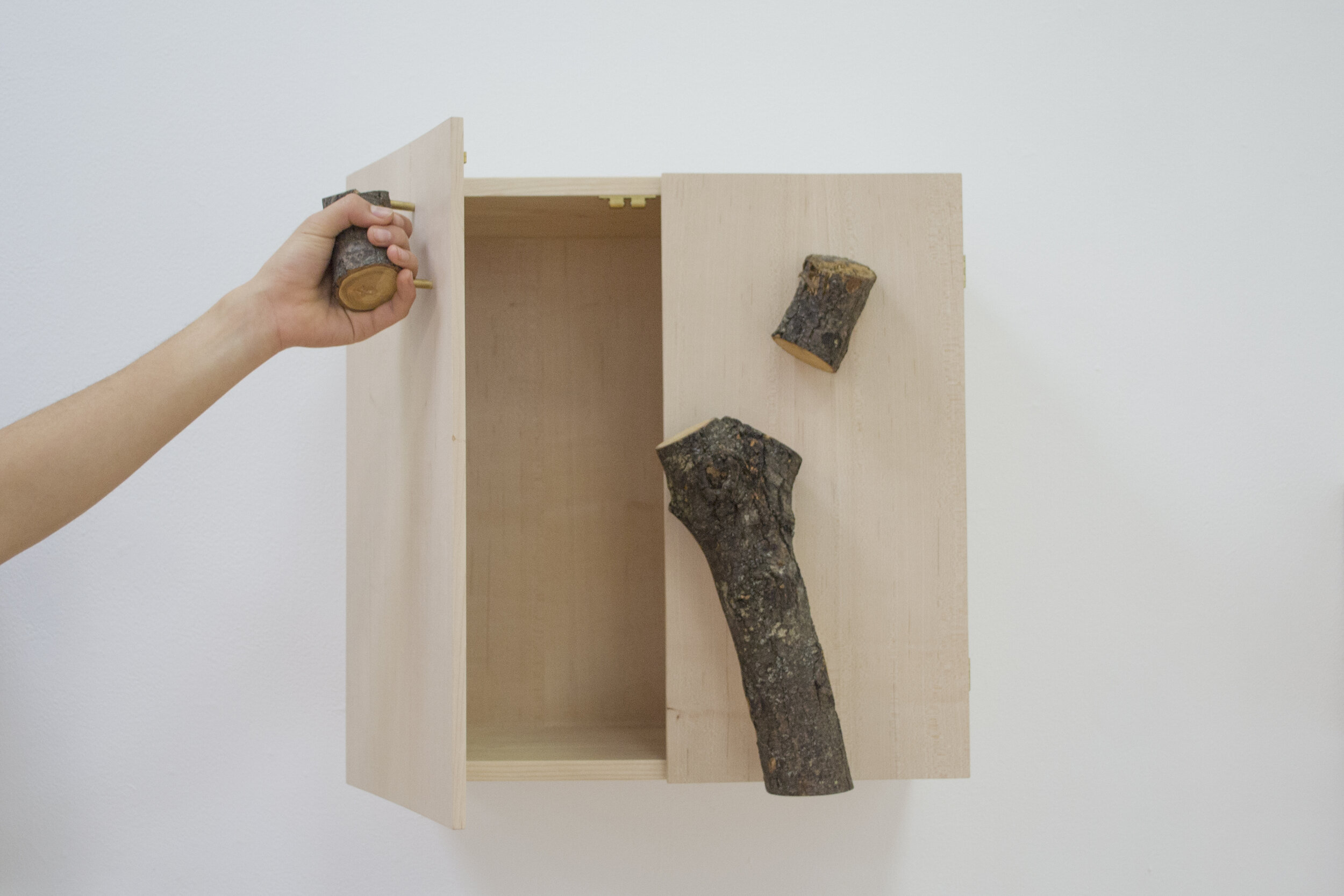
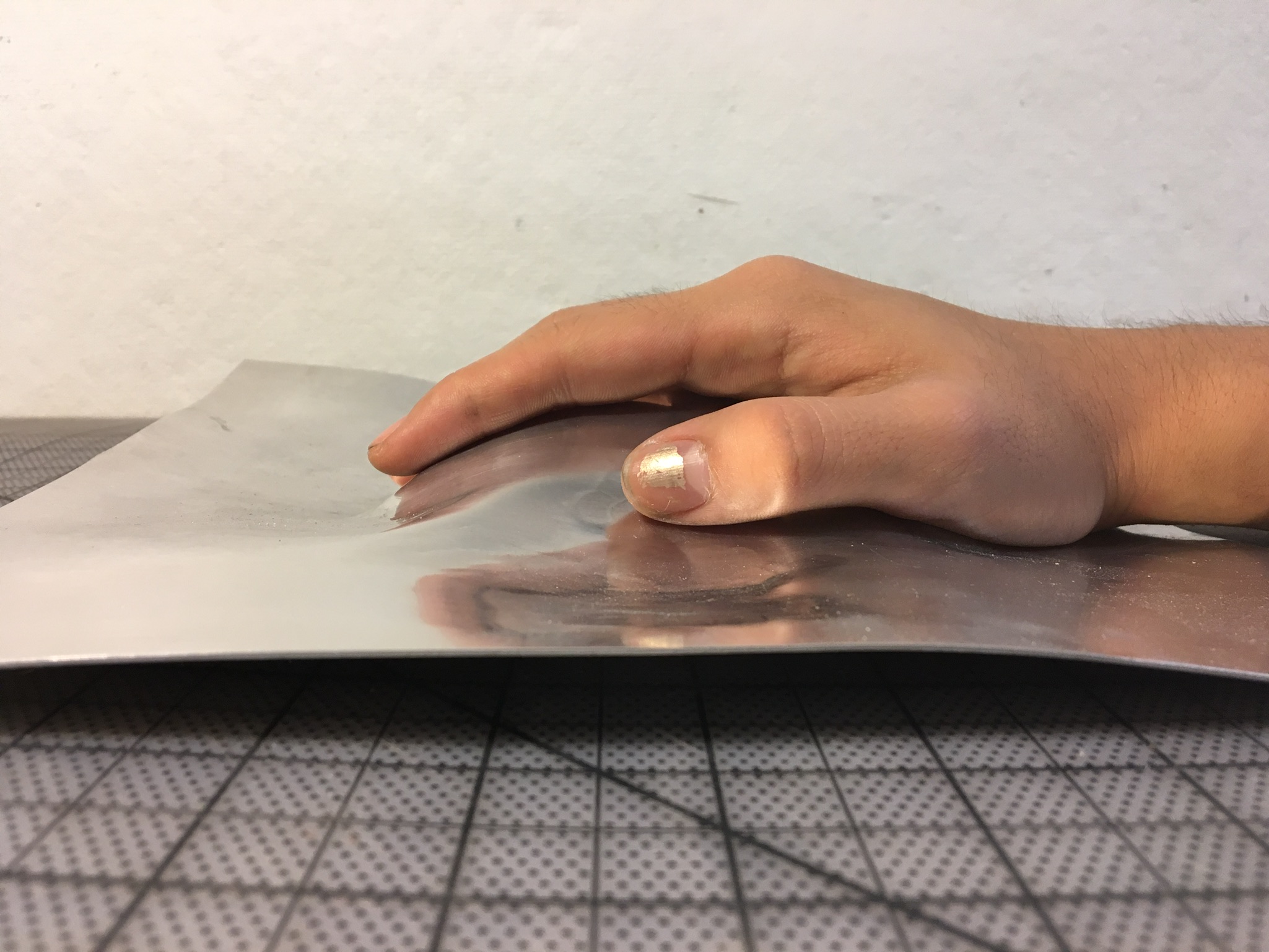
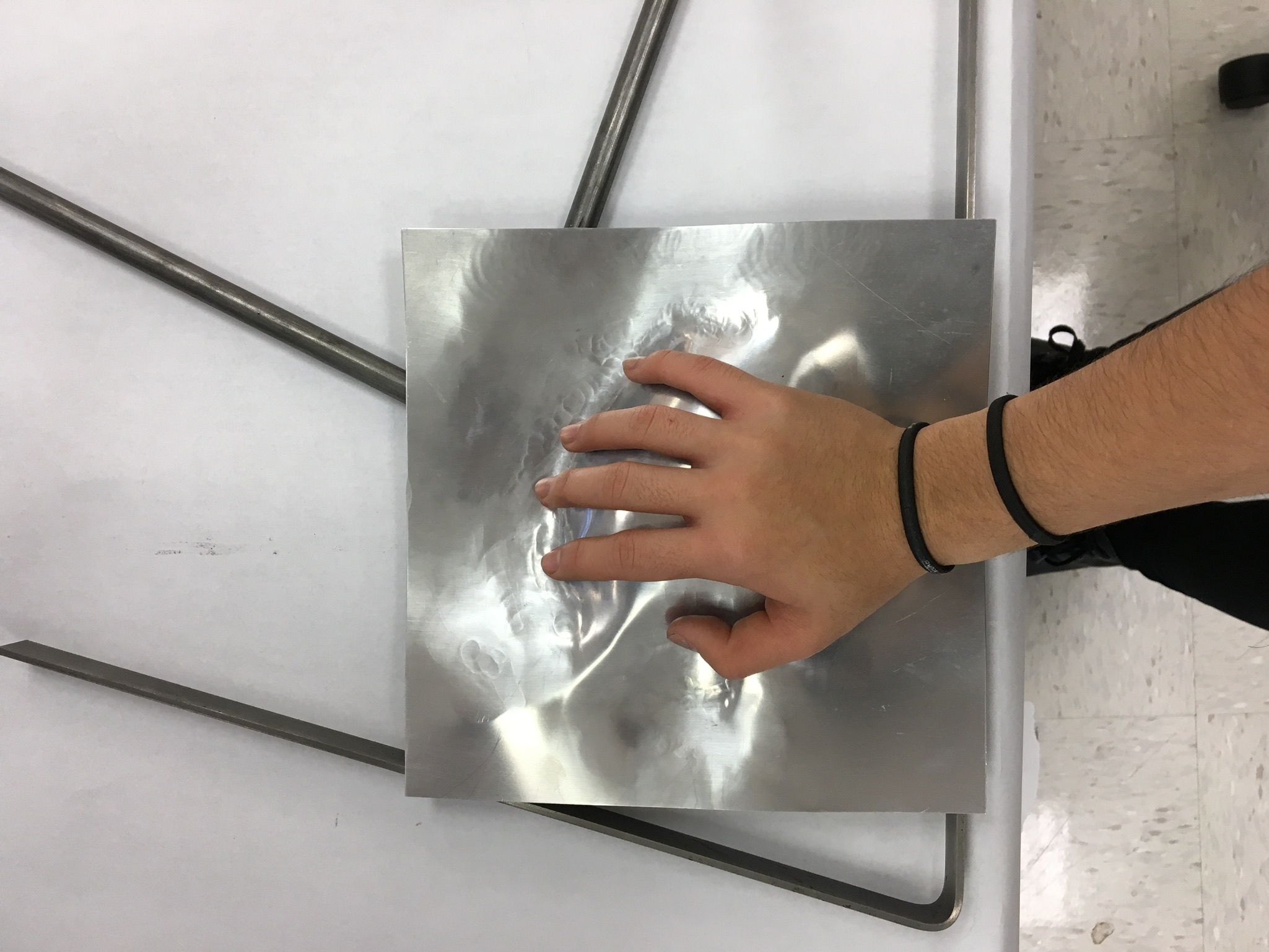
Furniture is an art medium that gives its human users a direct connection to subject matter. It is very haptic, relying very much on a sense of touch. And good design is preemptively responsive. That which is meant to be touched touches back. In this case, the handle of something is the hand of that thing.

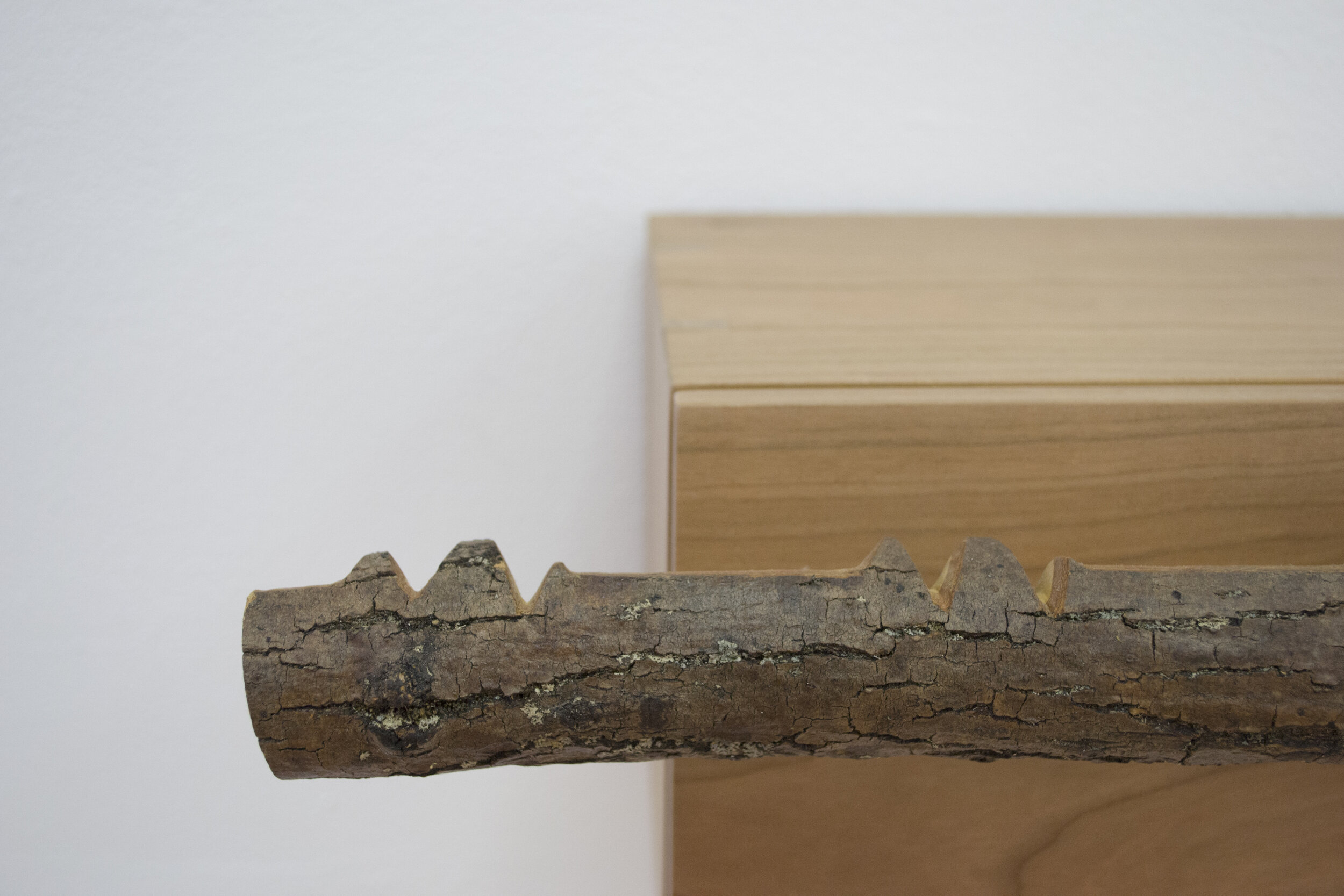
This series is something to hold on to, something we can live with. Each of these handles highlights this tree’s physical response to the Emerald Ash Borer, and is fitted perfectly to a human hand, to create a connection between species.

Special thanks to curator Christina Catanese and the team at the SCEE, which included Steve the arborist, who was the first person to show me how to read the trees. I am grateful as well to the Philadelphia Science Festival for the chance to speak with the public about the work while it was happening, and for my fellow Philadelphian artists (Nancy Agati, Laurie Beck Peterson, Anthony Heinz May, John Kuiphoff, Brian Skalaski) who made our resulting group show awesome.

You can read an article for woodturners about the Emerald Ash Borer here (or here in the event of a paywalling).


holding on bg.jpg

Flicker


DSC_0075.jpg
IMG_1728.jpg

For the show, “Leave a Light On” at Wharton Esherick Museum

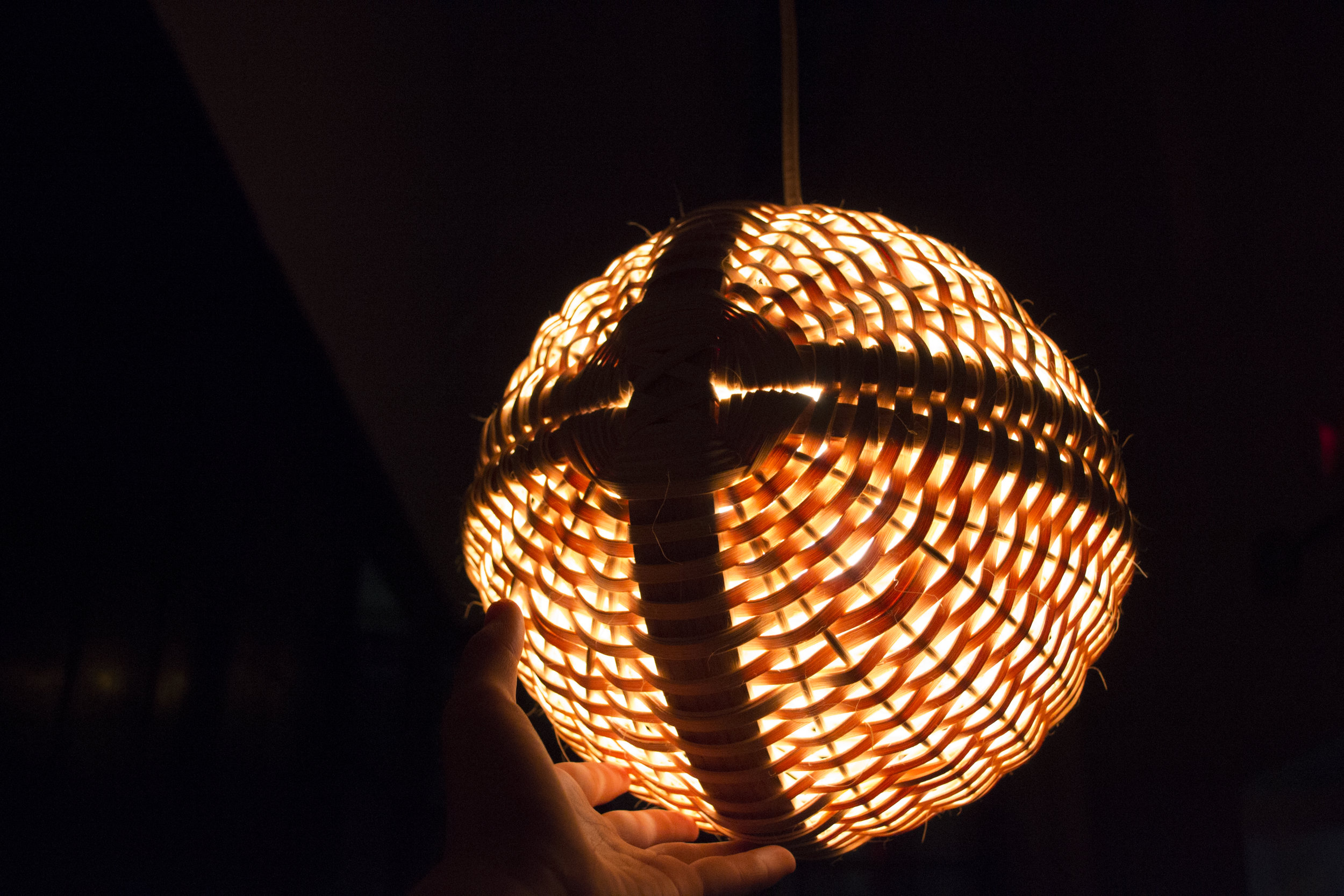
Flicker was the first attempt at combining steambending with basketweaving, highlighting each craft's unique qualities while skirting the limitations with the strengths of the complimentary craft. This resulted in a form that used the structure and linework of steambending, plus the translucency and body of basketweaving to create a light that transcends the expectations of both methods.

Brian and I have since made SO MANY Flickers! Mostly as lights. And we even hosted a few classes celebrating the crossover. Our thanks Arrowmont, Museum for Art in Wood, and Glen Foerd for hosting us.


Everything you don’t want anyone to see

Collaboration with Brian Skalaski.

 
nightstand 4.jpg

A nightstand, for “Continuum” At AAW Gallery of Wood Art

“… the primary function of furniture and objects here is to personify human relationships, to fill the space that they share between them, and to be inhabited by a soul.” —Jean Baudrillard

The wave of modern furniture that we are stepping down from sheds the symbolism of furniture for tact. Modern furnitures are mobile, flexible, stripped down functional expedients. Though very rational, there is a certain impoverishment to them; an absence of style, and an absence of meaning. It is no surprise then that in many current furniture trends we can see everything that modern is not—Colorful, over the top things: lumpy, stylized, narrative, highly textured, unclean, even unusable.

Furniture has a unique capacity to be intensely personal, in a way not well-afforded for by the modern aesthetic. My nightstand at home is one from Amazon, originally intended for my youngest brother, but so unparticular in its character, so functional, that it was easily passed over unassembled to me, when I moved to Philadelphia. It’s such the epitome of unremarkable—a dull gray rectangular box of particleboard, with one drawer, that came flat in a box—that the contents housed within it feel almost disgustingly personal. A nightstand is actually a repository for the really intimate stuff of life. I’d like not to name what’s in my nightstand, but well, as Brian so aptly put it, “If you could you could put your whole life out on the table, you wouldn’t have a drawer in your nightstand.”

nightstand 1 A 2 sm.jpg
nightstand+6+sm.jpg


nightstand 1 A 1 sm bg 60.jpg
 

Lure


Made deciding where to stay. Completed at Arrowmont Winter Pentaculum 2019

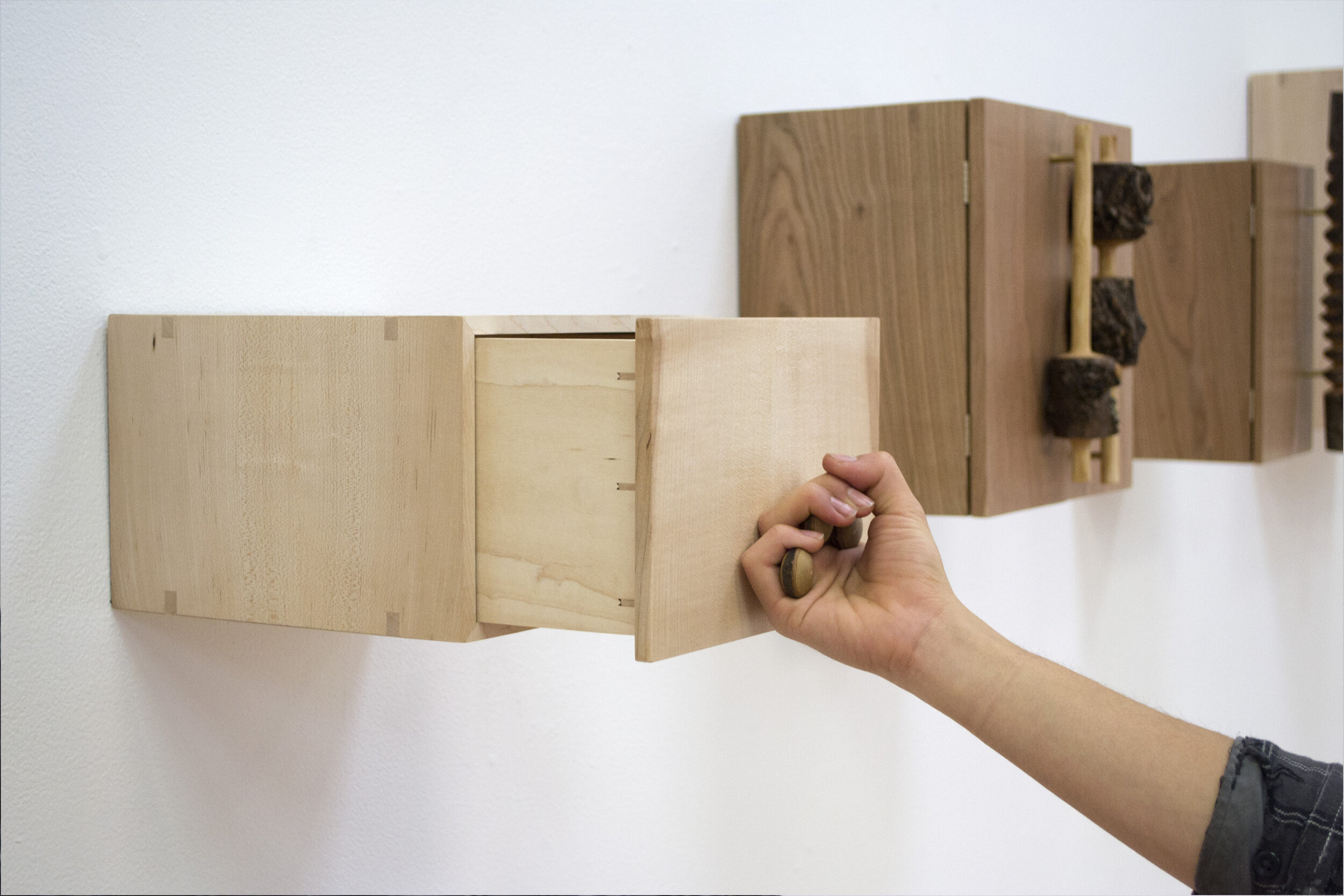
I connect this lure to a summer memory, of walking through a river of sharp rocks, wearing the wrong shoes, going barefoot, to be introduced to fishing for the first time, by someone that I love.

It is tranquil.

He made the stem and the frame, and I wove the pendant around these things, first in a courtyard in the Smokies, and the second time in a home that we now share.
lure 3.jpg
lure 2.jpg
lure detail.jpg


lurey night.jpg
 

Grabbable Table

DSC_0293EE.jpg

An experiment... Featured in Turnabout: Women at the Lathe ( Review)

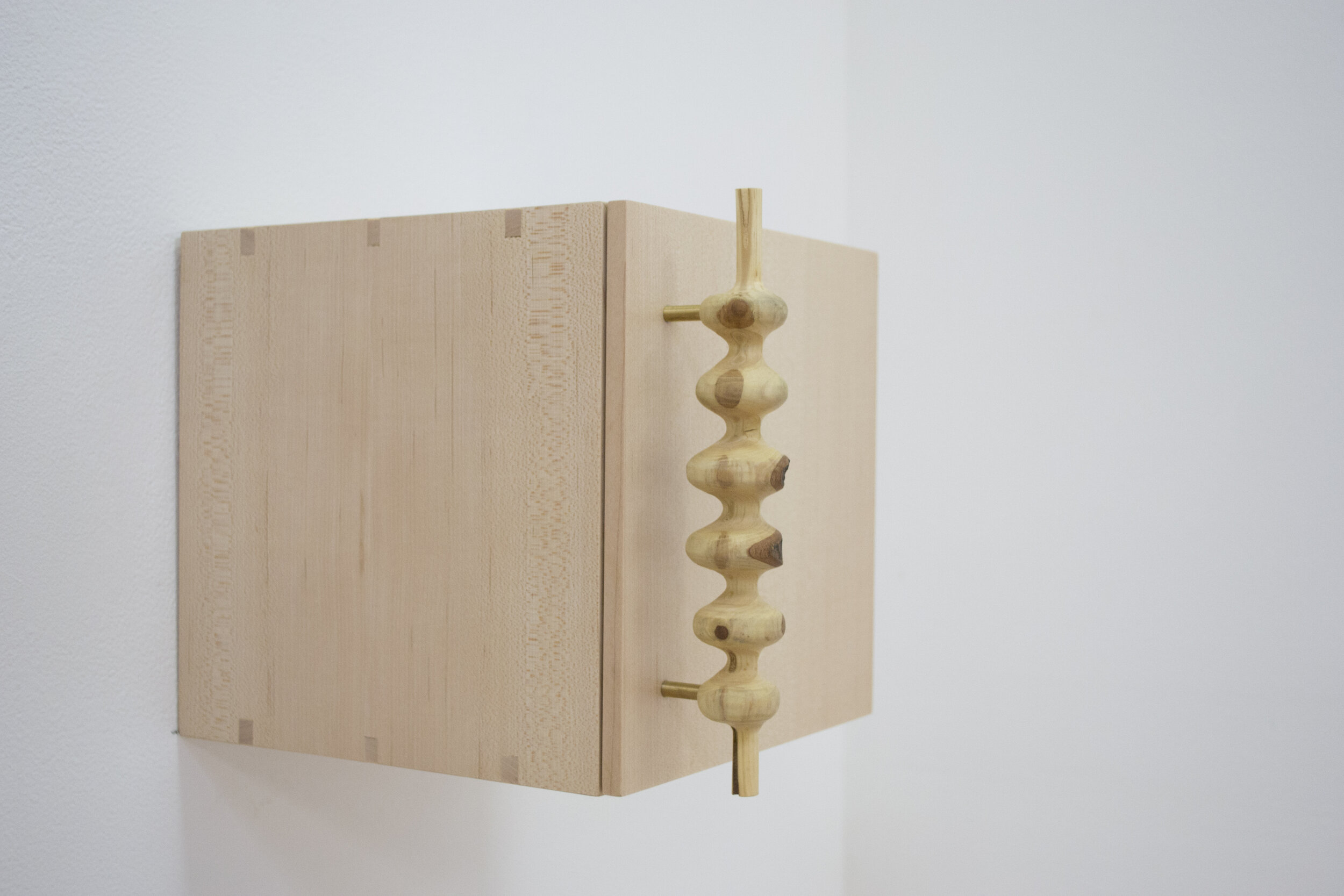
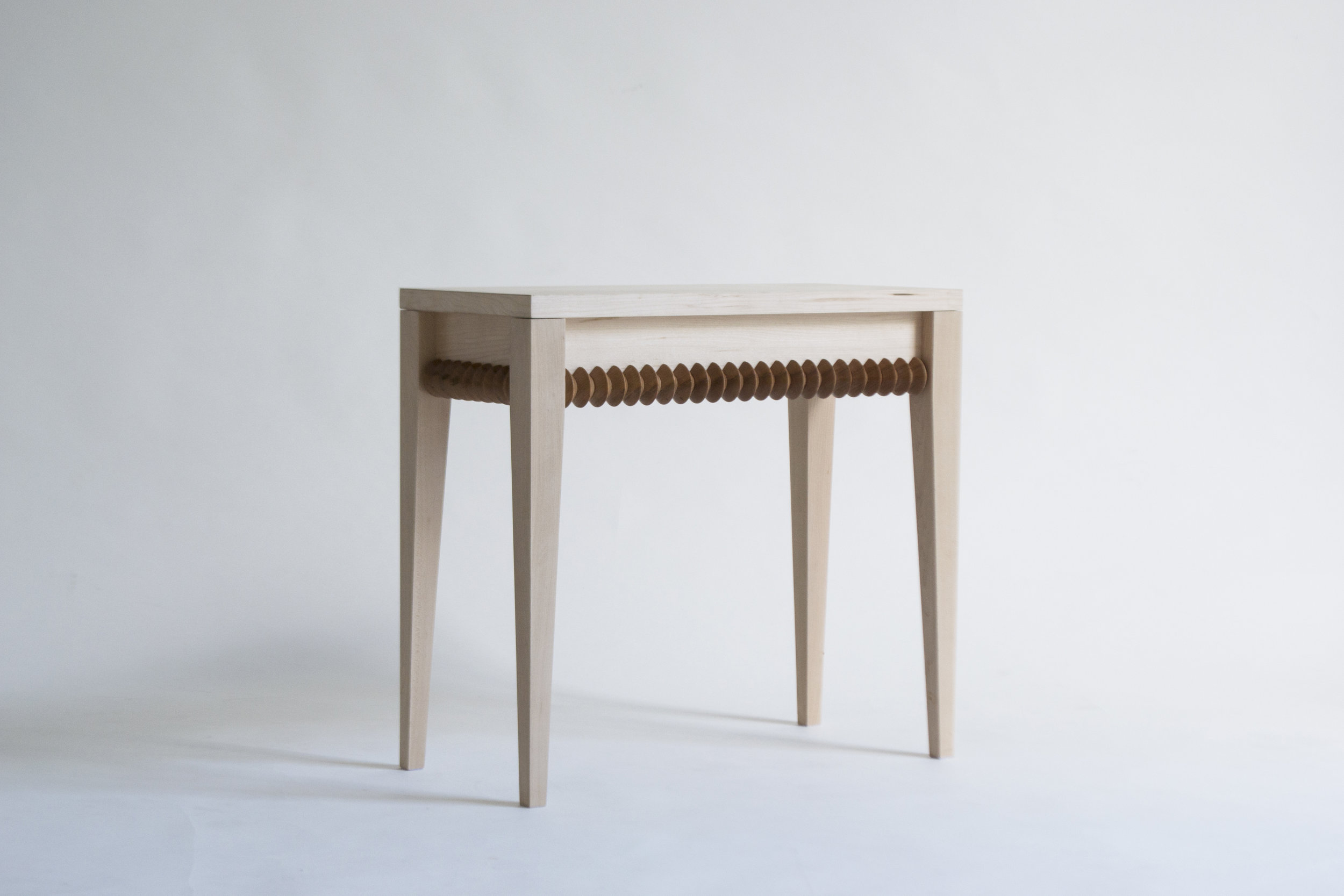
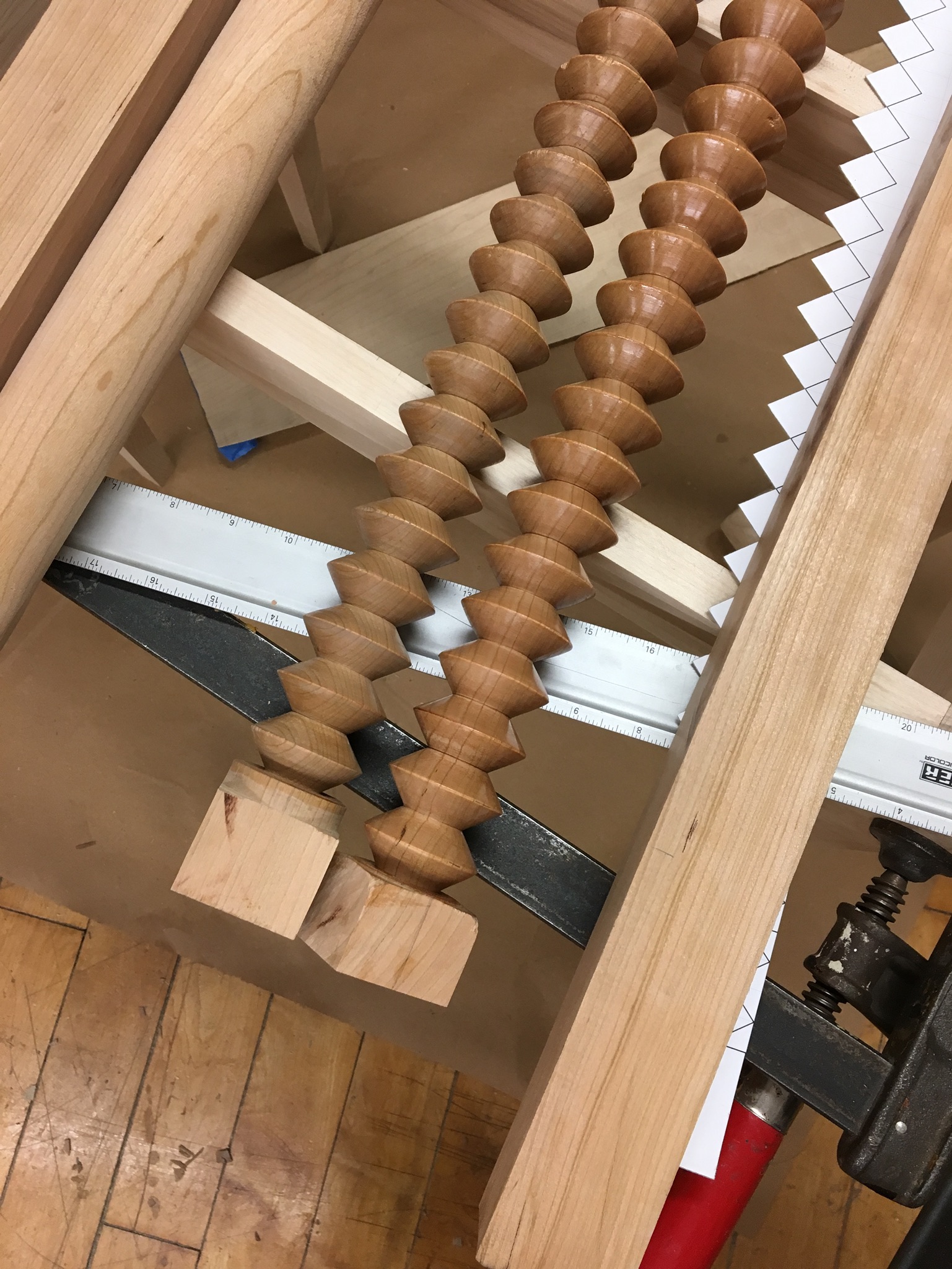
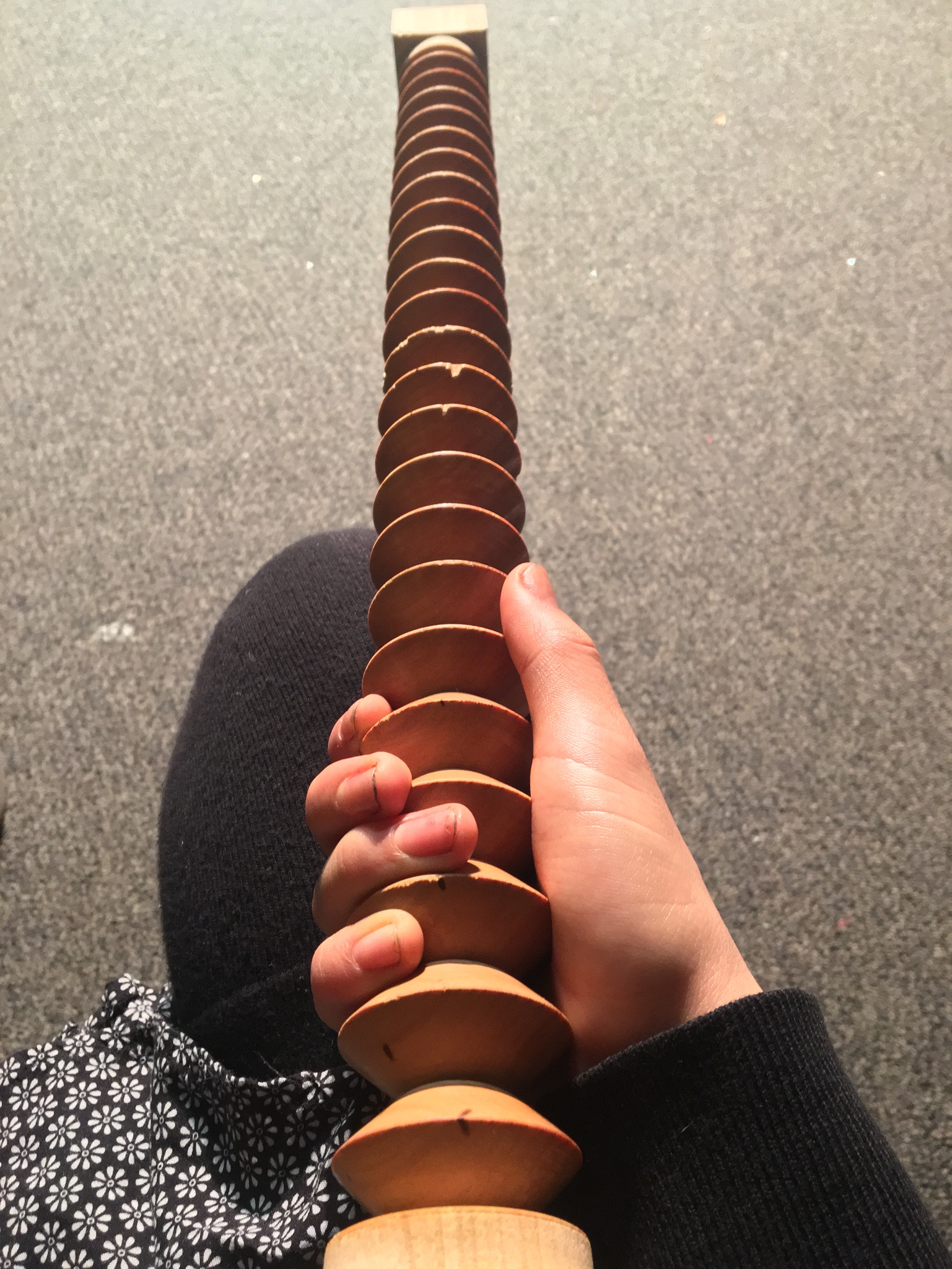
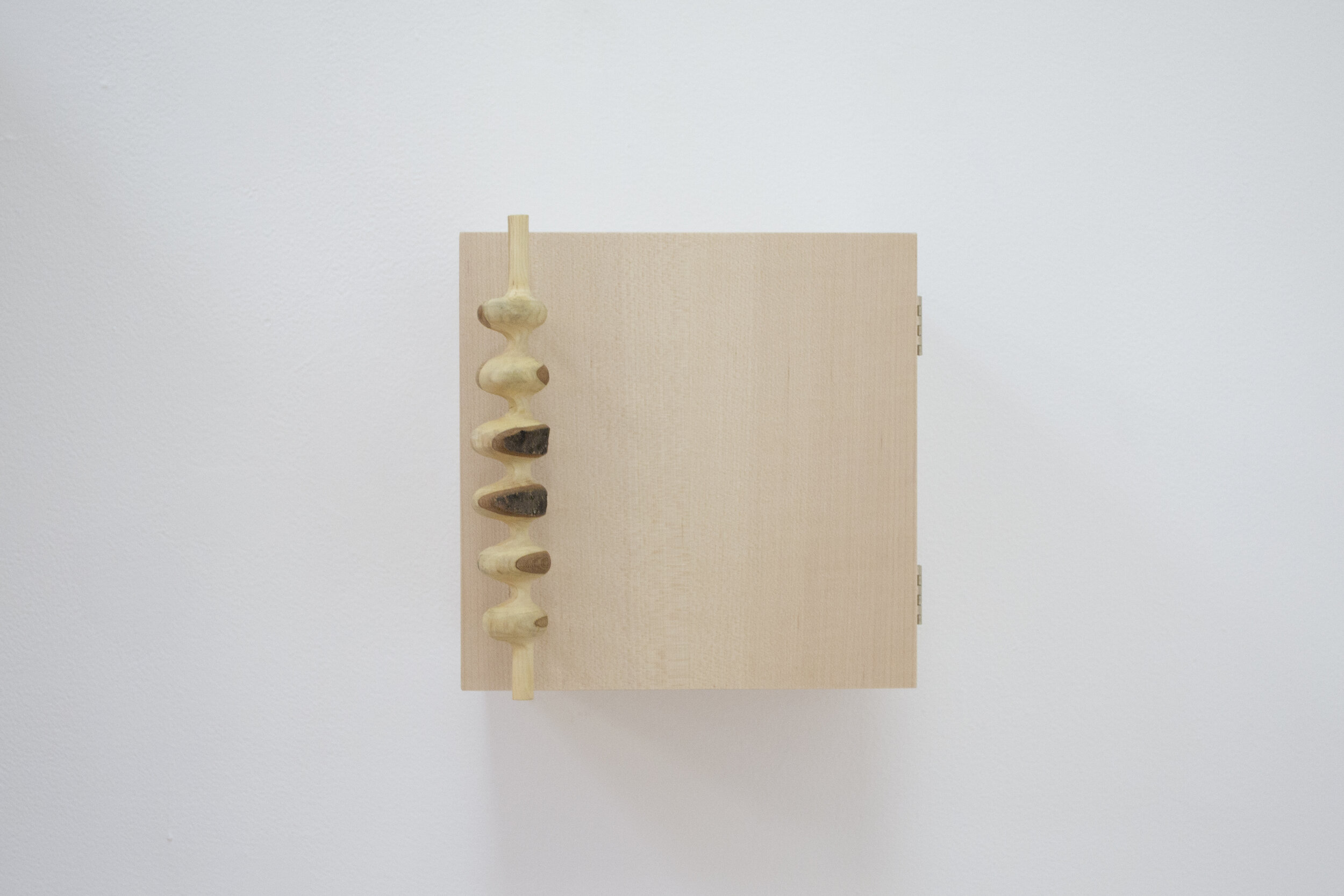
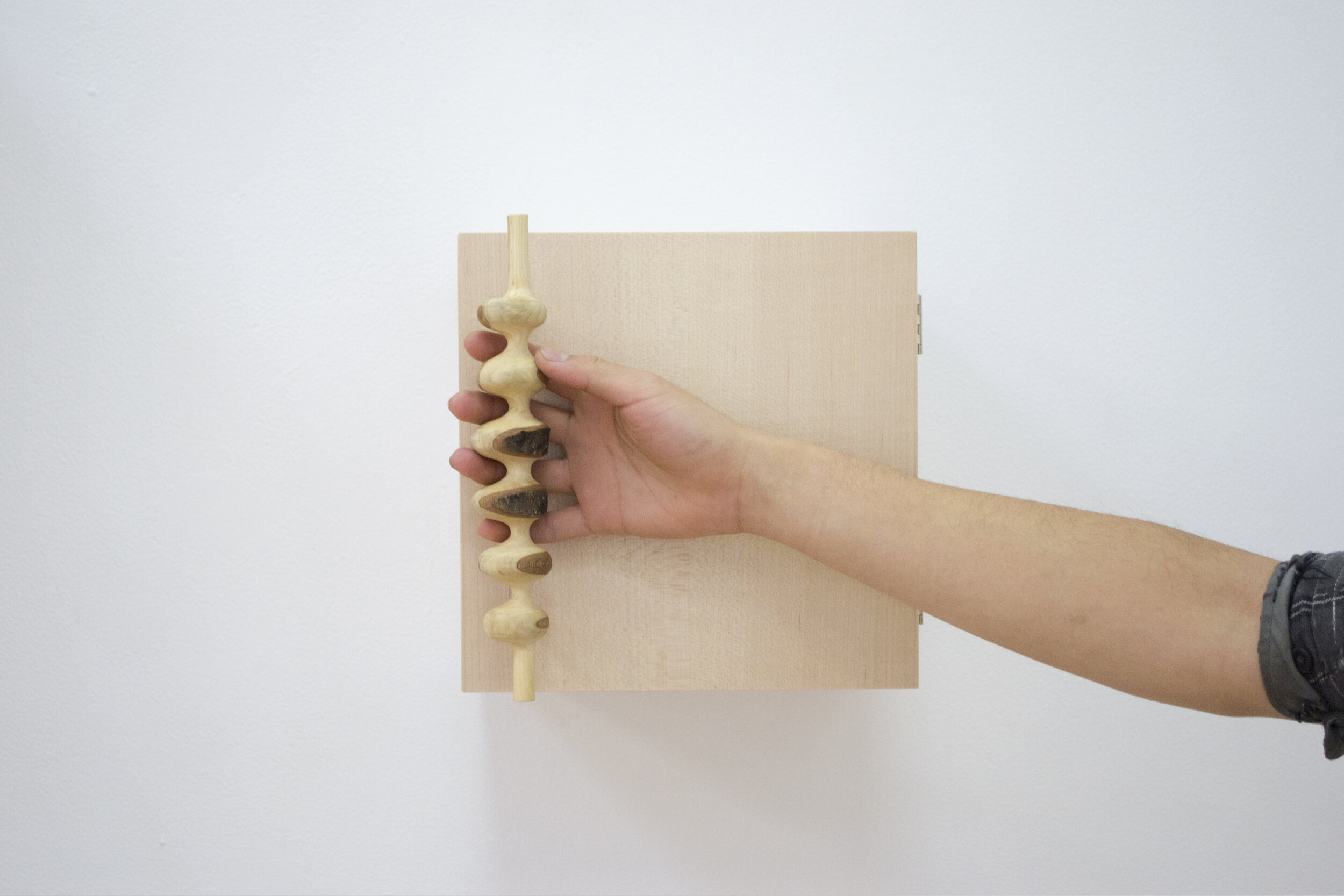
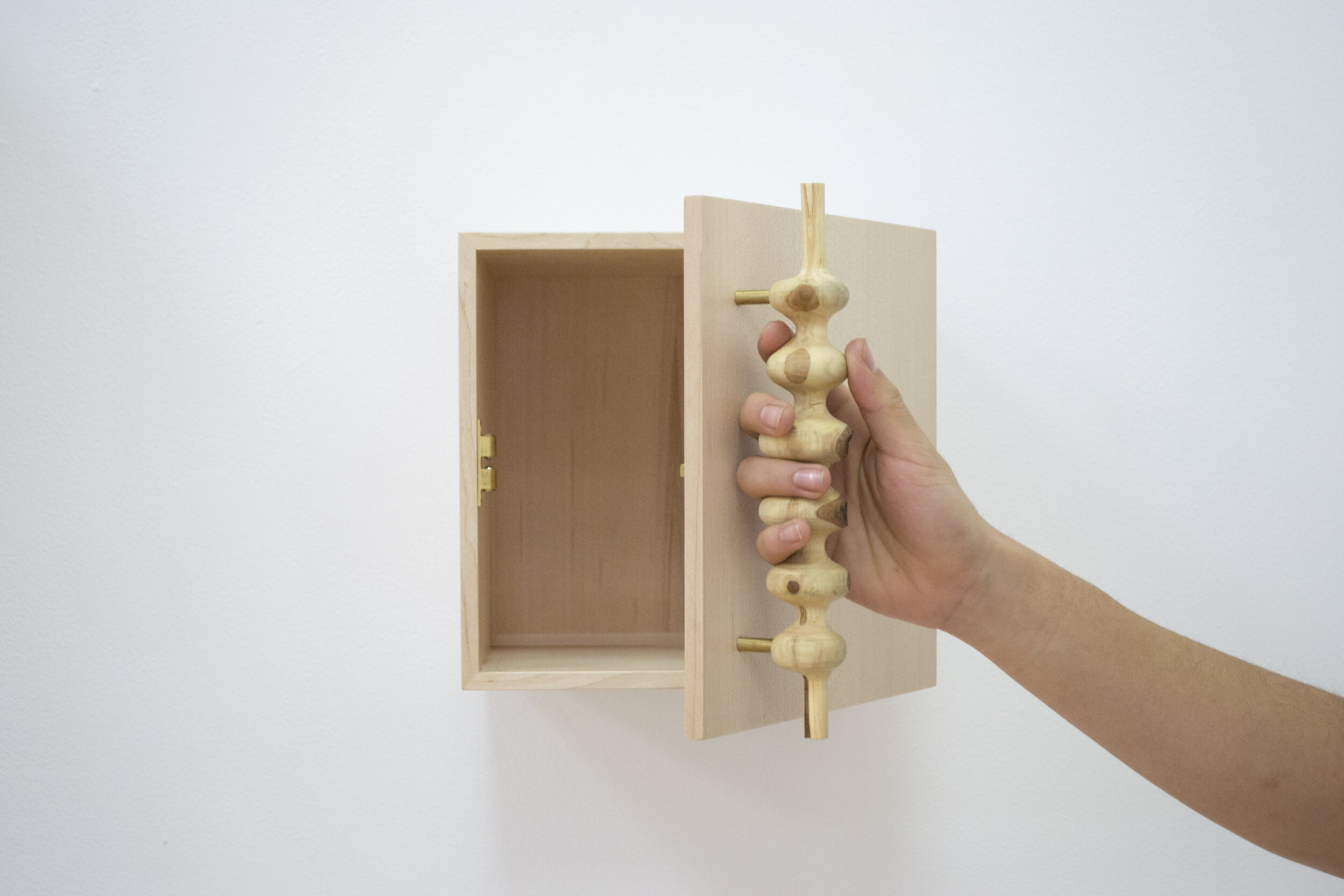
After turning a pattern of beads to the dimensions of my hand, removing 1/4 of the spindle results in a 3/4 spindle that can be applied to any square edge surface, to make grabbing that edge instantly satisfying instead of slightly unpleasant. This simple piece of furniture frames this functional detail.

Form follows function and spoils you a little.


DSC_0296E.jpg
DSC_0359E.jpg
DSC_0370E.jpg
DSC_0384E.jpg
 

Edit 2022: I have been making “Hand Stools,” a working title right now, but the same concept as the Grabbable Table but with stools (and fancier woodturning skills).


DSC_0308E.jpg
 

One-legged Family

People and stools 10 cropped.png


A family of stools

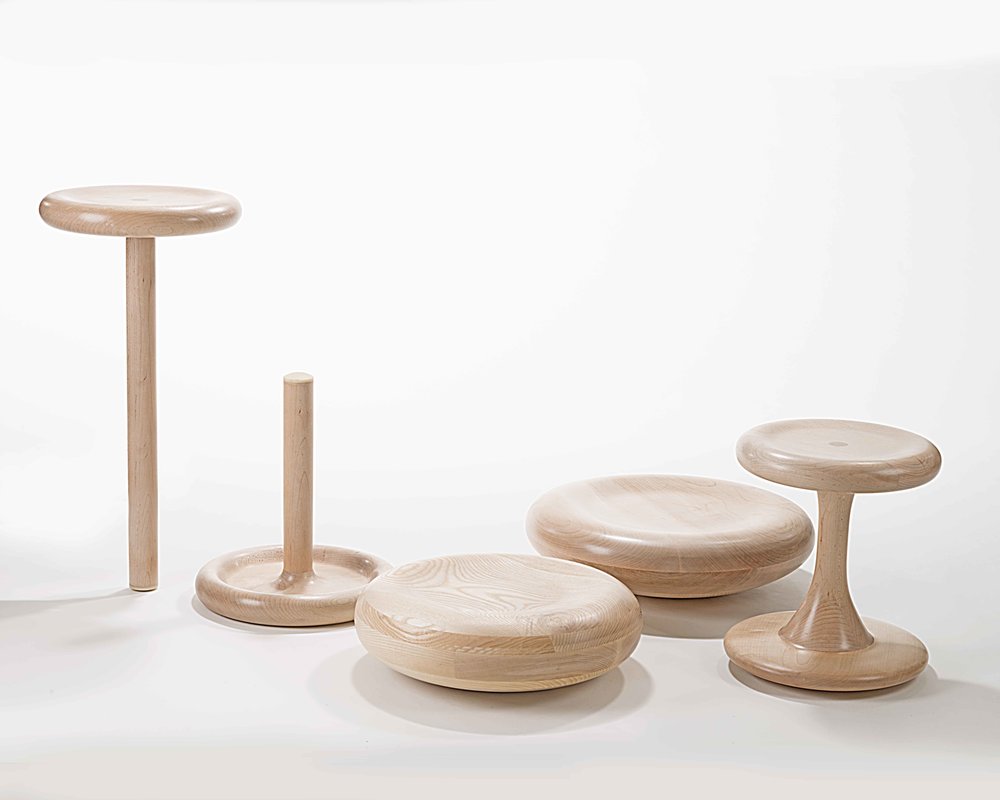
A family of stools pushing the “one-legged stool” typology as far as it can go. This mixture of mockups and finished pieces, when put in the hands of curious people, results in a cross-pollination of discoveries, combinations, uses, and postures.

I love watching people make sense of objects which have no strict pre-determined single function or orientation. Even small variations in height, width, weight, etc. result in totally different sitting and playing experiences. Perches become rolling ottomans, seats become slumping devices… a combination of two chairs actually becomes a vehicle that can propel you forward, wriglingly, snakingly… definitely not something I would have thought of on my own. Furniture always takes on its own life in someone else’s hands.

people and stools lots and lots omg.png
People and stools 11 cropped.png
JW09a One Legged Family.jpg
JW09c One Legged Family.jpg
People and stools 9.png
JW09b One Legged Family.jpg
JW09d One Legged Family.jpg
JW09e One Legged Family.jpg


013470f0fd5f9684149cf6d8e79efb432453fa8b48.jpg
 

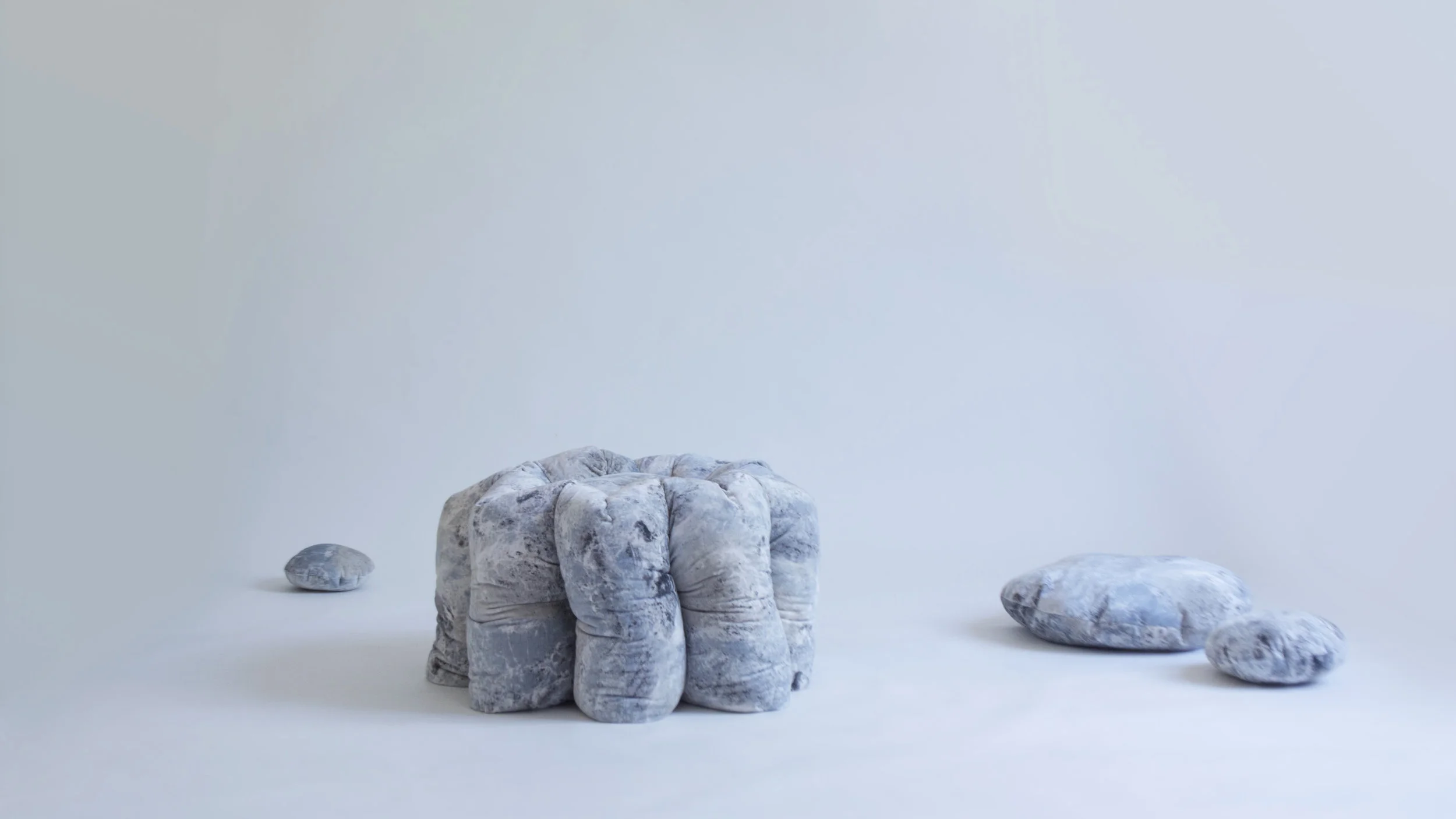
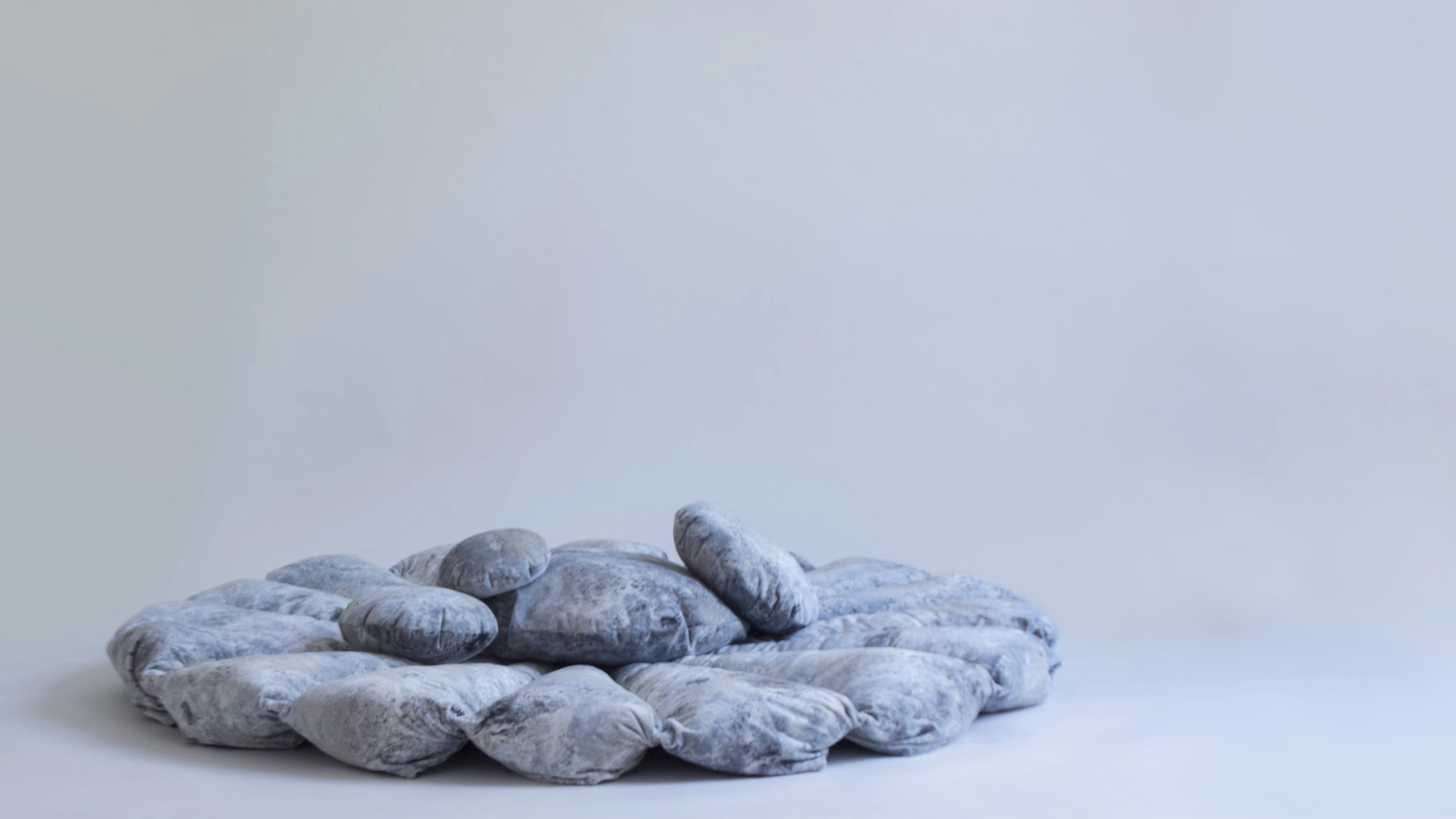
Concrete Comforter


file-stack-for-gifs-cropped-bright-n-halfsize.gif
 

A good, solid comforter...

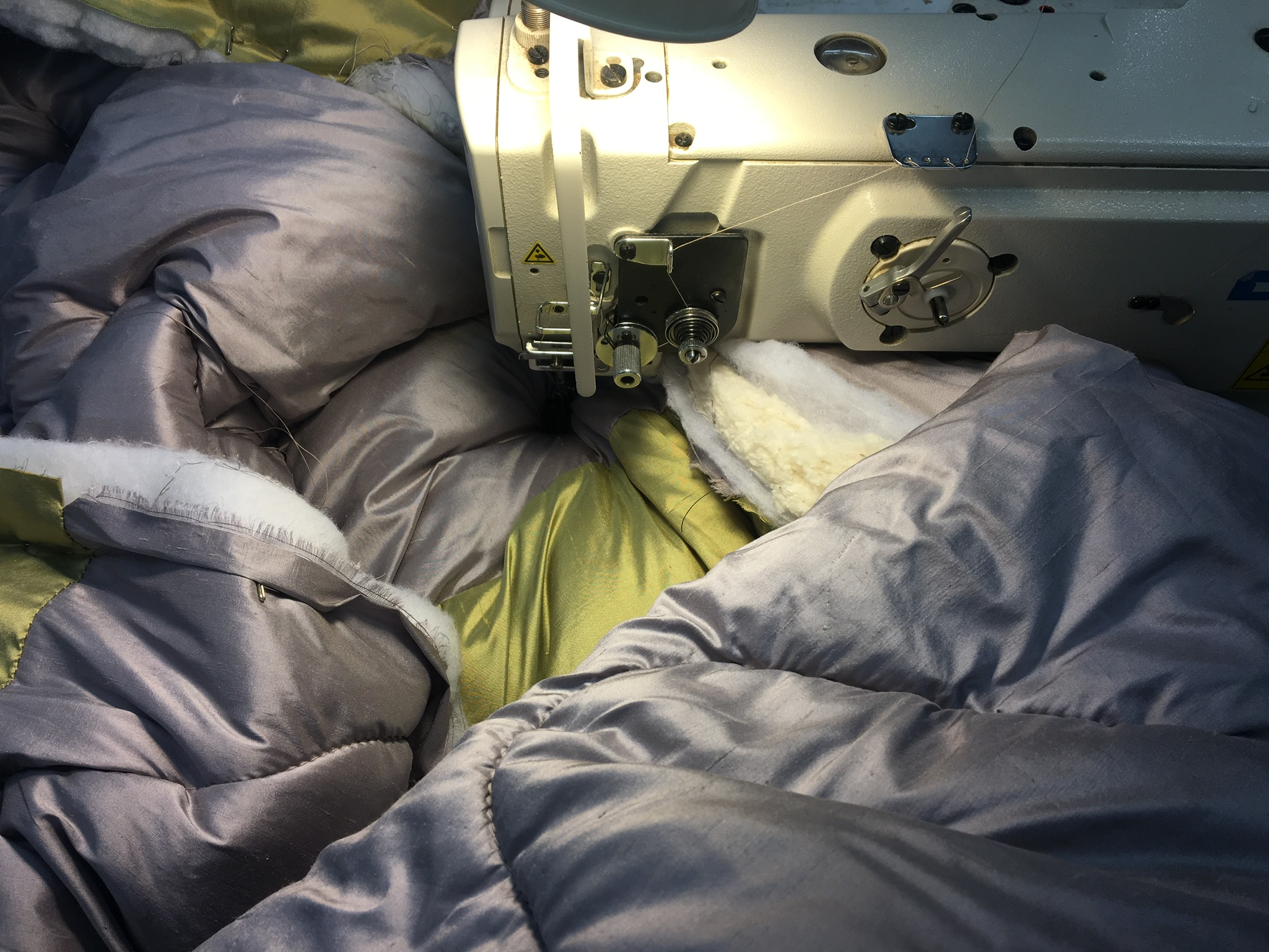
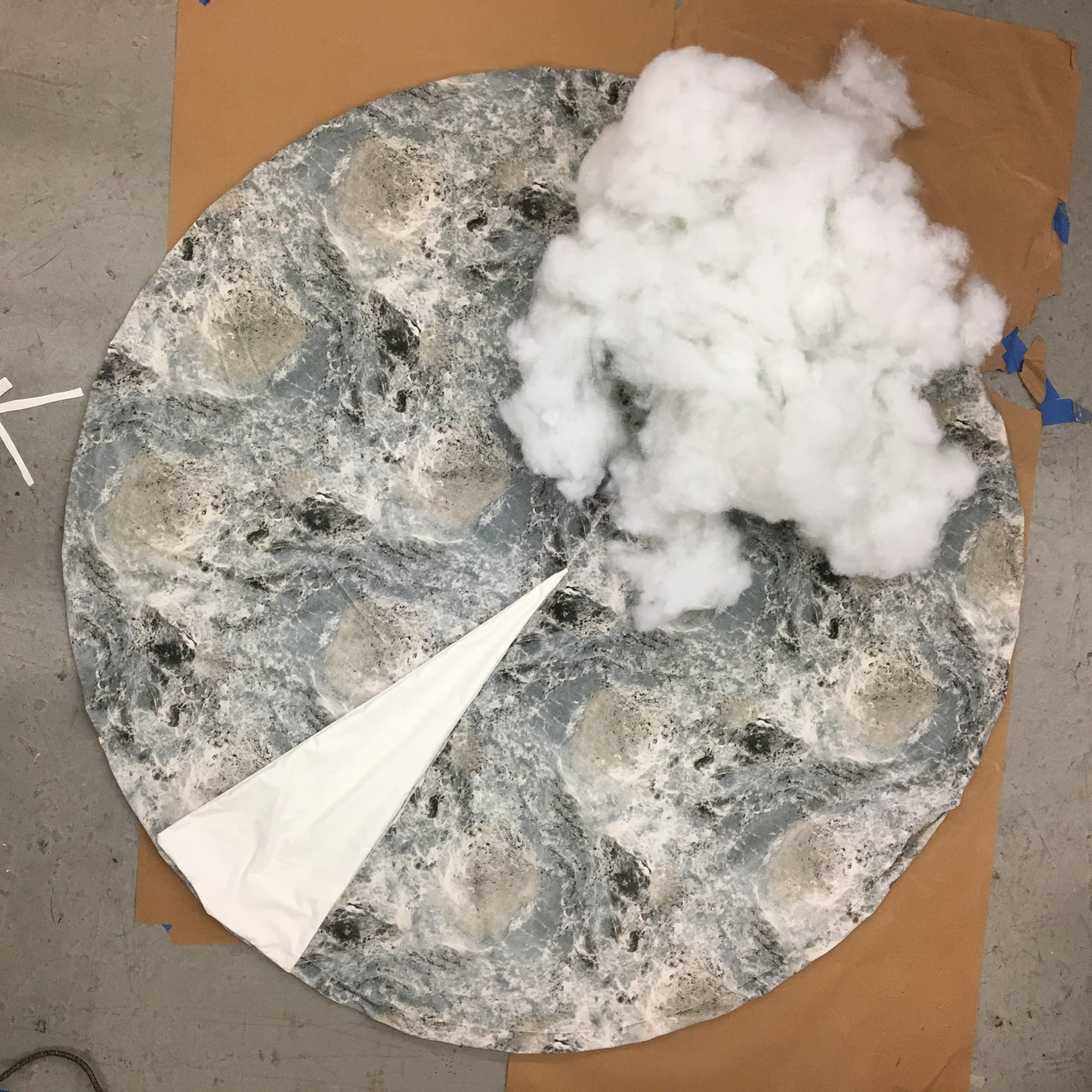
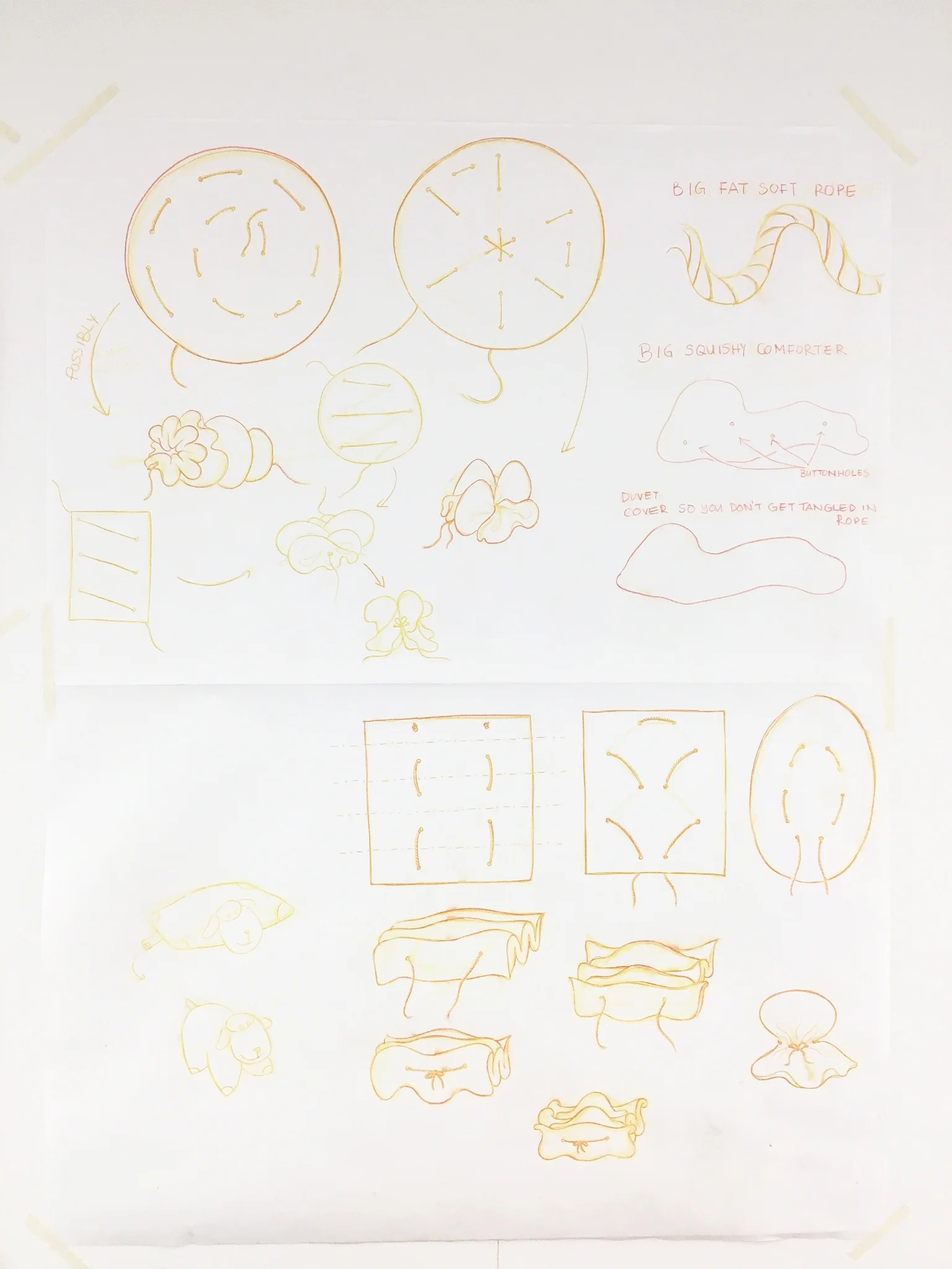
You’ve gotta love the malleability of a good, solid comforter: the way, balled up, pulled under, or bunched across, a comforter can be the perfect piece of furniture in the land of the bed. I have never been more comfortable than in the corner of my bed, with my comforter tossed in, then pulled and pushed just so. “Concrete Comforter” brings the comforter out of the bed and into the room, imbuing it with the structure, durability, and stability of furniture.
buying_guide_08_duvet_hero_image.jpg
det1.jpg
det2.jpg
sit.jpg
lounge.jpg
lie.jpg


det2.jpg
 

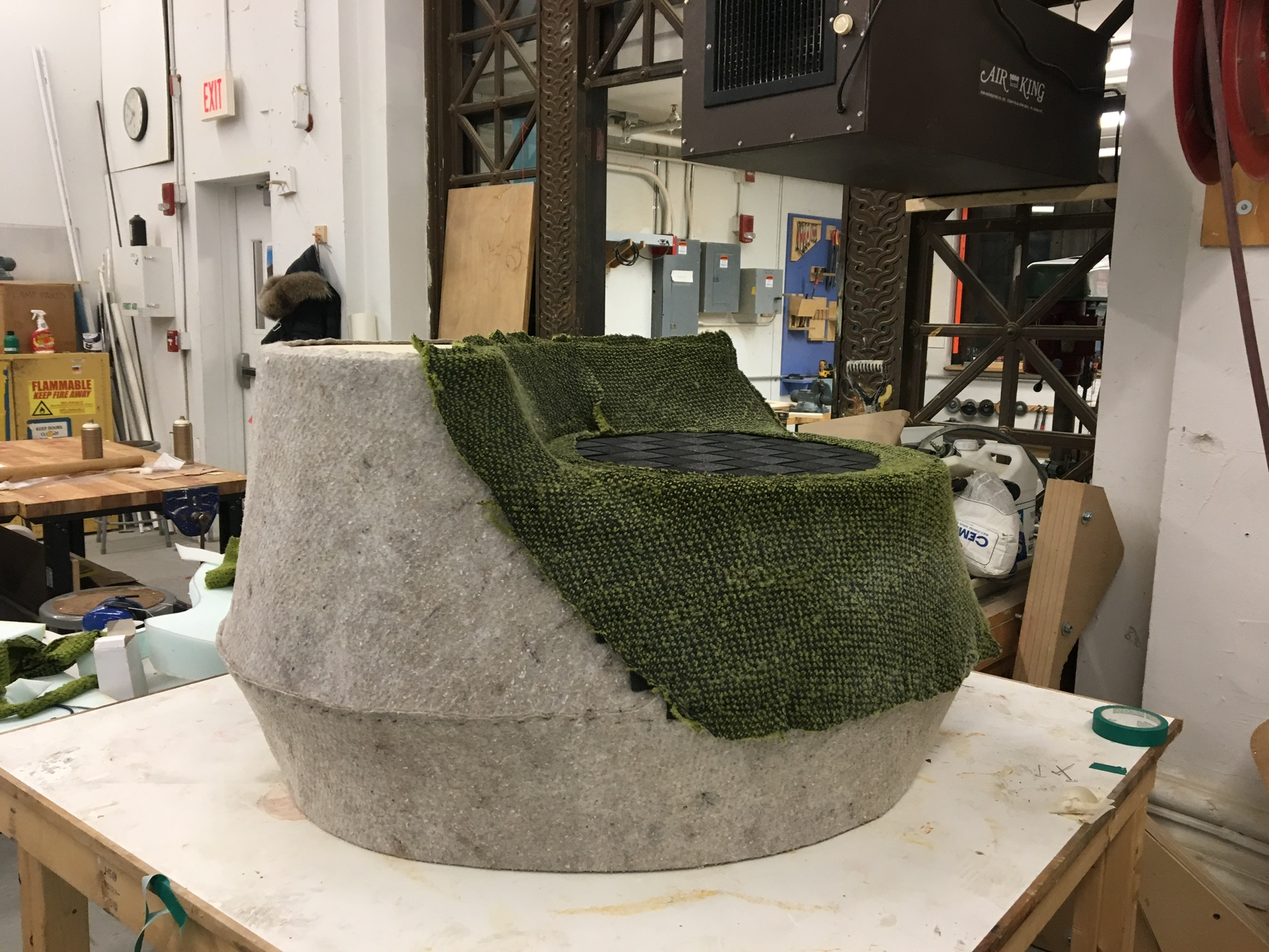
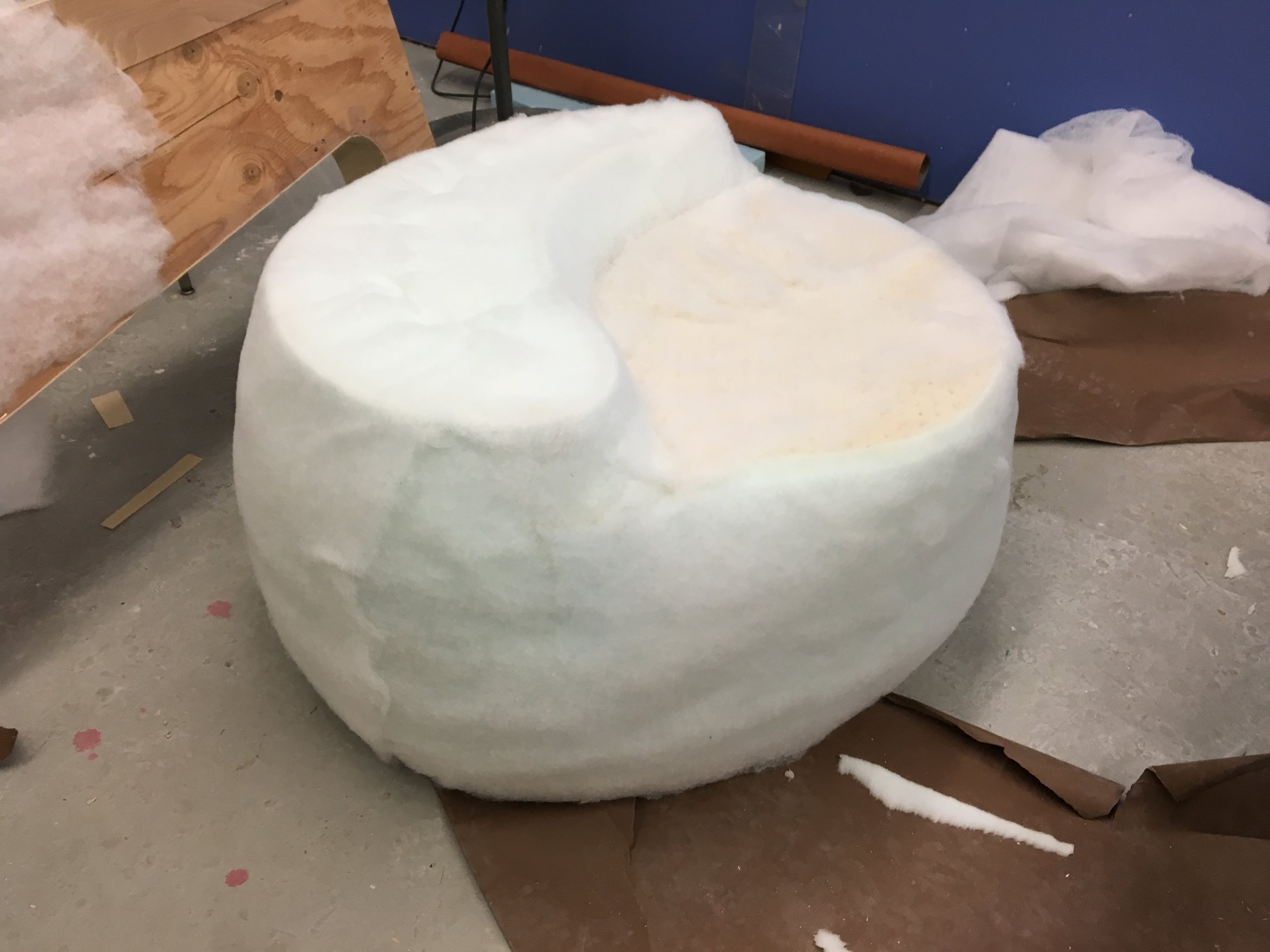
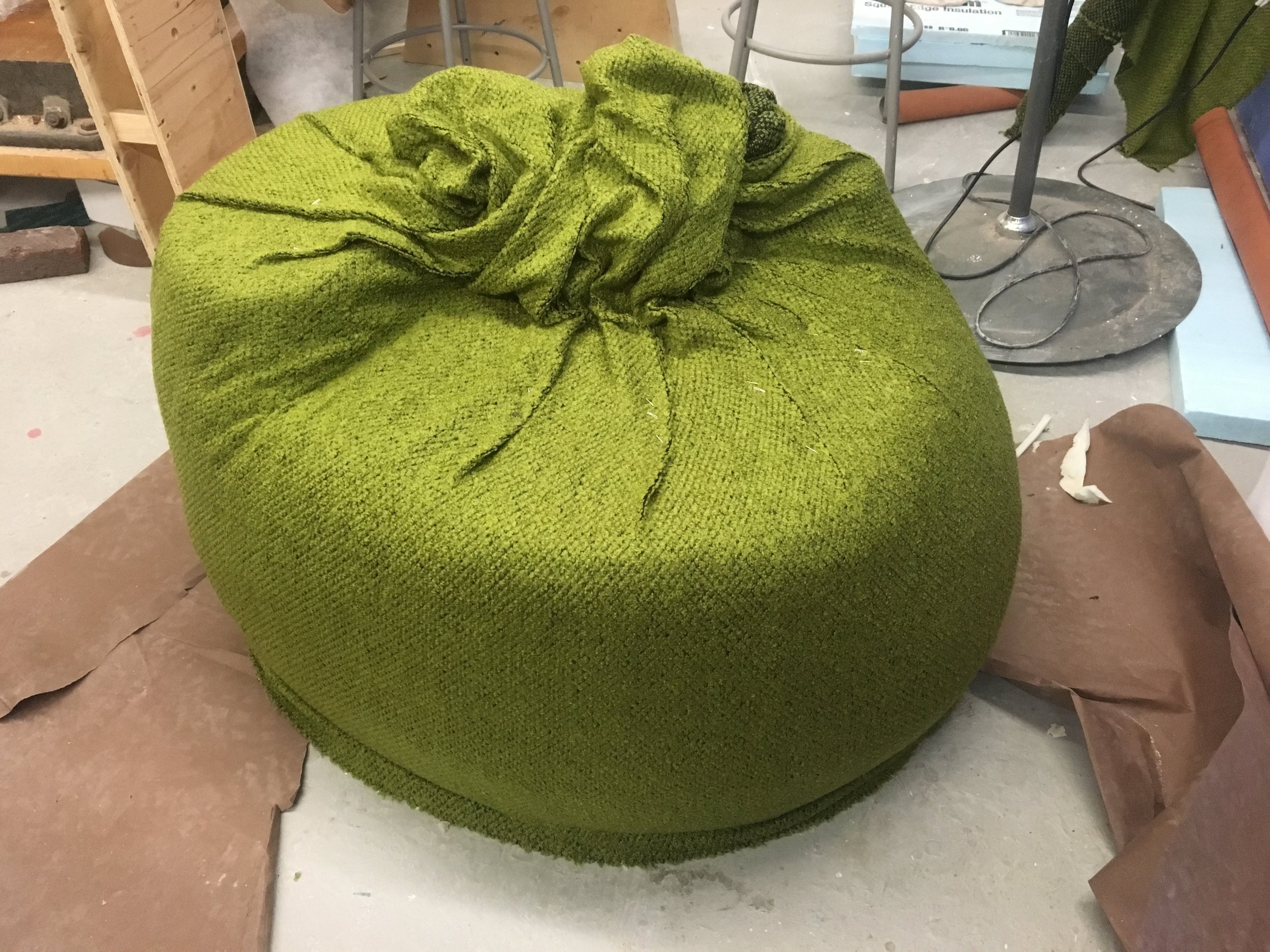
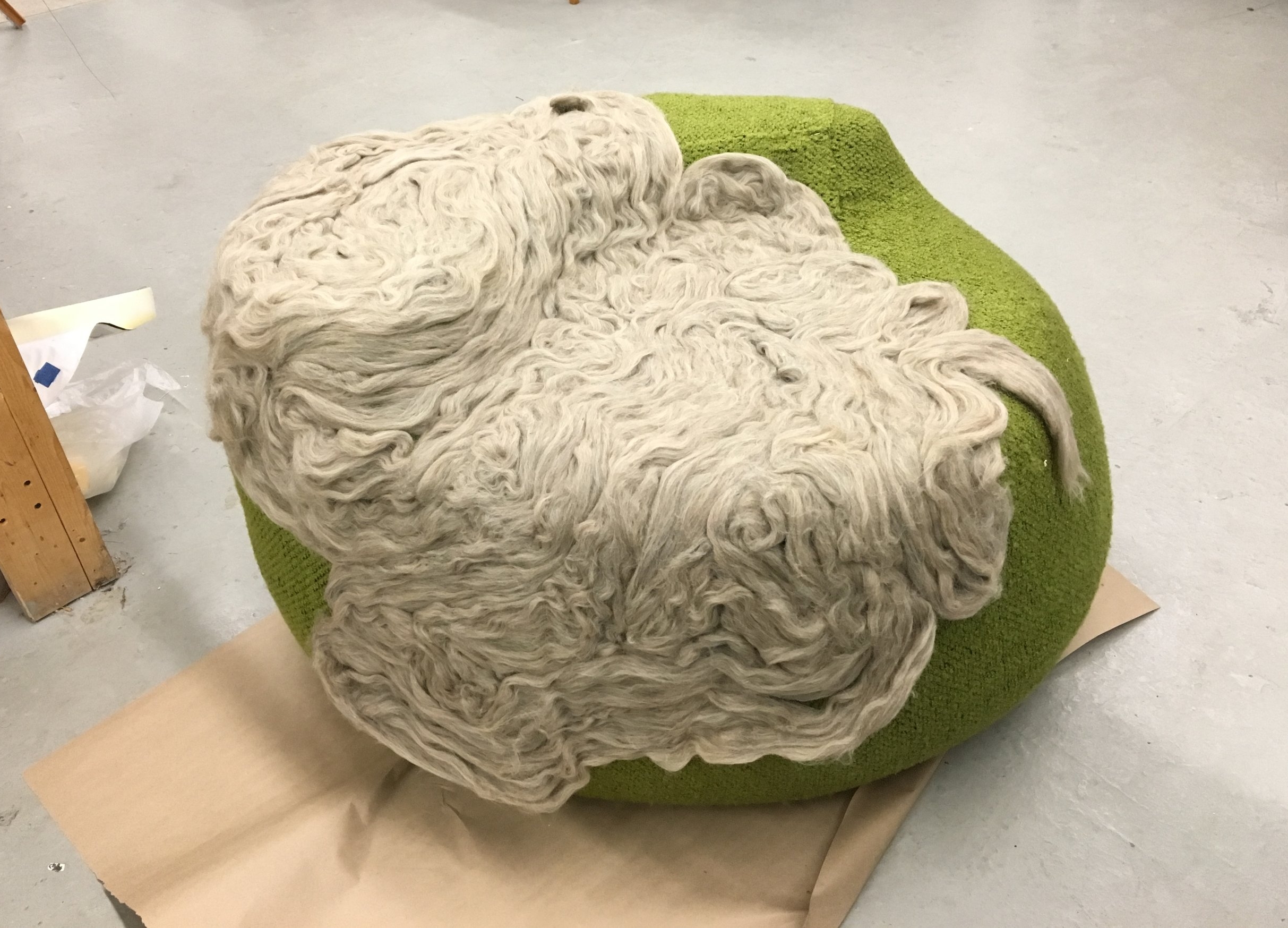
Snug Stone

IMG_3398.jpg

From the Upper East Side to East Stroudsburg: A spot in a landscape. Featured in In NYCXDESIGN RADO Star, and “Art of the State” State Museum of PA
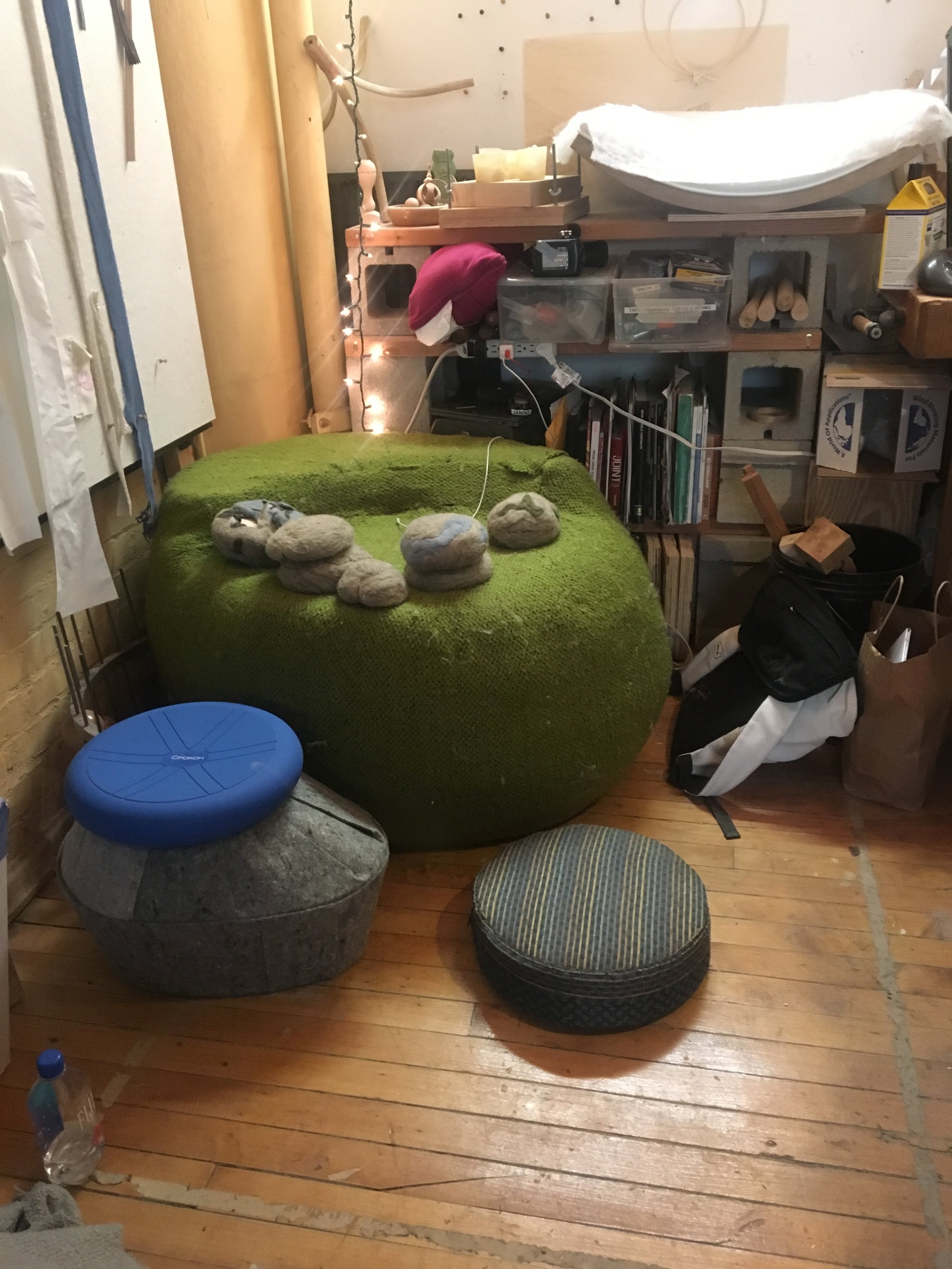
Lunch periods, after school, we rollerbladed for miles, climbed up embankments, found ourselves laying on warm, sunny stones, arranged just so. Even city kids could learn to appreciate nature in a place as tame and accommodating as this. This is where I learned to find comfort in a landscape.
Central Park is not nature; It is an idealized version of it. As I would learn in architecture school years later, its architect Frederick Law Olmstead envisioned the park as an endless painting, with every path leading to a new view, every turn into an idyllic new frame, every close look at the scene to an inhabitable spot to plant yourself. Every tree in the place was planted deliberately, and every boulder and smatter of rocks, planted too. I only learned to see the artifice when my parents moved to the mountains of East Stroudsburg, Pennsylvania, but I did not learn to hate my old stomping grounds. I realized we draw from this beauty and harness something that is there.

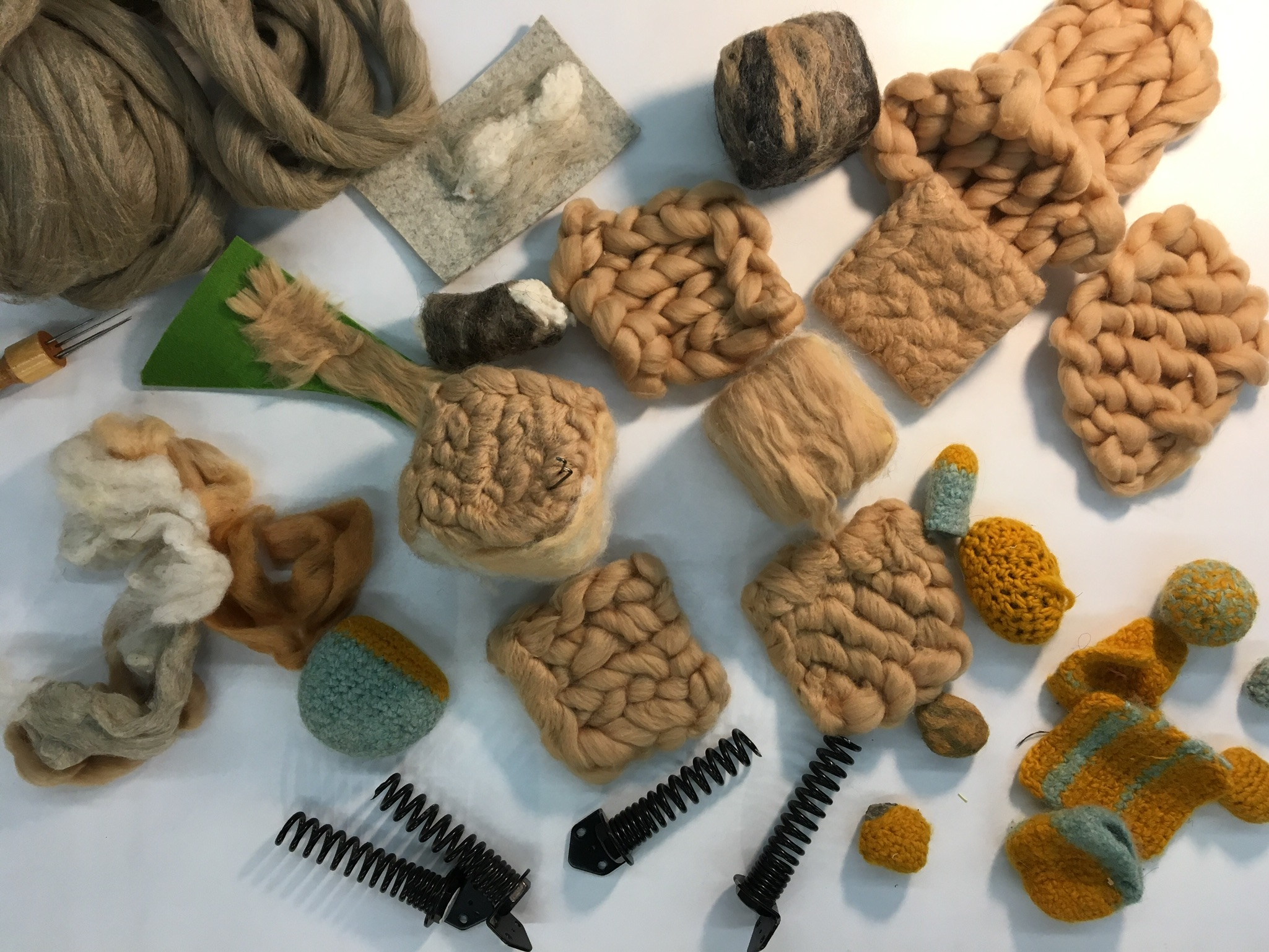
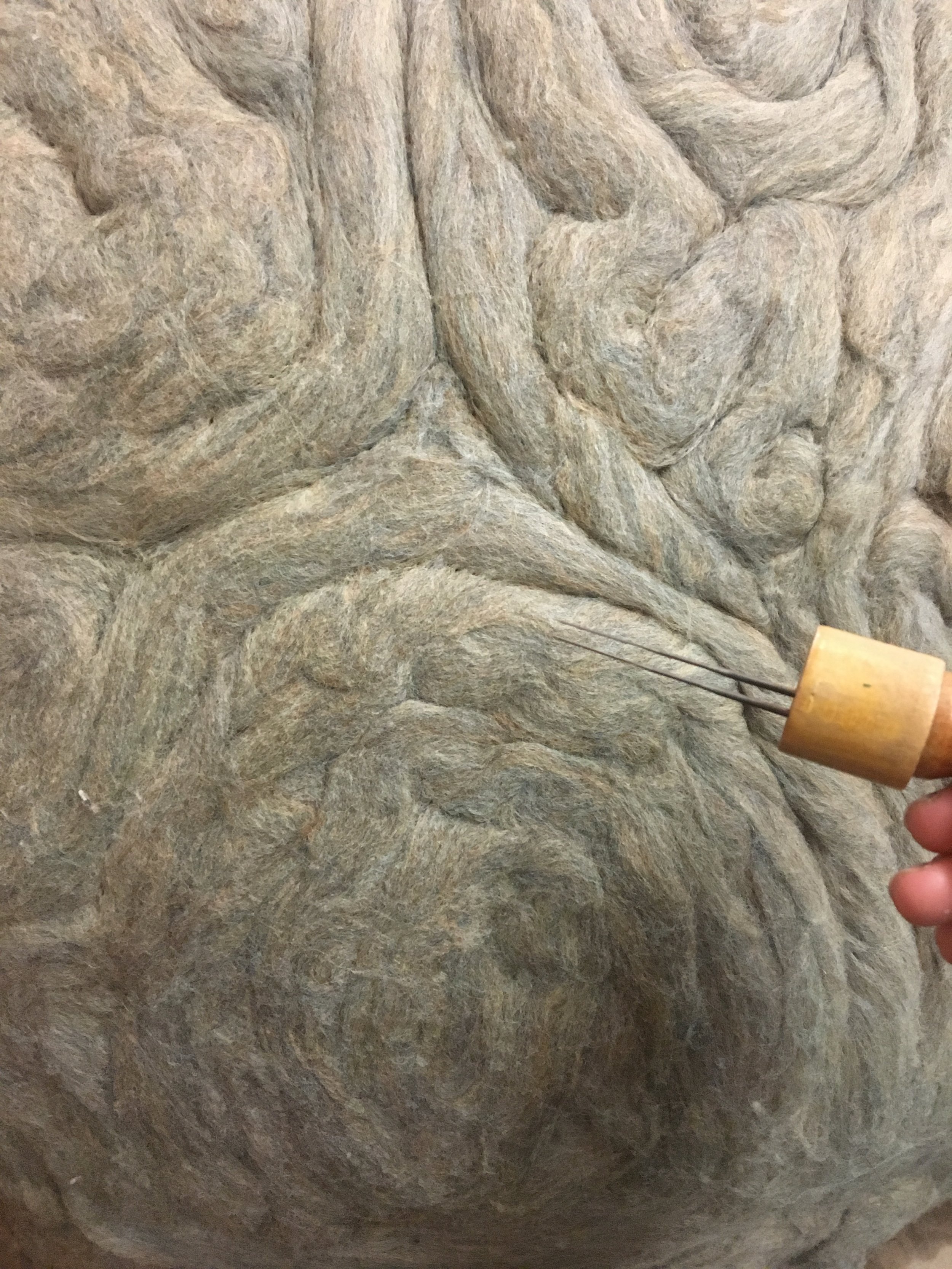
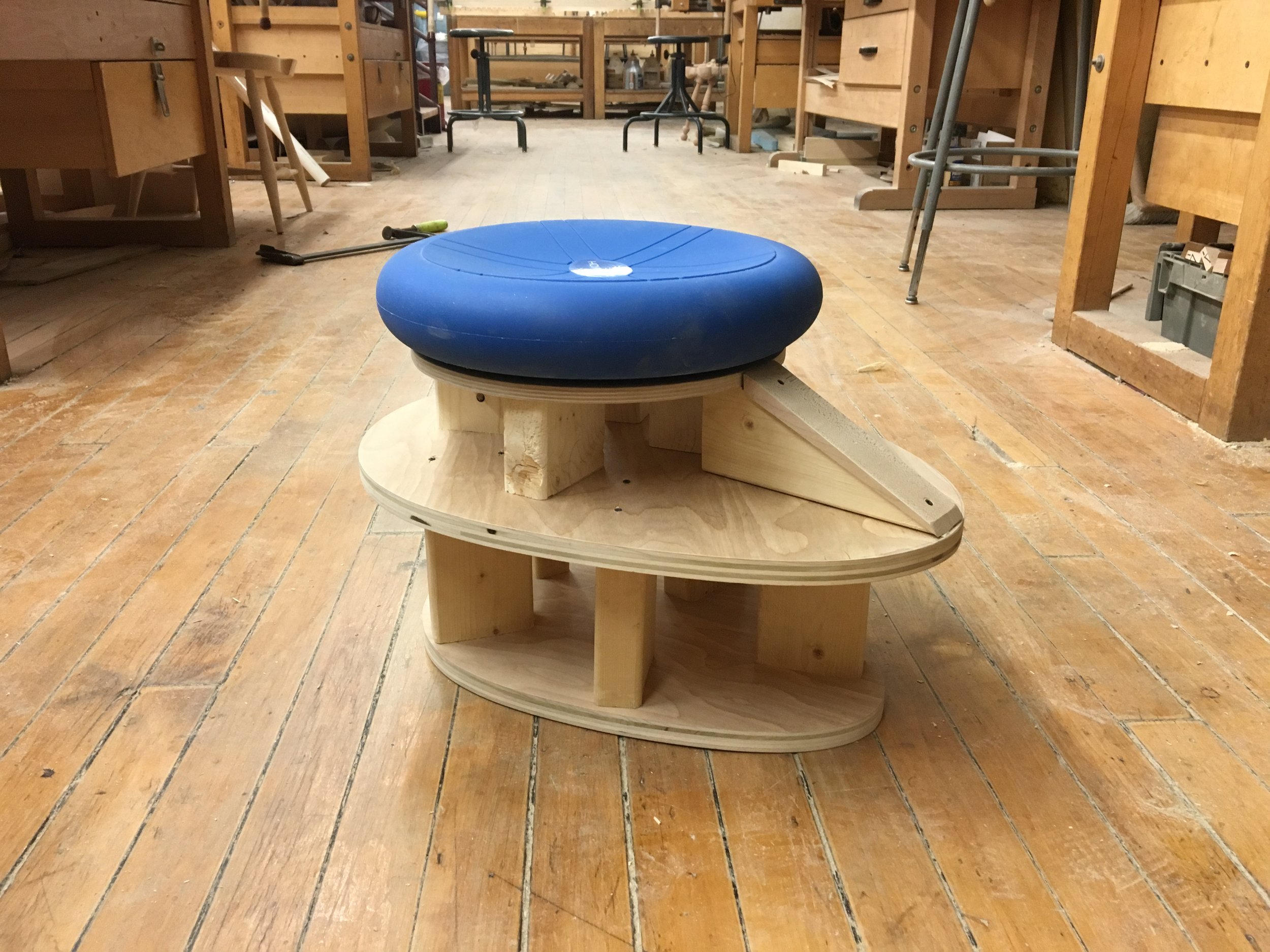
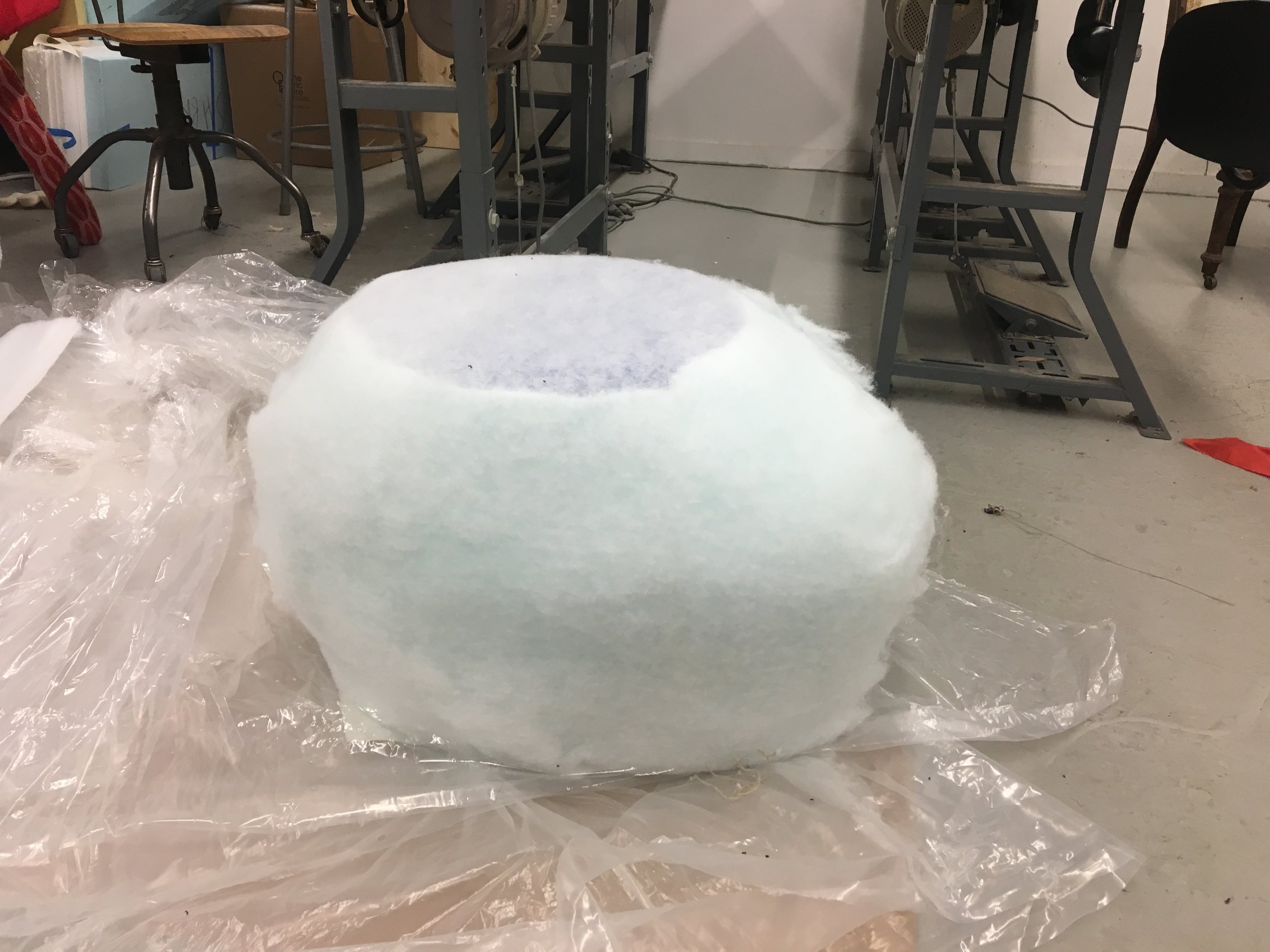
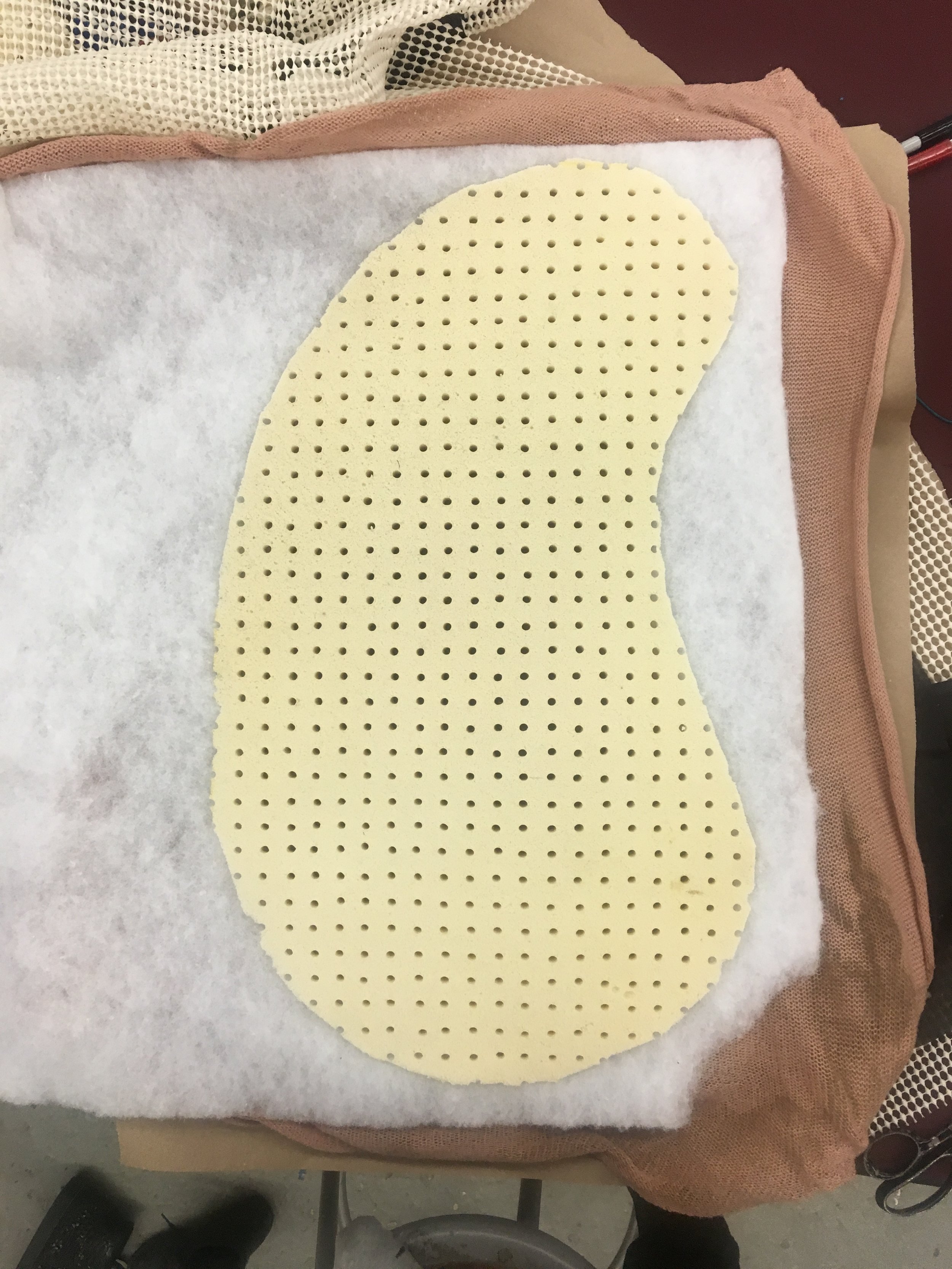
This “Snug Stone” is partially upholstered with garden gate springs, which produce an indescribable, comfortable and uniquely delightful seat shifting motion. The small stone holds a pocket of air, the smallest, latex. The homogeny of felt obscures the mixture of secret textures, and an experience only understandable through actual occupation. In the largest, the higher level is solid, while the lower (with the gate springs) is excessively accommodating. In my dreams, an abundance of these stones, at different heights and different sizes would encourage a person to discover their own place in the landscape they create on their own.

The wool is invitingly soft and warm. Embrace exploration, and then settle in.

IMG_3435.jpg
IMG_3395.jpg
IMG_3438.jpg
IMG_3463.jpg
IMG_3472.jpg


snug stone bg.jpg
 

Personal Display

 
my+things+masking ed.png

I’ve never had a very good memory and that’s why, I think, I hold on to objects so tightly. I think we all do this to some extent. Some things are touch points, others are memories, some things we think are beautiful and just want to keep close to us. If not for our connection to them, objects on display are on display for others, not ourselves.

We display for ourselves, though. Surround ourselves with things we give meaning to, and in return those things give our houses the warmth and comfort of home.
As a designer, I can do what I was taught, and break it down. What are these things, what do they have in common, what do they look like that we would give them a place and power in our homes? It’s all so arbitrary. That’s what’s compelling about the personal connection, and what makes it special and yours. It feels like fate.
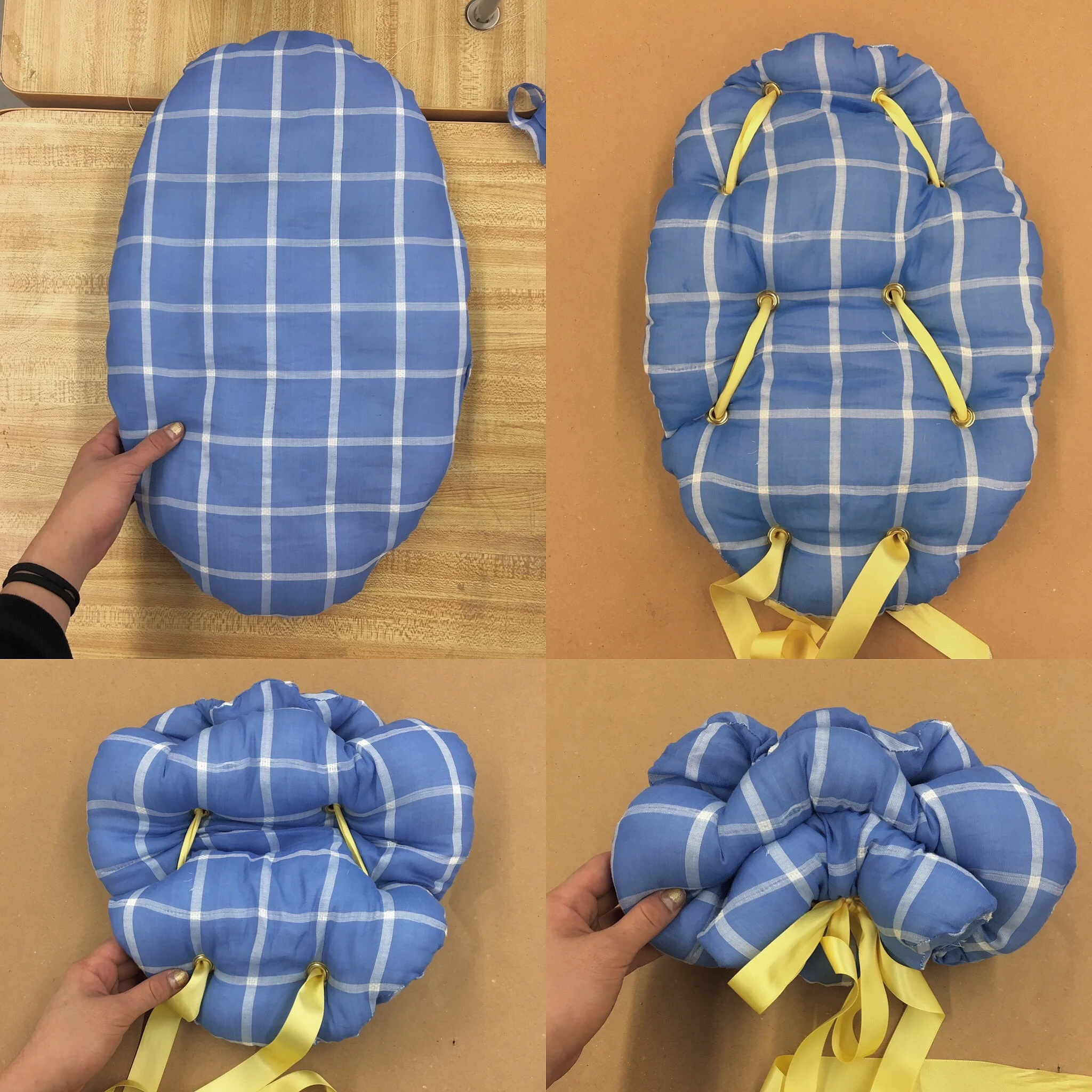
I could never presume to design for others an object programmed to be loved in this way. I might permit myself to house it, protect it, and cherish it. Can I make something that strengthens the bond we have with these things? Can I bring them closer to us? Make us more aware of them? Bring them out of basements and junk drawers and into our lines of sight and into our pockets?

_AAA3870.jpg
stuff inside.jpg
squeez the pillo.jpg
_AAA3871.jpg
_AAA3872.jpg

Moving House
 
Bubble-wrap the chimney, like a vase,
Its bouquet of wilted smoke
Tipped out, and pack the slates
The way you’d box a brittle set of books.
You’ll find the attic can’t be moved
Once the sky floods in, though another will appear
When the last trickle’s wrung from the new roof
And the dark takes place between the rafters.
 
Flat-pack each room, careful not to tear
the windows from their views:
they must be eased to their fresh prospects
to keep their perspectives true;
lead the bath out by the plug chain,
its tin legs squealing, and poke the electricity
from its hole with a forked stick,
pinning it to the ground by the throat.
 
Carry the doors on your backs,
For they’ve leant heavily against the world
They deserve this one good turn;
The foundations will make their own way –
Tap the ground gently when you arrive
And they’ll raise the surface like worms
After rain


Should you not have the time to memorize
these interactions, to squeeze all the air
out of the stairs;
should you be so utterly unprepared
as to leave your house behind,
rooms thrown around their walls
by the bare bulbs swinging in your wake;
should you have nowhere to set these thoughts,
fumbled at the beginning of the day
and caught again in a sunlit doorway,
 
Nowhere for the table and chairs to stretch
Their old shadows every afternoon
Or the floorboards to query each footstep –
Bury them, deep in the woods,
And fashion new ones in the glow
Of your little camp fire,
As wholves howl
High in the snow-covered hills
And the stars whistle over your head.

----Jacob Polley

 
memory bg whiter 66.jpg

Grounding Yourself

 
DSC_0083 3.jpg

Nothing much to Notice but yourself.

DSC_0138.jpg
DSC_0093.jpg
DSC_0121.jpg
DSC_0130.jpg
 
 
DSC_0083 2.jpg